
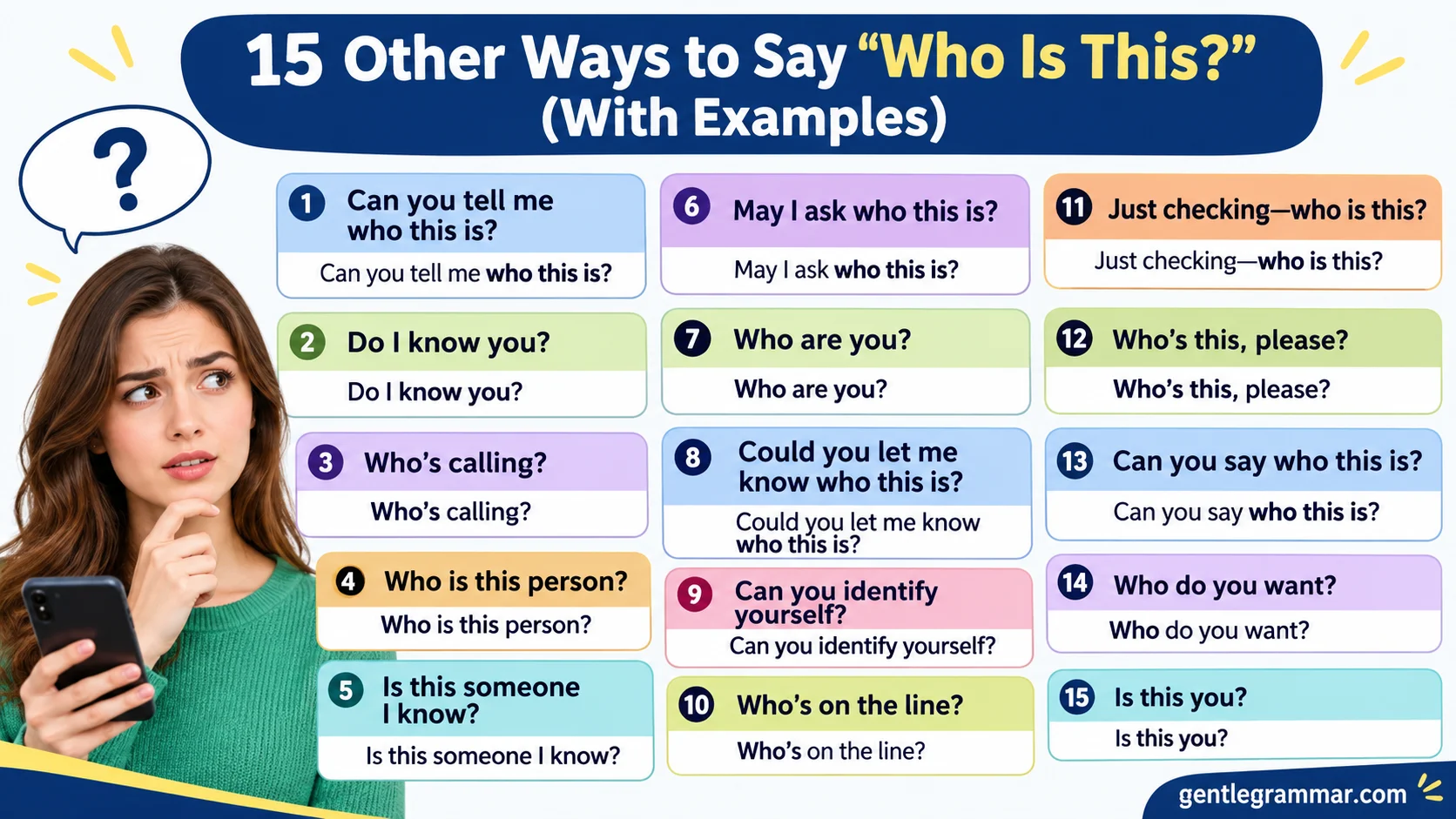
Here are 15 Other Ways to Say “Who Is This?” (With Examples) can help you choose natural wording.
In my own experience, the choice of words can make a big difference when answering the phone, speaking to a third party, or starting a friendly conversation. It also helps connect with others through clarity and connection in a meeting, social media platform, or real-life scenarios.The same approach works across different contexts and every type of conversation.
When someone sends a text message, email, or social media message, you may want to recognize the person before continuing the conversation. Practical tips, offering ideas, and strong conversational skills can help you communicate confidently without making someone uncomfortable. In professional situations, business communication, professional expressions, and polite alternatives are useful, while casual phrases suit texting and a friendly exchange.
What Does “Who Is This?” Mean?
“Who is this?” is a question used to ask someone to identify themselves. It is especially common when you don’t recognize the person speaking to you, calling you, or sending you a message. For example, if an unknown number texts you, you might reply, “Who is this?” The phrase is usually understood immediately, but its tone depends heavily on the situation and the relationship between the speakers. In a casual setting, it can simply express curiosity, while in another situation, it may sound somewhat direct or suspicious.
The phrase can also be used when asking about another person who is physically present, although the meaning changes slightly with context. For example, “Who is this?” while pointing toward someone may mean “Who is this person?” When speaking directly to an unknown caller or texter, however, it normally means “Can you tell me who you are?”
Common Situations Where “Who Is This?” Is Used
People commonly use “Who is this?” in everyday conversations, phone calls, text messages, and social media chats. It is particularly useful when an unfamiliar number contacts you or when you receive a message from someone whose identity you cannot immediately recognize.
The phrase can also appear in personal communication when someone has changed their number, contacted you after a long time, or used an account you don’t recognize. At work, however, a softer alternative may be preferable if you want to sound professional and respectful. The same question can feel very different depending on whether you’re responding to a friend, customer, colleague, stranger, or unknown caller.
Is It Professional or Polite to Say “Who Is This?”
“Who is this?” is grammatically correct and completely understandable, but it is generally direct and informal. Among friends or in casual text conversations, there is usually nothing wrong with using it. If an unknown number contacts you unexpectedly, the question can also be practical and reasonable.
In professional communication, though, a slightly softer expression often sounds better. Phrases such as “May I ask who this is?” or “Could you tell me who this is?” communicate the same basic idea while adding politeness and respect. The original phrase isn’t automatically rude, but your tone and the surrounding situation can make it sound either neutral or confrontational.
Advantages and Disadvantages of Saying “Who Is This?”
Advantages
The biggest advantage of “Who is this?” is its simplicity. It is short, clear, and immediately understandable. You don’t need to explain why you’re asking, and it works particularly well when you genuinely don’t recognize the person contacting you. It is also natural in everyday speech and texting, where short questions are common.
Disadvantages
The phrase can sometimes sound blunt or suspicious, especially when directed toward someone you don’t know. In a professional conversation, it may feel less welcoming than a more polite alternative. It also gives little information about your intended tone. If you want to sound curious, respectful, or warm rather than cautious or confrontational, another expression may communicate your intention more effectively.
Synonyms for “Who Is This?”
- Who’s this?
- May I ask who this is?
- Who am I speaking with?
- Could you tell me who this is?
- Who’s calling?
- Who is speaking?
- Who do I have the pleasure of speaking with?
- May I know who this is?
- Can I ask who I’m speaking to?
- Who’s on the line?
- Who might this be?
- Could I ask who you are?
- What’s your name?
- Can you tell me who you are?
- Who is this person?
1. Who’s this?
Meaning
“Who’s this?” is a shorter, more conversational version of “Who is this?”. It asks an unfamiliar person to identify themselves.
Definition
“Who’s this?” means “Who are you?” or “Can you tell me your identity?” in a casual situation.
Detailed Explanation
This expression is extremely natural in spoken English and texting. It feels slightly lighter and more conversational than “Who is this?” while keeping essentially the same meaning. You might use it when an unfamiliar number sends you a message or when someone calls unexpectedly. It is best suited to informal situations rather than formal business communication.
Scenario Examples
Scenario: An unknown number sends you a text.
Example: “Hey! Who’s this?”
Scenario: Someone calls you but doesn’t introduce themselves.
Example: “Hi, who’s this?”
Best Use
Use “Who’s this?” for texting, casual calls, and everyday conversation.
Tone
Tone: Casual, direct, conversational. It sounds natural but isn’t particularly formal.
2. May I ask who this is?
Meaning
“May I ask who this is?” is a more polite version of asking an unfamiliar person to identify themselves.
Definition
It means “Would you mind telling me who you are?” in a respectful way.
Detailed Explanation
This phrase softens the directness of “Who is this?” without becoming overly formal. It works especially well when you don’t want the other person to feel questioned aggressively. The expression is useful when responding to an unfamiliar caller, customer, colleague, or professional contact. It communicates politeness and courtesy while remaining clear.
Scenario Examples
Scenario: An unknown number calls you about work.
Example: “Hello, may I ask who this is?”
Scenario: Someone messages you from an unfamiliar account.
Example: “May I ask who this is? I don’t have this number saved.”
Best Use
Use it for professional calls, unfamiliar contacts, polite texts, and formal conversations.
Tone
Tone: Polite, respectful, professional. The wording reduces the possibility of sounding suspicious or abrupt.
3. Who am I speaking with?
Meaning
“Who am I speaking with?” asks the person on the other end of a conversation to identify themselves.
Definition
It means “Can you tell me your name or identity?” when you are already speaking with someone.
Detailed Explanation
This expression sounds more polished than “Who is this?” because it acknowledges that a conversation is already taking place. It is especially common in phone conversations and customer-service situations. The wording can sound professional without being stiff. It also avoids the slightly abrupt feeling that can come from directly asking, “Who are you?”
Scenario Examples
Scenario: A customer calls your business without introducing themselves.
Example: “Certainly. Who am I speaking with?”
Scenario: You answer a call from an unfamiliar number.
Example: “Hello, who am I speaking with?”
Best Use
Use it for phone calls, workplace conversations, customer communication, and professional settings.
Tone
Tone: Professional, courteous, neutral. It sounds more polished than a short “Who’s this?”
4. Could you tell me who this is?
Meaning
“Could you tell me who this is?” politely asks an unfamiliar person to identify themselves.
Definition
It means “Would you please tell me who you are?”
Detailed Explanation
This phrase uses “could you” to make the request sound softer and more courteous. It is a useful choice when you want clarity without sounding suspicious. Unlike “Who is this?”, it sounds more like a polite request than a blunt question. It works well in both personal and professional communication.
Scenario Examples
Scenario: An unknown person sends you a message.
Example: “Could you tell me who this is? I don’t recognize the number.”
Scenario: Someone calls your office and asks for you.
Example: “Before I transfer the call, could you tell me who this is?”
Best Use
Use it in professional communication, polite messages, and unfamiliar conversations.
Tone
Tone: Polite, calm, professional. It is particularly useful when you want to avoid sounding confrontational.
5. Who’s calling?
Meaning
“Who’s calling?” specifically asks for the identity of someone who is making a phone call.
Definition
It means “Who is making this call?” or “May I have your name?”
Detailed Explanation
This phrase is naturally connected to telephone conversations, so it isn’t a universal replacement for “Who is this?” If someone sends you a text, “Who’s calling?” would obviously be inappropriate. On a phone call, however, it is short and practical. It can sound neutral or slightly formal depending on your voice.
Scenario Examples
Scenario: You answer a business phone.
Example: “Good afternoon. Who’s calling?”
Scenario: Someone asks to speak with your manager.
Example: “Certainly. Who’s calling, please?”
Best Use
Use it for phone calls, reception desks, offices, and customer-service situations.
Tone
Tone: Direct, professional, neutral. Adding “please” can make it sound more courteous.
6. Who is speaking?
Meaning
“Who is speaking?” asks the person currently talking to identify themselves.
Definition
It means “Who are you?” or “May I know who is speaking?”
Detailed Explanation
This expression is clear and grammatically straightforward, but it can sound somewhat more formal or traditional than “Who’s calling?” It works particularly well when you cannot see the person you’re speaking with. In everyday casual texting, it may feel more formal than necessary. For telephone or official conversations, however, it can be perfectly appropriate.
Scenario Examples
Scenario: You receive an unfamiliar business call.
Example: “Hello. Who is speaking?”
Scenario: Someone calls your home and doesn’t give their name.
Example: “May I ask who is speaking?”
Best Use
Use it in phone calls, formal conversations, and situations where the speaker’s identity is unclear.
Tone
Tone: Formal, direct, respectful. It has a more traditional feel than many modern alternatives.
7. Who do I have the pleasure of speaking with?
Meaning
“Who do I have the pleasure of speaking with?” is a warm and highly polite way to ask someone’s name.
Definition
It means “May I have the name of the person I am speaking with?”
Detailed Explanation
This expression adds a noticeably warmer and more courteous feeling to the question. It is much more formal than “Who is this?”, so it may sound excessive in a casual text. It can work nicely in hospitality, business, networking, or customer-facing situations where creating a positive impression matters. The phrase also suggests that the speaker views the conversation positively rather than treating the unknown person as an interruption.
Scenario Examples
Scenario: You’re answering a professional networking call.
Example: “Good morning. Who do I have the pleasure of speaking with?”
Scenario: You are welcoming a new business contact.
Example: “It’s nice to hear from you. Who do I have the pleasure of speaking with?”
Best Use
Use it in formal phone conversations, networking, hospitality, and polished customer communication.
Tone
Tone: Warm, formal, courteous. It conveys respect and friendliness.
8. May I know who this is?
Meaning
“May I know who this is?” politely asks an unfamiliar person to identify themselves.
Definition
It means “May I have your name or know your identity?”
Detailed Explanation
This expression is courteous and concise. It is often heard in professional or polite conversations where a speaker wants to ask for someone’s identity without sounding too blunt. Compared with “Who is this?”, it creates more distance and respect. It is especially useful when you don’t want to assume familiarity with the person contacting you.
Scenario Examples
Scenario: A business contact calls from an unfamiliar number.
Example: “Hello, may I know who this is?”
Scenario: An unfamiliar account sends you a direct message.
Example: “May I know who this is before we continue?”
Best Use
Use it for polite conversations, business communication, and unfamiliar contacts.
Tone
Tone: Polite, formal, respectful. It sounds more careful than the original phrase.
9. Can I ask who I’m speaking to?
Meaning
“Can I ask who I’m speaking to?” politely requests the other person’s name or identity.
Definition
It means “May I ask for your name?” while emphasizing the current conversation.
Detailed Explanation
This wording is natural when you are already speaking with someone but don’t know who they are. It sounds less abrupt than “Who are you?” and more conversational than some highly formal alternatives. It can be used in personal or professional situations. The phrase is particularly useful when you want to remain friendly while still getting basic information.
Scenario Examples
Scenario: Someone approaches you at an event and starts talking as if you have met before.
Example: “Sorry, can I ask who I’m speaking to?”
Scenario: An unfamiliar caller asks for you.
Example: “Before we continue, can I ask who I’m speaking to?”
Best Use
Use it in conversations, phone calls, networking, and polite personal communication.
Tone
Tone: Friendly, polite, neutral. It sounds natural without being overly formal.
10. Who’s on the line?
Meaning
“Who’s on the line?” asks who is currently connected to a phone call.
Definition
It means “Who is speaking on this phone line?”
Detailed Explanation
This expression is specifically associated with telephone communication. It has a slightly traditional or professional feel and isn’t normally used for ordinary text messages. You might hear it in an office, reception area, or situation where someone answers a shared phone. Because of its phone-specific meaning, it should not be treated as a general replacement in every context.
Scenario Examples
Scenario: An assistant answers an office phone.
Example: “Good morning. Who’s on the line?”
Scenario: Someone asks you to take a call.
Example: “Who’s on the line? I wasn’t expecting anyone.”
Best Use
Use it for telephone conversations, offices, reception desks, and formal calls.
Tone
Tone: Professional, direct, slightly traditional. It is more natural on the phone than in writing.
11. Who might this be?
Meaning
“Who might this be?” asks an unfamiliar person to identify themselves in a softer, less direct way.
Definition
It means “Could you tell me who you are?” with a more tentative tone.
Detailed Explanation
The word “might” makes this expression feel less forceful than “Who is this?” It can communicate curiosity rather than suspicion. This makes it useful when an unfamiliar person contacts you and you want to remain friendly. Depending on the situation, it can also sound slightly old-fashioned or playful.
Scenario Examples
Scenario: You receive a friendly message from an unknown number.
Example: “Hi there! Who might this be?”
Scenario: Someone you don’t recognize sends you a social media message.
Example: “Hello! Who might this be?”
Best Use
Use it for friendly messages, casual conversations, and situations where you want a softer question.
Tone
Tone: Friendly, curious, gentle. It sounds less confrontational than “Who is this?”
12. Could I ask who you are?
Meaning
“Could I ask who you are?” politely requests someone’s identity.
Definition
It means “May I know who you are?”
Detailed Explanation
This phrase is direct but softened by “Could I ask.” It can work when you need someone’s name or identity but don’t want to sound demanding. However, because it uses “you” directly, it can occasionally feel more pointed than “Could you tell me who this is?” The surrounding tone matters, especially when speaking to a stranger.
Scenario Examples
Scenario: Someone approaches you and begins asking personal questions.
Example: “Before I answer that, could I ask who you are?”
Scenario: An unfamiliar person arrives at your workplace.
Example: “Could I ask who you are and who you’re here to see?”
Best Use
Use it for face-to-face conversations, cautious situations, and polite requests for identification.
Tone
Tone: Direct, cautious, polite. It can become firm when the situation requires boundaries.
13. What’s your name?
Meaning
“What’s your name?” directly asks someone to tell you their name.
Definition
It means “Please tell me your name.”
Detailed Explanation
This is one of the simplest ways to identify someone, but it is slightly different from “Who is this?” because it specifically asks for a name rather than identity in a broader sense. It is perfectly natural with introductions, children, new acquaintances, and casual conversations. With an adult stranger in a sensitive situation, the directness may feel stronger. A softer version can be useful when you want to sound more courteous.
Scenario Examples
Scenario: You meet someone at a social event.
Example: “Hi, I’m Sam. What’s your name?”
Scenario: A new customer approaches you.
Example: “I’m sorry, what’s your name?”
Best Use
Use it for introductions, casual conversations, meeting new people, and everyday interactions.
Tone
Tone: Simple, friendly, direct. It is usually warmer when paired with your own introduction.
14. Can you tell me who you are?
Meaning
“Can you tell me who you are?” asks someone to identify themselves.
Definition
It means “Please explain who you are or tell me your identity.”
Detailed Explanation
This phrase can be polite, but it has a stronger and more serious quality than “Who is this?” depending on how it is delivered. It may be appropriate when someone contacts you without explaining their purpose. However, in a casual conversation, it can sound suspicious or challenging. Use it when you genuinely need the person to clarify their identity rather than simply wanting their name.
Scenario Examples
Scenario: An unfamiliar person enters a restricted workplace area.
Example: “Excuse me, can you tell me who you are?”
Scenario: Someone sends a strange message without identifying themselves.
Example: “Can you tell me who you are and how you got my number?”
Best Use
Use it when identity or authorization needs clarification, especially in serious or unfamiliar situations.
Tone
Tone: Direct, serious, cautious. It can sound confrontational if spoken sharply.
15. Who is this person?
Meaning
“Who is this person?” asks for information about someone else rather than asking that person directly to identify themselves.
Definition
It means “Who is that person?” or “Can you tell me who this individual is?”
Detailed Explanation
This expression is not a direct substitute for “Who is this?” when speaking to an unknown caller. Instead, it is useful when you’re asking another person about someone nearby, in a photograph, or mentioned in a conversation. The key difference is that you’re referring to a third person. Because of that, this phrase should only be used when the context involves another individual.
Scenario Examples
Scenario: A friend shows you a photograph of someone you don’t recognize.
Example: “Who is this person standing next to you?”
Scenario: A colleague mentions someone you’ve never met.
Example: “Who is this person you keep referring to?”
Best Use
Use it when asking about another person, particularly in conversation, photographs, or social situations.
Tone
Tone: Neutral, curious, direct. The tone depends mainly on how the question is delivered.
FAQs:
What is another way to say “Who Is This?”
Some natural alternatives include “Who’s this?”, “Who am I speaking with?”, “May I ask who this is?”, and “Could you tell me who this is?”. The best choice depends on whether you want to sound casual, polite, or professional.
What does “Who Is This?” mean?
“Who is this?” is used to ask an unfamiliar person to identify themselves. It commonly appears in phone calls, text messages, and other situations where you don’t recognize the person contacting you.
Is “Who Is This?” professional?
It is understandable but fairly direct and informal. In a workplace or customer-service setting, “Who am I speaking with?” or “May I ask who this is?” usually sounds more polished and courteous.
What is a more polite way to say “Who Is This?”
“May I ask who this is?” is one of the most natural polite alternatives. You can also say “Could you tell me who this is?” when you want to make the request sound softer.
Which alternative works best in formal communication?
For formal communication, “Who am I speaking with?” is a strong choice, especially during a phone call. “May I ask who this is?” also works well when you want a respectful and straightforward expression.
Conclusion:
Choosing another expression for “Who Is This?” is often less about changing the meaning and more about changing the tone. A short phrase such as “Who’s this?” works naturally with friends and casual messages, while “May I ask who this is?” creates a more respectful impression. In professional conversations, “Who am I speaking with?” can sound polished without feeling overly formal.
Some alternatives, such as “Who’s calling?”, are best reserved for phone conversations, while “Who is this person?” refers to someone else entirely. The most natural wording depends on your relationship, setting, and reason for asking. Choose the expression that matches the situation rather than treating every alternative as interchangeable.
