
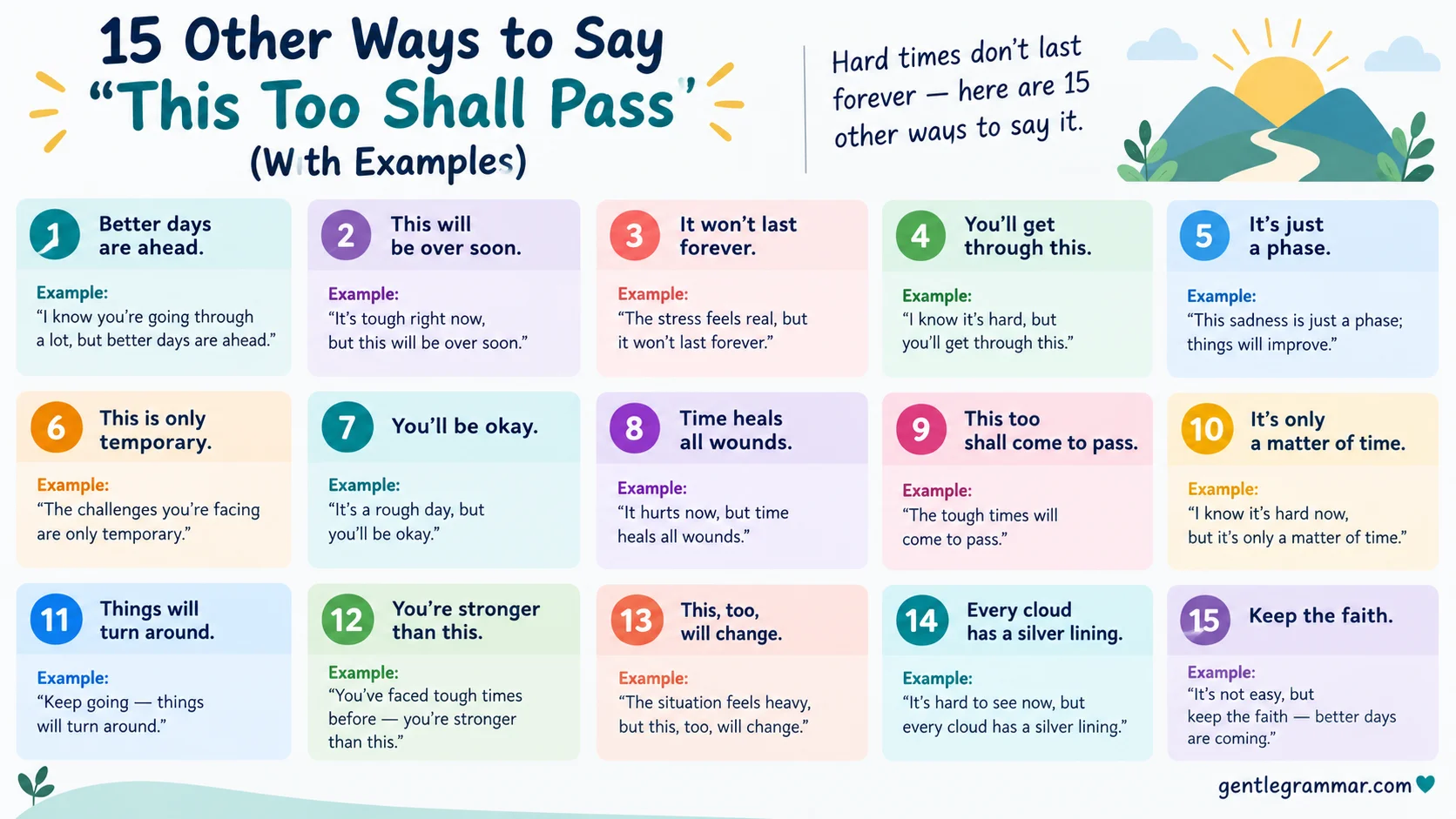
The phrase “This too shall pass” reminds us that life’s impermanence makes both wonderful moments and difficult experiences temporary.
Life has good times, bad times, moments of happiness, and challenging moments that eventually become part of our lasting memories or fleeting moments. We all experience life transitions, life challenges, and different situations. Sometimes stress, disappointment, grief, uncertainty, emotional distress, loneliness, homesickness, and confusion make it difficult to see a way forward. During these periods, patience, hope, and resilience help us keep going.
A little comfort, solace, and a healthy perspective can also make a difference. Practicing mindfulness, reflection, acceptance of circumstances, and understanding change helps us learn from life’s experiences. That’s why 15 Other Ways to Say “This Too Shall Pass” (With Examples) can help you express the same message with greater warmth, encouragement, and emotional strength.
What Does “This Too Shall Pass” Mean?
“This Too Shall Pass” means that difficult situations, painful feelings, and challenging periods are temporary. It reminds people that sadness, disappointment, stress, and uncertainty will not last forever. Although a problem may feel overwhelming right now, circumstances can change with time.
The expression communicates hope, patience, and emotional reassurance. People often use it when comforting someone who is going through a difficult experience or reminding themselves to remain strong during uncertain times. It doesn’t promise that every problem will disappear immediately. Instead, it encourages people to keep going because the present moment does not define their entire future.
Common Situations Where “This Too Shall Pass” Is Used
People use this expression in several personal and emotional situations. During everyday conversations, it can reassure a friend who is having a stressful week. In text messages, it offers a short but meaningful reminder to someone dealing with disappointment or uncertainty. It also appears in social media captions, motivational posts, and personal reflections about overcoming difficult experiences.
The phrase is particularly useful in relationships, family conversations, and personal communication when someone needs encouragement. For example, a person experiencing a breakup, struggling with schoolwork, or facing a challenging period at work may appreciate hearing it. However, when someone is experiencing deep grief or a serious personal loss, a more empathetic expression may feel appropriate because it acknowledges their pain rather than simply reminding them that time will pass.
Is It Professional or Polite to Say “This Too Shall Pass”?
“This Too Shall Pass” is generally polite, encouraging, and thoughtful, but it has an emotional and somewhat informal quality. It works naturally in friendly conversations, supportive messages, and personal discussions. You can also use it in workplace communication when speaking with a colleague who is dealing with temporary pressure or a challenging project.
However, it may not be the best choice for formal business writing, customer complaints, or serious professional situations. Someone experiencing a major workplace problem may need practical reassurance rather than a philosophical expression. In those situations, wording such as “We will work through this together” sounds more direct and supportive. The best choice depends on your relationship with the reader and the seriousness of the situation.
Advantages and Disadvantages of Saying “This Too Shall Pass”
Advantages
- Offers hope: It reminds people that difficult circumstances are not necessarily permanent.
- Provides comfort: The expression can help someone feel less alone during a stressful period.
- Encourages patience: It reminds people not to make permanent judgments based on temporary emotions.
- Easy to understand: Its simple wording makes it suitable for conversations, messages, and motivational writing.
- Promotes resilience: It encourages people to keep moving forward despite uncertainty.
Disadvantages
- May sound dismissive: Someone experiencing serious grief might feel that their pain is being minimized.
- Can feel repetitive: Using the same reassurance repeatedly may make it less meaningful.
- Doesn’t offer practical help: The expression provides emotional encouragement but doesn’t explain how to solve a problem.
- May sound too philosophical: Some professional or urgent situations require more direct communication.
- Doesn’t fit every emotion: A person may need understanding and acknowledgment before receiving encouragement.
Synonyms for “This Too Shall Pass”
- This Won’t Last Forever
- Things Will Get Better
- Better Days Are Ahead
- Time Heals All Wounds
- Every Storm Runs Out of Rain
- Hang in There
- One Day at a Time
- This Is Only Temporary
- The Sun Will Shine Again
- Tough Times Don’t Last
- Keep Your Head Up
- Brighter Days Are Coming
- Nothing Stays the Same Forever
- You’ll Get Through This
- After the Rain Comes the Rainbow
1. This Won’t Last Forever
Meaning
“This Won’t Last Forever” means that a difficult experience or unpleasant situation will eventually come to an end. Like the original expression, it reminds someone that their current struggles are not permanent.
Definition
A reassuring statement that emphasizes the temporary nature of a difficult situation.
Detailed Explanation
This expression is straightforward and comforting. It focuses on the idea that present circumstances can change, even when improvement seems far away. Compared with “This Too Shall Pass,” it sounds more conversational and less philosophical. It works especially well when someone needs a simple reminder that their current difficulties are not their entire future.
Scenario Examples
Scenario 1: Comforting a friend after a breakup.
Example: “I know you’re hurting right now, but this won’t last forever. Give yourself time to heal.”
Scenario 2: Supporting someone dealing with work pressure.
Example: “It’s a demanding month, but this won’t last forever. We’ll get through the busy season.”
Scenario 3: Sending an encouraging text.
Example: “Keep going. This won’t last forever, and better moments are still ahead.”
Best Use
Use this expression in personal conversations, supportive text messages, and everyday communication. It is particularly suitable when you want to reassure someone without sounding overly formal or dramatic.
Tone
Tone: Warm, reassuring, conversational.
Its simple wording makes it feel personal and sincere, especially when someone needs emotional support.
2. Things Will Get Better
Meaning
“Things Will Get Better” communicates hope for improvement. It suggests that a person’s current circumstances can become more positive with time, support, or changing conditions.
Definition
A comforting expression that encourages someone to believe their situation can improve.
Detailed Explanation
Unlike the original phrase, which emphasizes that difficult experiences eventually end, this expression focuses on a more positive future. It can offer encouragement when someone feels disappointed, discouraged, or uncertain about what comes next. The wording is gentle and optimistic without sounding overly poetic. However, it is best used as reassurance rather than a guaranteed prediction.
Scenario Examples
Scenario 1: Encouraging a student after poor results.
Example: “One disappointing exam doesn’t define you. Things will get better if you keep learning.”
Scenario 2: Supporting a friend during financial stress.
Example: “I know money has been tight lately. I hope things will get better soon.”
Scenario 3: Talking to a partner during a difficult period.
Example: “We’ve had some challenging days, but I believe things will get better for us.”
Best Use
This expression works well in friendly conversations, personal messages, relationships, and supportive discussions. It is also suitable for motivational writing.
Tone
Tone: Optimistic, gentle, encouraging.
It communicates confidence in improvement while keeping the message simple and approachable.
3. Better Days Are Ahead
Meaning
“Better Days Are Ahead” means that more positive experiences may be waiting in the future. It encourages someone not to lose hope because their current difficulties do not determine what comes next.
Definition
An optimistic expression suggesting that happier or more successful times may come in the future.
Detailed Explanation
This phrase has a more inspirational quality than “This Too Shall Pass.” Rather than focusing only on the end of a difficult experience, it directs attention toward future possibilities. It can be especially meaningful when someone feels stuck or has experienced several disappointments. The expression sounds positive and thoughtful, making it suitable for both personal encouragement and motivational writing.
Scenario Examples
Scenario 1: Encouraging someone after losing a job.
Example: “This setback doesn’t define your career. Better days are ahead, and another opportunity may be closer than you think.”
Scenario 2: Writing a social media caption.
Example: “Some chapters are difficult, but better days are ahead. Keep believing in yourself.”
Scenario 3: Supporting a friend going through loneliness.
Example: “I know things feel quiet right now, but better days are ahead. You’re not alone.”
Best Use
Choose this expression for motivational messages, social media captions, personal conversations, and encouraging notes. It is particularly effective when you want to emphasize hope and future opportunities.
Tone
Tone: Hopeful, uplifting, inspirational.
Its positive outlook makes it a natural choice for encouraging someone to look beyond present difficulties.
4. Time Heals All Wounds
Meaning
“Time Heals All Wounds” suggests that emotional pain can become easier to manage as time passes. It is commonly associated with heartbreak, grief, disappointment, and painful memories.
Definition
A traditional expression suggesting that emotional suffering may gradually lessen with time.
Detailed Explanation
This expression is more specifically connected to emotional healing than the original phrase. It acknowledges that painful experiences can leave lasting feelings, but those feelings may become less intense over time. However, it is not a guarantee that every wound disappears completely. Some experiences require support, reflection, and personal healing beyond simply waiting.
Scenario Examples
Scenario 1: Talking to someone after a breakup.
Example: “You don’t have to feel better immediately. Time heals all wounds, so be patient with yourself.”
Scenario 2: Comforting a friend after losing someone.
Example: “I know how much you miss them. Take things slowly because healing takes time.”
Scenario 3: Reflecting on a difficult memory.
Example: “It was painful back then, but time has helped me see things differently.”
Best Use
Use this expression when discussing heartbreak, emotional recovery, painful memories, and personal healing. Avoid using it too quickly when someone is grieving because they may first need empathy and understanding.
Tone
Tone: Reflective, comforting, compassionate.
It carries a thoughtful message about healing rather than promising that circumstances will change immediately.
5. Every Storm Runs Out of Rain
Meaning
“Every Storm Runs Out of Rain” uses a weather metaphor to communicate that even the most difficult periods eventually come to an end.
Definition
A figurative expression suggesting that challenging experiences cannot continue forever.
Detailed Explanation
This phrase creates a comforting picture of a storm gradually passing and the rain eventually stopping. It shares the hopeful message of the original expression but sounds more creative and poetic. The metaphor can make encouragement feel more memorable, especially when someone is facing several problems at once. It is not a literal promise about how quickly a situation will improve.
Scenario Examples
Scenario 1: Encouraging a friend during a difficult month.
Example: “You’ve had so much to deal with lately, but every storm runs out of rain. Don’t lose hope.”
Scenario 2: Writing an inspirational caption.
Example: “Even the darkest skies change eventually. Every storm runs out of rain.”
Scenario 3: Supporting someone after a business setback.
Example: “This has been a rough season for the company, but every storm runs out of rain. Let’s keep working toward recovery.”
Best Use
This expression is ideal for motivational writing, heartfelt messages, personal reflections, and inspirational social media posts. It works best when a poetic touch feels appropriate.
Tone
Tone: Poetic, hopeful, encouraging.
The weather metaphor gives the expression emotional warmth and makes it more imaginative than ordinary reassurance.
6. Hang in There
Meaning
“Hang in There” means keep going even when something feels difficult. It encourages someone to remain patient and not give up during a challenging situation.
Definition
An informal expression used to encourage someone to stay strong and continue through difficulties.
Detailed Explanation
This phrase is more action-oriented than “This Too Shall Pass.” Instead of simply reminding someone that difficulties are temporary, it encourages them to persevere. It is short, friendly, and natural in everyday English. However, it does not directly promise that a problem will disappear. It communicates support and determination rather than a prediction about the future.
Scenario Examples
Scenario 1: Texting a friend preparing for exams.
Example: “You’re almost through exam week. Hang in there!”
Scenario 2: Supporting a colleague during a busy project.
Example: “I know the deadlines are piling up. Hang in there, and let me know if you need help.”
Scenario 3: Encouraging a partner during a difficult week.
Example: “I know you’re exhausted. Hang in there, sweetheart. I’m here for you.”
Best Use
Use it in casual conversations, text messages, friendly workplace communication, and everyday encouragement. It is especially useful when someone needs a quick reminder to keep going.
Tone
Tone: Friendly, casual, supportive.
Its informal wording makes it feel natural between people who already share a comfortable relationship.
7. One Day at a Time
Meaning
“One Day at a Time” means focusing on the present instead of worrying too much about the future. It encourages people to handle challenges gradually.
Definition
An expression advising someone to manage life or a difficult situation one day at a time.
Detailed Explanation
This phrase offers a different kind of comfort from the original expression. Rather than promising that a difficult experience will end, it encourages someone to avoid feeling overwhelmed by everything at once. It is particularly useful when a problem requires patience and steady progress. The wording feels practical and calm, making it suitable for situations where small steps matter more than immediate results.
Scenario Examples
Scenario 1: Supporting someone recovering from a major setback.
Example: “You don’t need to figure everything out today. Just take it one day at a time.”
Scenario 2: Talking to a friend dealing with a stressful routine.
Example: “There’s a lot happening this week, so try to take things one day at a time.”
Scenario 3: Personal reflection in a journal.
Example: “I’m learning to stop worrying about next month and live one day at a time.”
Best Use
This expression works well in personal conversations, emotional support, recovery journeys, and reflective writing. It is especially appropriate when someone needs patience and a manageable approach.
Tone
Tone: Calm, reassuring, practical.
It shifts attention away from overwhelming future concerns and toward manageable present actions.
8. This Is Only Temporary
Meaning
“This Is Only Temporary” means that the current situation is not permanent. It reassures someone that their present difficulties may change with time.
Definition
A direct statement explaining that a particular condition or experience will last for a limited period.
Detailed Explanation
This expression is more factual and straightforward than “This Too Shall Pass.” It focuses on the temporary nature of a specific problem rather than offering a broad philosophical message. It can work well when someone is dealing with a temporary inconvenience, demanding schedule, or difficult transition. However, be careful when the duration is uncertain because not every challenging situation has a predictable ending.
Scenario Examples
Scenario 1: Reassuring someone about a temporary work assignment.
Example: “The long commute is frustrating, but this is only temporary until your office transfer is approved.”
Scenario 2: Talking to a student during a demanding semester.
Example: “The workload feels overwhelming, but this is only temporary. Your semester will eventually finish.”
Scenario 3: Sending a message to someone adjusting to a new home.
Example: “I know moving has turned everything upside down, but this is only temporary while you settle in.”
Best Use
Use this phrase in everyday conversations, workplace discussions, practical reassurance, and personal messages when you want to emphasize that a specific condition will not last indefinitely.
Tone
Tone: Direct, reassuring, realistic.
Its clear wording makes it useful when emotional language or poetic expressions might feel unnecessary.
9. The Sun Will Shine Again
Meaning
“The Sun Will Shine Again” means that happiness, hope, or positive experiences can return after a difficult period.
Definition
A poetic expression suggesting that brighter and happier times may follow sadness or hardship.
Detailed Explanation
This phrase uses sunshine as a symbol of happiness and better circumstances. It has a softer and more emotional feeling than the original expression because it focuses on the return of positive experiences. It is particularly suitable when someone feels discouraged or has lost confidence after a disappointment. The expression offers hope without suggesting that someone should ignore their present emotions.
Scenario Examples
Scenario 1: Comforting a friend after a disappointing relationship.
Example: “I know your heart is hurting, but the sun will shine again. Give yourself time.”
Scenario 2: Writing a motivational social media post.
Example: “Cloudy days don’t last forever. The sun will shine again.”
Scenario 3: Encouraging someone after a personal failure.
Example: “One mistake doesn’t erase your progress. The sun will shine again, and you’ll have another chance.”
Best Use
This expression is suitable for heartfelt messages, inspirational writing, emotional conversations, and social media captions. It works especially well when you want to sound gentle and optimistic.
Tone
Tone: Gentle, poetic, uplifting.
Its imagery makes the message feel comforting without sounding overly direct.
10. Tough Times Don’t Last
Meaning
“Tough Times Don’t Last” means that difficult periods are temporary, even when they feel exhausting or overwhelming.
Definition
A motivational expression reminding people that challenging circumstances eventually change.
Detailed Explanation
This phrase is close to the meaning of the original expression, but it places more emphasis on resilience during hardship. It can encourage someone to remain determined when facing setbacks, obstacles, or repeated disappointments. Its wording is stronger and more motivational than a gentle reassurance. It is commonly paired with the idea that people can develop strength by continuing through difficult experiences.
Scenario Examples
Scenario 1: Encouraging someone dealing with a business setback.
Example: “Sales have been slow, but tough times don’t last. Let’s keep improving our approach.”
Scenario 2: Supporting a friend during a challenging period.
Example: “I know things have been difficult lately. Remember, tough times don’t last.”
Scenario 3: Motivational personal note.
Example: “Stay focused on your goals. Tough times don’t last, and your efforts still matter.”
Best Use
Use this phrase in motivational conversations, personal encouragement, speeches, and inspirational writing. It is particularly appropriate when you want to emphasize perseverance.
Tone
Tone: Determined, motivational, confident.
Its stronger wording encourages resilience rather than focusing only on emotional comfort.
11. Keep Your Head Up
Meaning
“Keep Your Head Up” means stay positive and maintain confidence when life becomes difficult. It encourages someone not to let disappointment destroy their motivation.
Definition
An informal expression advising someone to remain hopeful and confident during challenging circumstances.
Detailed Explanation
This phrase focuses on a person’s attitude rather than the temporary nature of their problems. It encourages confidence, courage, and emotional strength when someone feels discouraged. Compared with the original expression, it sounds more personal and motivational. It is useful when you want to remind someone of their inner strength, although it may not be enough on its own when they need practical assistance.
Scenario Examples
Scenario 1: Encouraging a friend who didn’t get a promotion.
Example: “I know you worked hard for that position. Keep your head up because another opportunity will come.”
Scenario 2: Supporting a student after failing an assignment.
Example: “Don’t let one bad grade discourage you. Keep your head up and try again.”
Scenario 3: Sending an encouraging message to a sibling.
Example: “You’ve handled difficult situations before. Keep your head up, and remember how far you’ve come.”
Best Use
This phrase is best for casual conversations, friendly messages, personal encouragement, and motivational discussions. It works particularly well when someone needs confidence after a setback.
Tone
Tone: Friendly, confident, encouraging.
It feels like a supportive reminder from someone who believes in the other person’s ability to move forward.
12. Brighter Days Are Coming
Meaning
“Brighter Days Are Coming” suggests that happier, more peaceful, or more positive experiences may be ahead.
Definition
An optimistic expression that offers hope for a more positive future after a difficult period.
Detailed Explanation
This phrase is similar to “Better Days Are Ahead,” but its wording has a slightly softer and more emotional quality. The word brighter creates an image of moving away from darkness toward happiness and relief. It is useful when someone needs encouragement but may not feel ready for a direct motivational statement. Like other hopeful expressions, it should be used thoughtfully rather than as a guaranteed promise.
Scenario Examples
Scenario 1: Comforting a friend facing personal difficulties.
Example: “I know this chapter has been hard, but brighter days are coming. Don’t give up on yourself.”
Scenario 2: Writing a thoughtful social media caption.
Example: “Even after the longest night, morning arrives. Brighter days are coming.”
Scenario 3: Encouraging a colleague after a difficult project.
Example: “We’ve had a challenging quarter, but brighter days are coming as we put our new plans into action.”
Best Use
Use this expression in inspirational posts, personal messages, emotional conversations, and encouraging notes. It is especially suitable when a warm, hopeful feeling is important.
Tone
Tone: Optimistic, gentle, uplifting.
Its soft imagery gives the message a comforting quality that works well in emotional communication.
13. Nothing Stays the Same Forever
Meaning
“Nothing Stays the Same Forever” means that circumstances, feelings, and situations naturally change over time.
Definition
A reflective expression explaining that no condition or experience remains unchanged indefinitely.
Detailed Explanation
This phrase has a broader meaning than the original expression because it applies to both positive and negative experiences. It reminds people that difficult situations can improve, but it also acknowledges that good moments change. Its message is more philosophical and neutral than an explicitly encouraging statement. It can help someone accept uncertainty and understand that change is a natural part of life.
Scenario Examples
Scenario 1: Talking to a friend experiencing a life transition.
Example: “Starting over feels uncomfortable, but nothing stays the same forever. You’ll find your rhythm.”
Scenario 2: Reflecting on a challenging period.
Example: “I’ve learned that nothing stays the same forever, including the problems that once seemed impossible.”
Scenario 3: Encouraging someone after a difficult change.
Example: “Your situation may look different next year. Nothing stays the same forever.”
Best Use
This expression works well in personal reflections, meaningful conversations, journal writing, and thoughtful messages. Choose it when you want to communicate acceptance and perspective rather than strong emotional reassurance.
Tone
Tone: Reflective, philosophical, calm.
Its balanced message makes it suitable for discussing change in both positive and difficult circumstances.
14. You’ll Get Through This
Meaning
“You’ll Get Through This” means that someone has the strength or support needed to face a difficult experience and move forward.
Definition
A supportive expression used to encourage someone who is struggling with a personal challenge.
Detailed Explanation
This phrase is more personal than “This Too Shall Pass” because it focuses on the individual rather than the situation. It communicates confidence in someone’s ability to cope with hardship. It can also suggest that the speaker is available to offer help and emotional support. The wording is especially meaningful when someone needs to feel understood, although it should be delivered with sensitivity when the situation is serious.
Scenario Examples
Scenario 1: Comforting a friend going through a breakup.
Example: “I know this isn’t easy, but you’ll get through this. Call me whenever you need someone to talk to.”
Scenario 2: Supporting a colleague dealing with a difficult assignment.
Example: “You’ve handled challenging projects before. You’ll get through this one too.”
Scenario 3: Encouraging a family member during a personal struggle.
Example: “Take your time and don’t put too much pressure on yourself. You’ll get through this.”
Best Use
Choose this expression for personal conversations, close relationships, supportive text messages, and empathetic communication. It is particularly useful when you want to reassure someone that they have support.
Tone
Tone: Compassionate, reassuring, personal.
Its direct focus on the listener makes it feel more caring than a general statement about life’s difficulties.
15. After the Rain Comes the Rainbow
Meaning
“After the Rain Comes the Rainbow” suggests that positive experiences can follow difficult or painful periods.
Definition
A figurative expression communicating that hope and happiness may appear after hardship.
Detailed Explanation
This expression uses a rainbow as a symbol of hope following a storm. It has a more imaginative and inspirational feeling than the original phrase. Rather than simply reminding someone that their difficulties will end, it suggests that something beautiful or positive may follow. It is best used when the situation calls for optimism and a little poetic language. However, it should not be used to imply that every painful experience automatically leads to a reward.
Scenario Examples
Scenario 1: Encouraging someone after a failed business attempt.
Example: “Don’t let this setback stop you. After the rain comes the rainbow, and you can learn from this experience.”
Scenario 2: Writing an inspirational caption.
Example: “The hardest seasons teach us patience. After the rain comes the rainbow.”
Scenario 3: Supporting a friend after a difficult year.
Example: “You’ve faced so much this year. I hope you find happiness again because after the rain comes the rainbow.”
Best Use
Use this expression in creative writing, motivational messages, social media captions, and heartfelt personal communication. It works best when a poetic and uplifting style suits the moment.
Tone
Tone: Poetic, hopeful, inspirational.
Its colorful imagery creates a memorable message about finding hope after hardship.
FAQs:
1. What is another way to say “This Too Shall Pass”?
Some natural alternatives include “This Won’t Last Forever,” “Things Will Get Better,” “Better Days Are Ahead,” and “You’ll Get Through This.” Each expression offers reassurance, but the best choice depends on whether you want to communicate hope, patience, emotional support, or confidence.
2. What does “This Too Shall Pass” mean?
“This Too Shall Pass” means that difficult experiences and painful emotions are temporary. It encourages people to remain patient and hopeful because circumstances can change over time.
3. Is “This Too Shall Pass” professional?
Yes, it can be appropriate in certain professional situations, particularly when offering friendly encouragement to a colleague. However, it has a philosophical and informal tone, so direct expressions such as “We will work through this together” may be more suitable for formal workplace communication.
4. What is a more comforting way to say “This Too Shall Pass”?
“You’ll Get Through This” is a particularly comforting alternative because it focuses on the person receiving support. Other gentle choices include “The Sun Will Shine Again” and “Brighter Days Are Coming.”
5. Which alternative works best in formal communication?
“This Is Only Temporary” can work well in formal communication when the situation is genuinely temporary. For workplace challenges, “We will work through this together” may sound more professional because it communicates practical support and shared responsibility.
Conclusion:
Choosing the right words can make a meaningful difference when someone is facing a difficult time. While “This Too Shall Pass” offers a timeless reminder that challenges are temporary, other expressions can communicate encouragement, patience, emotional support, or confidence in different ways. For a close friend, “You’ll Get Through This” may feel more personal, while “One Day at a Time” offers a practical reminder to focus on the present.
Expressions such as “Better Days Are Ahead” add a hopeful perspective without dismissing someone’s struggles. Ultimately, consider the person’s feelings and your relationship before choosing an alternative. A thoughtful expression, delivered with genuine care, can provide comfort when someone needs it most.
