
The phrase I wish you the best expresses hope, success, happiness, and good fortune in a simple but meaningful way.
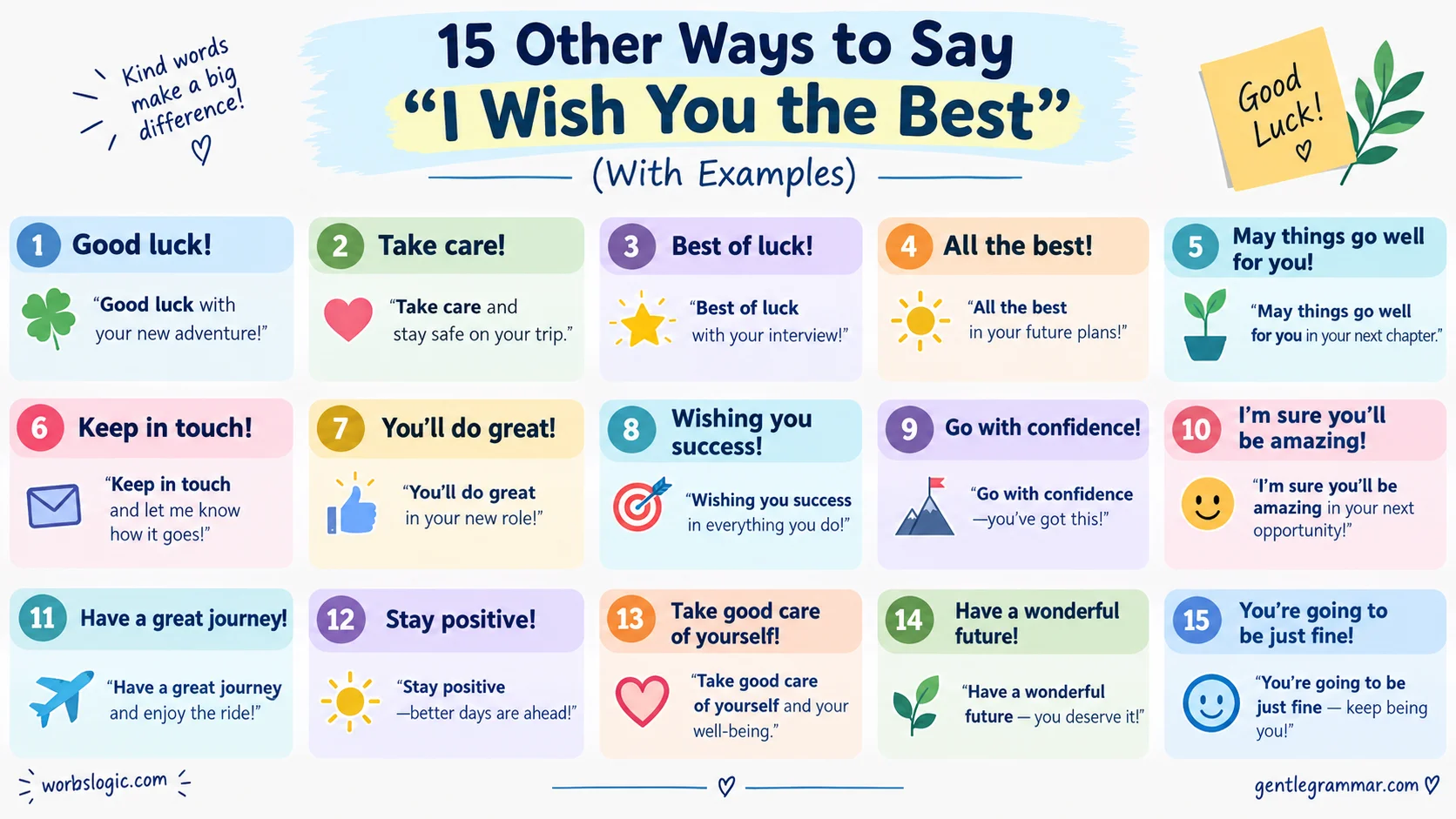
In 15 Other Ways to Say “I Wish You the Best” (With Examples), you can discover thoughtful expressions that make your message warmer, more sincere, and personal. In my experience, the right expression depends on the timing, reason, delivery, and relationship context. Whether you are supporting a friend, colleague, or family member, your words can show kindness, empathy, care, confidence, and encouragement.
You might write a card message, email message, or farewell message when someone starts a new journey, begins a job, faces an upcoming challenge, reaches an important milestone, or enters a new chapter. For example, “I Wish You The Best Of Luck” suits an important task, while “I wish you the best” can express support during new beginnings, personal growth, or professional growth. Choose a professional tone, casual tone, or emotional tone to match the occasion and help the recipient feel valued, supported, and ready for whatever comes next.
What Does “I Wish You the Best” Mean?
“I wish you the best” means that you hope someone experiences happiness, success, good health, or positive outcomes in the future. It expresses goodwill without requiring a specific promise or prediction. People commonly use this phrase when someone starts a new job, moves to another place, begins a relationship, faces a challenge, or reaches the end of an important chapter in life. Depending on the context, it can sound warm, encouraging, respectful, or gently final. It may also be used when saying goodbye to someone, even when the speaker and listener are no longer especially close.
Common Situations Where “I Wish You the Best” Is Used
This expression works in many everyday situations. You might use it in a text message to encourage a friend before an interview, in a personal note to support someone through a difficult period, or on social media to congratulate someone on a new beginning. In the workplace, it can be appropriate when a colleague leaves for another job, a team member starts a new role, or a professional relationship comes to an end. It can also appear in emails, farewell cards, and conversations with classmates or acquaintances. An alternative may feel more natural when you want to express a specific hope, such as career success, happiness, or a smooth transition, rather than general goodwill.
Is It Professional or Polite to Say “I Wish You the Best”?
Yes, “I wish you the best” is polite and generally suitable for professional communication. It expresses respect and goodwill without being overly personal or informal. For example, it works well in a farewell email to a departing colleague or a message to a business contact who is starting a new position. In personal relationships, the phrase can sound sincere and caring, although a more specific expression may communicate greater emotional warmth. It can also sound somewhat distant or final when used after a disagreement or breakup. The surrounding message and your relationship with the recipient help determine whether it feels encouraging, neutral, or like a gentle goodbye.
Advantages and Disadvantages of Saying “I Wish You the Best”
Advantages
The phrase is versatile, polite, and easy to understand. It fits personal and professional situations, communicates goodwill without requiring a long explanation, and avoids making promises about what will happen. Its neutral wording is especially useful when you want to remain respectful without becoming too emotional or familiar.
Disadvantages
Because the expression is broad, it may feel less personal or specific when someone needs direct encouragement or emotional support. It does not explain what kind of success or happiness you hope they experience. In a close relationship, it might sound distant if the conversation calls for more affection. In a formal business message, a more specific wish for future success may also feel more purposeful.
Synonyms for “I Wish You the Best”
- Wishing You All the Best
- Best of Luck
- I Hope Everything Goes Well
- Wishing You Every Success
- I Hope You Achieve Your Goals
- May All Your Dreams Come True
- I Hope Life Treats You Well
- Wishing You Happiness and Success
- Good Luck With Everything
- I’m Rooting for You
- I Hope the Future Brings You Great Things
- Take Care and All the Best
- Wishing You a Bright Future
- I Hope Things Work Out for You
- May Good Things Come Your Way
1. Wishing You All the Best
Meaning
“Wishing you all the best” expresses a sincere hope that someone experiences happiness, success, and positive things in the future. It is very close in meaning to the original phrase and works in both personal and professional situations.
Definition
A polite expression used to communicate good wishes for someone’s future.
Detailed Explanation
This expression sounds slightly more like a written message than everyday speech, although it is natural in both. It is especially useful when someone is leaving a job, moving away, graduating, or beginning a new chapter. The word “all” gives the message a broad, generous feeling without naming a particular goal. It can be warm without becoming overly emotional.
Scenario Examples
Scenario 1: A colleague is leaving the company.
Example: “It has been great working with you. Wishing you all the best in your next role!”
Scenario 2: A friend is moving abroad.
Example: “I’ll miss having you nearby. Wishing you all the best in your new home.”
Scenario 3: A classmate is graduating.
Example: “Congratulations on your graduation! Wishing you all the best in whatever comes next.”
Best Use
Use this expression in farewell messages, emails, greeting cards, graduation notes, and personal conversations. It is particularly suitable when you want to express goodwill without assuming too much about the other person’s plans.
Tone
Tone: Warm, polite, encouraging
Its familiar wording makes it appropriate for both friendly relationships and respectful professional exchanges.
2. Best of Luck
Meaning
“Best of luck” expresses a hope that someone succeeds in a particular situation. Unlike a general wish for someone’s future, this phrase often focuses on an upcoming challenge, decision, or opportunity.
Definition
A common expression used to wish someone good fortune or success.
Detailed Explanation
This alternative is especially natural before an exam, interview, competition, presentation, or important meeting. It is shorter and more direct than the original phrase. Although it can express genuine support, it focuses more on the outcome of a particular event than on someone’s overall happiness. It is not a promise that things will go well; it simply communicates encouragement.
Scenario Examples
Scenario 1: A friend has a job interview.
Example: “Your interview is tomorrow, right? Best of luck! I hope it goes really well.”
Scenario 2: A student is preparing for an exam.
Example: “You’ve studied hard for this test. Best of luck tomorrow!”
Scenario 3: A colleague is giving a presentation.
Example: “Best of luck with the client presentation this afternoon.”
Best Use
Use it before exams, interviews, competitions, performances, and important appointments. For a long-term farewell, a broader expression may be more appropriate.
Tone
Tone: Friendly, encouraging, casual to neutral
The short wording feels natural in conversation and text messages, while remaining acceptable in many workplace situations.
3. I Hope Everything Goes Well
Meaning
“I hope everything goes well” communicates the hope that a situation develops positively and without unnecessary problems. It is useful when someone is facing an uncertain event or important transition.
Definition
An expression of hope for a smooth and positive outcome.
Detailed Explanation
This phrase is more situation-focused than the original expression. It suggests that you care about how a particular event unfolds, rather than simply wishing someone a generally happy future. It can be especially comforting when someone is nervous about a move, appointment, difficult conversation, or new responsibility. The word “hope” makes the message supportive without implying that you know what will happen.
Scenario Examples
Scenario 1: A friend is moving into a new apartment.
Example: “I hope everything goes well with the move. Let me know if you need a hand.”
Scenario 2: A colleague is meeting an important client.
Example: “I hope everything goes well at the meeting this afternoon.”
Scenario 3: Someone is preparing for a difficult conversation.
Example: “I know this conversation matters to you. I hope everything goes well.”
Best Use
Choose this wording for personal messages, workplace conversations, important appointments, and uncertain situations. It is especially useful when the person may appreciate reassurance.
Tone
Tone: Reassuring, thoughtful, polite
It shows concern for the situation without sounding overly emotional or making unrealistic promises.
4. Wishing You Every Success
Meaning
“Wishing you every success” expresses a strong, positive hope for someone’s achievements and future progress. It is particularly appropriate when the person is pursuing a career opportunity, launching a project, or taking on a new professional responsibility.
Definition
A polite expression wishing someone success in their future efforts.
Detailed Explanation
This phrase places more emphasis on achievement than the broader original expression. It sounds polished and slightly formal, making it useful in professional correspondence. It can also work in personal messages when someone is pursuing an important ambition. However, it is less suitable when the main concern is emotional comfort rather than accomplishment.
Scenario Examples
Scenario 1: A coworker is starting a new position.
Example: “Congratulations on your promotion. Wishing you every success in your new role.”
Scenario 2: A business contact is opening a company.
Example: “Thank you for sharing your plans. Wishing you every success with the new venture.”
Scenario 3: A friend is beginning a training program.
Example: “You’ve worked hard to get here. Wishing you every success throughout the program.”
Best Use
Use it in professional emails, farewell notes, business messages, and congratulations cards. It is especially effective when success or achievement is the main focus.
Tone
Tone: Professional, respectful, optimistic
Its formal wording communicates genuine goodwill while maintaining an appropriate degree of distance.
5. I Hope You Achieve Your Goals
Meaning
“I hope you achieve your goals” expresses support for someone’s specific ambitions. It communicates a desire to see the person make progress toward something they genuinely want to accomplish.
Definition
A supportive expression wishing someone success in reaching their objectives.
Detailed Explanation
This alternative is more personal and goal-oriented than a general wish for the best. It works well when you know what the person is trying to accomplish, whether that involves education, career development, fitness, or a creative project. It also acknowledges that reaching a goal may require effort and persistence. Because it focuses on achievement, it may feel less suitable when the situation calls mainly for comfort, affection, or sympathy.
Scenario Examples
Scenario 1: A friend wants to complete a degree.
Example: “Keep going with your studies. I hope you achieve your goals and feel proud of what you accomplish.”
Scenario 2: A colleague is working toward a promotion.
Example: “You’ve put a lot into your development. I hope you achieve your goals this year.”
Scenario 3: Someone is pursuing a creative project.
Example: “I’m excited to see where your photography takes you. I hope you achieve your goals.”
Best Use
Choose this phrase when you know someone’s plans, ambitions, or personal milestones. It works in supportive messages, conversations with friends, mentoring, and professional development discussions.
Tone
Tone: Supportive, motivating, personal
The direct reference to someone’s goals makes the message feel thoughtful and connected to their individual ambitions.
6. May All Your Dreams Come True
Meaning
“May all your dreams come true” expresses an affectionate hope that someone’s deepest wishes and ambitions become reality. It often carries a more emotional or celebratory feeling than the original phrase.
Definition
A heartfelt expression wishing someone the fulfillment of their hopes and dreams.
Detailed Explanation
The word “may” gives this expression a blessing-like quality, while “dreams” suggests personal hopes rather than only practical goals. It is particularly fitting for birthdays, weddings, graduations, and other meaningful milestones. The phrase can sound sentimental in ordinary professional communication, so it is not always the best choice for workplace emails. It expresses a wish, not a guarantee that every dream will come true.
Scenario Examples
Scenario 1: A friend is celebrating a birthday.
Example: “Happy birthday! May all your dreams come true in the year ahead.”
Scenario 2: A loved one is getting married.
Example: “Wishing you both a lifetime of love and joy. May all your dreams come true together.”
Scenario 3: A young artist is pursuing a lifelong ambition.
Example: “Keep following your passion. May all your dreams come true.”
Best Use
Use it in birthday cards, wedding wishes, milestone celebrations, and heartfelt personal messages. Avoid it in routine business correspondence unless the relationship is unusually warm.
Tone
Tone: Affectionate, sentimental, hopeful
Its emotional wording makes it more expressive than a neutral or professional farewell.
7. I Hope Life Treats You Well
Meaning
“I hope life treats you well” expresses a wish for someone to experience happiness, kindness, peace, and positive circumstances over time. It can be particularly meaningful when saying goodbye.
Definition
A warm expression wishing someone a good and fulfilling life.
Detailed Explanation
This phrase focuses on a person’s overall experience of life rather than a single achievement. It can communicate affection, goodwill, and a quiet sense of letting go. Depending on the relationship and context, it may sound reflective or slightly bittersweet. It is therefore more personal than a standard professional farewell and may not fit a routine workplace email.
Scenario Examples
Scenario 1: Two friends are moving to different countries.
Example: “We may not see each other often, but I hope life treats you well wherever you go.”
Scenario 2: Someone is beginning a new chapter after a difficult period.
Example: “You deserve some peace after everything you’ve been through. I hope life treats you well.”
Scenario 3: Two people are ending a relationship respectfully.
Example: “I’m grateful for the time we shared, and I hope life treats you well.”
Best Use
Choose this expression for personal farewells, reflective messages, and conversations about major life changes. It is most effective when you want to express goodwill beyond a specific event.
Tone
Tone: Thoughtful, gentle, reflective
Its focus on life’s broader journey gives it a deeper and sometimes bittersweet feeling.
8. Wishing You Happiness and Success
Meaning
“Wishing you happiness and success” expresses goodwill in two important areas: personal well-being and achievement. It communicates that you hope someone enjoys life while also making progress toward their ambitions.
Definition
A positive expression wishing someone both personal happiness and achievement.
Detailed Explanation
This wording is more specific than the original because it identifies two outcomes you hope the person experiences. It is suitable for professional and personal messages, particularly when someone is starting a new chapter. The mention of happiness prevents the message from focusing entirely on career or achievement. At the same time, it may feel less intimate than a more emotional expression of care.
Scenario Examples
Scenario 1: A colleague is retiring.
Example: “Thank you for all your contributions over the years. Wishing you happiness and success in this next chapter.”
Scenario 2: A friend is starting a business.
Example: “I’m excited for you and this new adventure. Wishing you happiness and success along the way.”
Scenario 3: A graduate is preparing for the future.
Example: “Congratulations on completing your degree. Wishing you happiness and success in everything ahead.”
Best Use
Use it in farewell cards, graduation messages, professional emails, and congratulations notes when both well-being and achievement matter.
Tone
Tone: Positive, respectful, encouraging
The balanced wording makes it suitable for a wide range of relationships without sounding overly casual or sentimental.
9. Good Luck With Everything
Meaning
“Good luck with everything” expresses a broad wish that things go well across several areas of someone’s life. It is often used when a person is dealing with multiple changes or preparing for a new beginning.
Definition
An informal expression wishing someone good fortune across their upcoming plans or activities.
Detailed Explanation
This alternative sounds more conversational than the original and is common in everyday speech. The word “everything” makes it broad enough for situations involving work, studies, travel, or personal changes. However, “good luck” can emphasize fortune or circumstances more than personal happiness. It may also sound slightly casual in a formal letter unless the surrounding message is appropriately professional.
Scenario Examples
Scenario 1: A friend is leaving for university.
Example: “I hope you enjoy campus life and meet some great people. Good luck with everything!”
Scenario 2: A colleague is leaving to pursue a new opportunity.
Example: “It’s been a pleasure working together. Good luck with everything in your next chapter.”
Scenario 3: A friend is preparing for several important changes.
Example: “You have a lot happening this month. Good luck with everything, and keep me updated!”
Best Use
Use it in text messages, friendly farewells, casual conversations, and informal workplace exchanges. For formal correspondence, a more polished expression may be preferable.
Tone
Tone: Casual, friendly, upbeat
Its relaxed wording is easy to use in everyday communication and conveys encouragement without requiring a lengthy message.
10. I’m Rooting for You
Meaning
“I’m rooting for you” means that you support someone and genuinely hope they succeed. It conveys personal encouragement and suggests that you are emotionally invested in seeing them do well.
Definition
An informal expression showing support and encouragement for someone’s success.
Detailed Explanation
Unlike a general wish for the best, this phrase emphasizes your active emotional support. It is especially useful when someone is working toward a challenging goal or feeling nervous about an important event. The wording is more personal and enthusiastic than a neutral farewell. Because it is informal and supportive, it may be less appropriate for formal business letters or relationships where emotional familiarity would feel unusual.
Scenario Examples
Scenario 1: A friend is nervous about an audition.
Example: “You’ve prepared so much for this. I’m rooting for you!”
Scenario 2: A sibling is training for a competition.
Example: “I know how hard you’ve been working. I’m rooting for you all the way.”
Scenario 3: A colleague is applying for an internal promotion.
Example: “You’d bring a lot to that role. I’m rooting for you!”
Best Use
Choose this phrase for close friends, family members, supportive text messages, and encouraging conversations. It is particularly effective when someone needs reassurance and motivation.
Tone
Tone: Warm, enthusiastic, supportive
The expression feels personal because it communicates that you are on the person’s side, not simply offering a polite farewell.
11. I Hope the Future Brings You Great Things
Meaning
“I hope the future brings you great things” expresses optimism about the positive experiences and opportunities someone may encounter ahead. It is a broad, forward-looking message of goodwill.
Definition
An expression of hope that someone experiences good opportunities and positive developments in the future.
Detailed Explanation
This phrase focuses on what may lie ahead rather than on the person’s current situation. It is useful when someone is moving into an unfamiliar stage of life and you want to acknowledge the possibilities before them. The wording feels slightly more reflective than a simple wish for success. It does not specify which opportunities the person should pursue, allowing the recipient to define what “great things” means to them.
Scenario Examples
Scenario 1: A colleague is leaving for another company.
Example: “Thank you for being such a supportive teammate. I hope the future brings you great things.”
Scenario 2: A friend is finishing university.
Example: “You have so many possibilities ahead. I hope the future brings you great things.”
Scenario 3: Someone is beginning again after a major change.
Example: “This is a fresh start, and I hope the future brings you great things.”
Best Use
Use it in farewell notes, graduation messages, supportive personal communication, and professional transitions. It is most appropriate when you want to focus on future possibilities rather than a single goal.
Tone
Tone: Optimistic, thoughtful, encouraging
Its forward-looking language conveys hope without placing pressure on the recipient to achieve one particular outcome.
12. Take Care and All the Best
Meaning
“Take care and all the best” combines a friendly expression of concern with a general wish for someone’s future. It communicates both personal consideration and goodwill.
Definition
A farewell expression that conveys care for someone’s well-being and positive wishes for the future.
Detailed Explanation
The words “take care” add a personal touch that the original phrase does not always carry. This makes the expression especially useful when ending a conversation or saying goodbye to someone you may not see regularly. It is warm without being overly intimate and can fit both personal and professional exchanges. However, it usually sounds more like a closing message than encouragement before a specific challenge.
Scenario Examples
Scenario 1: Ending a friendly conversation.
Example: “I have to head out now, but it was lovely catching up. Take care and all the best!”
Scenario 2: Saying goodbye to a former colleague.
Example: “Thanks for all your help over the years. Take care and all the best in your new position.”
Scenario 3: Writing to a friend who is moving away.
Example: “I’ll miss our weekend chats. Take care and all the best with the move.”
Best Use
Use it as a farewell, email sign-off, text-message closing, or friendly goodbye. It is especially natural when you want the message to sound considerate rather than purely formal.
Tone
Tone: Warm, polite, caring
The combination of concern and goodwill makes this expression a natural choice when bringing a conversation or relationship chapter to a close.
13. Wishing You a Bright Future
Meaning
“Wishing you a bright future” expresses hope that someone will enjoy positive opportunities, progress, and fulfillment in the years ahead. It often emphasizes potential and new beginnings.
Definition
A positive expression wishing someone a promising and successful future.
Detailed Explanation
This alternative is particularly suitable for people entering a new stage of education, work, or personal development. The word “bright” suggests promise and possibility, giving the phrase an optimistic quality. It often sounds more ceremonial than everyday conversation, so it is especially effective in cards, speeches, and formal congratulations. Unlike a general wish for happiness, it emphasizes what lies ahead and the opportunities someone may discover.
Scenario Examples
Scenario 1: A student is graduating from school.
Example: “Congratulations on your graduation. Wishing you a bright future filled with meaningful opportunities.”
Scenario 2: A new employee is joining a company.
Example: “Welcome to the team! Wishing you a bright future with us.”
Scenario 3: A young professional is beginning a career.
Example: “You have a promising path ahead. Wishing you a bright future in your chosen field.”
Best Use
Choose this expression for graduation cards, professional congratulations, farewell speeches, and messages to people starting a new chapter. It is less natural as a quick response to an everyday problem.
Tone
Tone: Optimistic, respectful, encouraging
Its emphasis on potential makes it especially appropriate for milestones associated with growth and opportunity.
14. I Hope Things Work Out for You
Meaning
“I hope things work out for you” expresses a desire for a situation to reach a positive or satisfactory outcome. It is often used when someone faces uncertainty or is waiting to see how something develops.
Definition
An expression of hope that a difficult or uncertain situation ends positively.
Detailed Explanation
This phrase is more specific to circumstances than the original expression. It is especially natural when someone is dealing with a job application, a personal decision, a relationship issue, or another situation whose outcome is not yet clear. It can sound compassionate because it acknowledges that things may not be easy. However, depending on the situation, it may also feel somewhat detached if the person needs direct emotional support rather than a general statement of hope.
Scenario Examples
Scenario 1: A friend is waiting to hear about a job.
Example: “I know you really want this position. I hope things work out for you.”
Scenario 2: A classmate is appealing a decision.
Example: “That sounds stressful. I hope things work out for you and the decision is fair.”
Scenario 3: A friend is trying to resolve a disagreement.
Example: “I hope you two can talk things through. I really hope things work out for you.”
Best Use
Use it in supportive conversations, text messages, and situations involving uncertainty or personal difficulties. For formal professional communication, a more specific and polished expression may be better.
Tone
Tone: Sympathetic, conversational, cautiously hopeful
Its wording recognizes uncertainty rather than assuming success is guaranteed.
15. May Good Things Come Your Way
Meaning
“May good things come your way” expresses a heartfelt hope that someone encounters happiness, positive experiences, and unexpected opportunities. It has a gentle, almost blessing-like quality.
Definition
A warm expression wishing someone positive experiences and good fortune in life.
Detailed Explanation
This phrase is broader and more expressive than a simple wish for success. It does not focus on one achievement; instead, it suggests that the person deserves good experiences in different parts of life. It works well in thoughtful messages, celebrations, and personal farewells. Because its wording is somewhat poetic, it may feel less natural in a routine workplace email or a brief practical exchange.
Scenario Examples
Scenario 1: A friend is celebrating a personal milestone.
Example: “You’ve worked so hard for this moment. May good things come your way!”
Scenario 2: Someone has helped you through a difficult time.
Example: “Thank you for always being there for me. May good things come your way, too.”
Scenario 3: A friend is beginning a new chapter.
Example: “I’m excited to see what comes next for you. May good things come your way wherever life takes you.”
Best Use
Choose this expression for heartfelt messages, celebration cards, personal notes, and meaningful farewells. It works best when you want to sound sincere and slightly poetic.
Tone
Tone: Heartfelt, gentle, optimistic
Its blessing-like wording communicates goodwill in a way that feels more expressive and personal than a neutral closing phrase.
FAQs:
What is another way to say “I Wish You the Best”?
“Wishing you all the best” is one of the closest alternatives. Other options include “Wishing you every success,” “I hope everything goes well,” and “Wishing you happiness and success.” Choose the expression that best matches your relationship with the person and the situation.
What does “I Wish You the Best” mean?
It means you sincerely hope someone experiences happiness, success, or positive outcomes in the future. The phrase can be used when congratulating someone, offering encouragement, or saying goodbye. Its exact emotional meaning depends on the context.
Is “I Wish You the Best” professional?
Yes, it is polite and appropriate for most professional situations. You can use it in farewell emails, messages to departing colleagues, and communication with business contacts. For a more formal tone, “Wishing you every success” is another suitable choice.
What is a more heartfelt way to say “I Wish You the Best”?
For a more heartfelt message, try “May all your dreams come true,” “I hope life treats you well,” or “May good things come your way.” These expressions can communicate affection, encouragement, or deeper emotional warmth, especially when writing to friends and loved ones.
Which alternative works best in formal communication?
“Wishing you every success” is an excellent option for formal or professional communication, particularly when someone is starting a new role, launching a project, or moving into a new career opportunity. “Wishing you all the best” is also appropriate when you want a polite, versatile expression that does not focus exclusively on professional achievement.
Conclusion:
Choosing the right alternative to “I wish you the best” helps you communicate goodwill in a way that suits the moment. A simple phrase such as “Best of luck” works well before an important event, while “I’m rooting for you” offers more personal encouragement. For professional farewells, “Wishing you every success” sounds polished and respectful. Meanwhile, expressions such as “May all your dreams come true” can add warmth to meaningful personal messages.
The important thing is to consider your relationship with the recipient, the situation, and the feeling you want to express. Similar phrases do not always carry the same emotional weight, and a small change in wording can make your message feel more sincere. When you want to say “I wish you the best,” choose words that reflect what you genuinely hope for the other person.
