
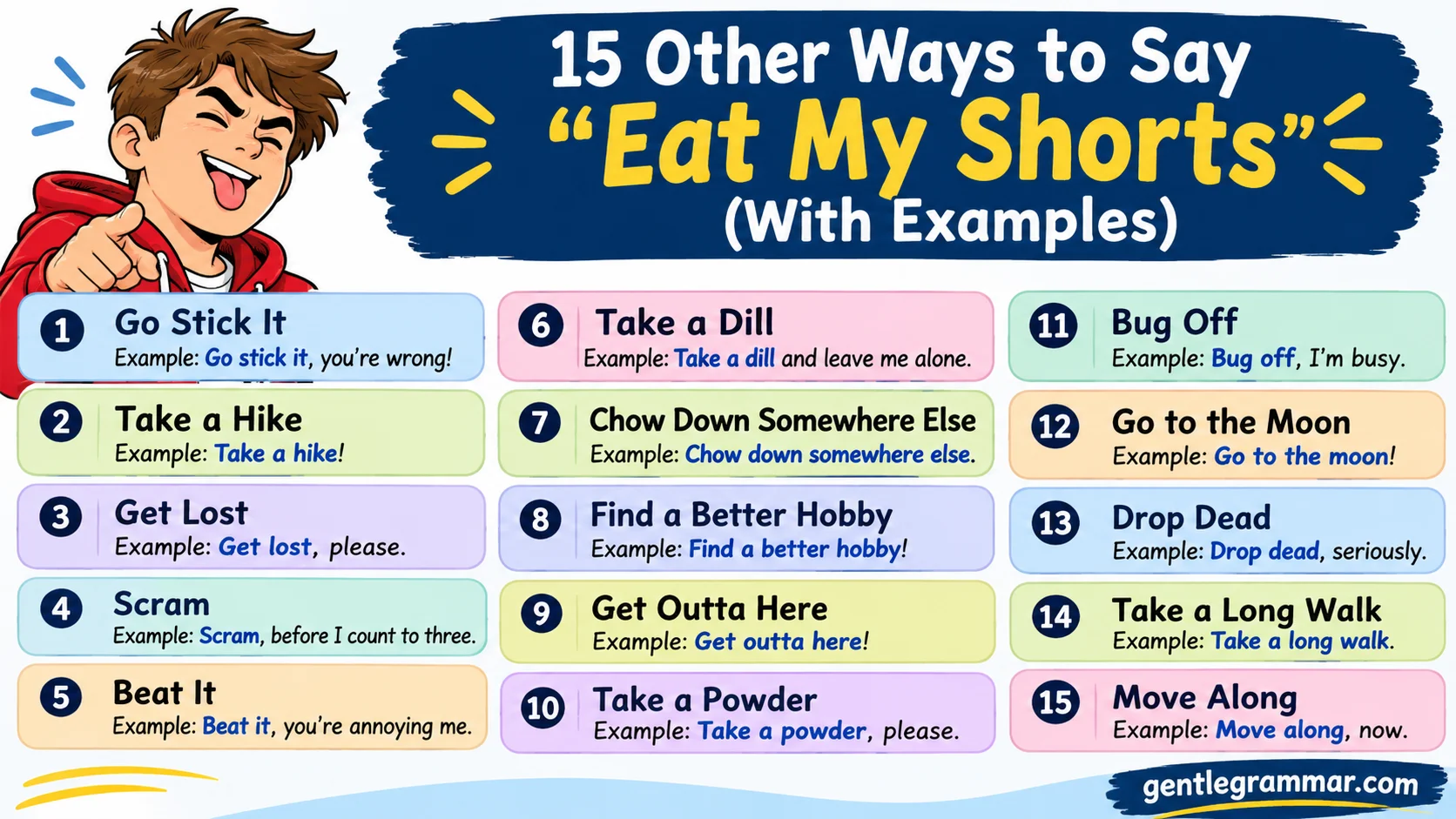
This guide to 15 Other Ways to Say “Eat My Shorts” (With Examples) helps you choose a phrase that fits your tone, audience, and situation today.
Eat My Shorts is a famous catchphrase associated with Bart Simpson from The Simpsons, an animated sitcom that helped make it a lasting part of pop culture. Popularized through the television show, this iconic phrase gained widespread fame across generations. Its catchphrase origin has roots in earlier slang, and the character reportedly adopted it as an ad-lib during the show’s reading. In American English, it is an informal expression with a non-literal meaning.
Depending on the context, it can sound sarcastic, cheeky, lighthearted, aggressive, or insulting. It generally communicates defiance, rebellion, and rebellious refusal. People may use it as a taunt, an insult, a humorous insult, or a disrespectful remark to rebuff someone, rudely dismiss them, or reject authority. Although it can be potentially offensive, its blending humor and playful expression make it a recognizable pop culture reference.
What Does “Eat My Shorts” Mean?
“Eat my shorts” is a sarcastic and insulting expression used to tell someone that you don’t care about their opinion, criticism, or demands. It generally communicates defiance, disrespect, frustration, or playful rebellion. The phrase became widely recognizable through the character Bart Simpson from The Simpsons, who uses it as a cheeky response when someone annoys or challenges him. In everyday English, it is usually understood as a humorous way of saying, “I don’t care what you think” or “Leave me alone.” Although it can make friends laugh, it may also offend someone if delivered seriously. Its meaning depends heavily on the speaker’s attitude, relationship with the listener, and situation.
Common Situations Where “Eat My Shorts” Is Used
People generally use this expression in informal conversations when they want to respond to criticism, teasing, or an irritating comment. Friends might say it jokingly during an argument, while someone might use it in a text message to show playful annoyance. It can also appear in memes, social media comments, comedy, and fictional dialogue. The phrase is particularly associated with youthful rebellion and sarcastic humor.
However, it isn’t a natural choice for most workplace conversations, customer service interactions, school assignments, or formal writing. Someone who wants to express disagreement without sounding rude may prefer alternatives such as “I respectfully disagree” or “That’s your opinion.” Choosing a different expression allows people to maintain their personality without creating unnecessary conflict.
Is It Professional or Polite to Say “Eat My Shorts”?
“Eat my shorts” is informal, sarcastic, and potentially insulting. It isn’t considered professional or particularly polite in ordinary workplace communication. Among close friends, it can sound funny and playful, especially when everyone understands the joke. However, saying it to a manager, customer, teacher, or unfamiliar person may come across as disrespectful. The phrase communicates a strong sense of defiance rather than cooperation. If you want to challenge someone’s opinion professionally, expressions like “I see things differently” or “Let’s agree to disagree” are more appropriate. The right choice depends on whether your goal is to entertain, tease, reject criticism, or communicate a serious disagreement.
Advantages and Disadvantages of Saying “Eat My Shorts”
Advantages
The expression has a distinctive humorous personality. It’s short, memorable, and effective when someone wants to respond to teasing with a little attitude. Among friends who enjoy sarcastic humor, it can make an uncomfortable exchange feel less serious. It also communicates rebellion without requiring a lengthy explanation.
Disadvantages
The biggest disadvantage is that it can sound rude, childish, or disrespectful outside a playful setting. Someone unfamiliar with the expression may interpret it as a genuine insult. It also doesn’t explain why you disagree or what bothers you. In professional and sensitive conversations, clearer wording usually communicates your feelings more effectively.
Synonyms for “Eat My Shorts”
- Bite Me
- Get Lost
- Whatever!
- Make Me
- Talk to the Hand
- Not a Chance
- Dream On
- Kiss Off
- Back Off
- Save It
- Take a Hike
- Who Cares?
- Get Over Yourself
- I Couldn’t Care Less
- Agree to Disagree
1. Bite Me
Meaning
“Bite me” is a sarcastic expression used to reject someone’s criticism, teasing, or unwanted advice. Like “Eat my shorts,” it communicates defiance and annoyance.
Definition
A casual, somewhat rude phrase telling someone that you reject their attitude or comments.
Detailed Explanation
“Bite me” is one of the closest alternatives in terms of attitude and emotional strength. It often suggests that the speaker doesn’t care about another person’s criticism. The expression can sound funny between close friends, but it may feel confrontational during a serious disagreement. Unlike the original phrase, it doesn’t have the same distinctive cartoon association.
Scenario Examples
Scenario 1: A friend makes fun of your new haircut.
Example: “I actually like it, so bite me!”
Scenario 2: Someone keeps criticizing your favorite movie.
Example: “Bite me! I still think it’s a great film.”
Scenario 3: Your sibling teases you about losing a game.
Example: “Bite me. I’ll beat you next time.”
Best Use
Use it in casual conversations, joking arguments, and friendly exchanges where people understand your humor. Avoid using it in professional emails or serious discussions.
Tone
Tone: Sarcastic, rebellious, confrontational, playful.
It has a sharp attitude, although close friends may interpret it as harmless teasing.
2. Get Lost
Meaning
“Get lost” tells someone to go away or stop bothering you. It shares the dismissive attitude of “Eat my shorts,” but focuses more on wanting distance.
Definition
An informal and direct expression used to tell someone to leave or stop disturbing you.
Detailed Explanation
This phrase is more straightforward than the original expression. It communicates irritation rather than playful rebellion. Someone might use it when another person refuses to respect their personal space or keeps interrupting them. Depending on delivery, it can sound mildly annoyed or openly hostile.
Scenario Examples
Scenario 1: Someone keeps interrupting your conversation.
Example: “Get lost! We’re trying to talk.”
Scenario 2: A friend jokingly follows you around.
Example: “Oh, get lost! You’re being annoying.”
Scenario 3: Someone sends unwanted messages repeatedly.
Example: “Please get lost and stop messaging me.”
Best Use
It works best in informal spoken English, fictional dialogue, and situations where you need someone to leave you alone. Use a softer expression when speaking professionally.
Tone
Tone: Direct, dismissive, irritated.
Its meaning is stronger when delivered angrily rather than playfully.
3. Whatever!
Meaning
“Whatever!” expresses indifference, disagreement, or frustration. It suggests that the speaker doesn’t want to continue discussing something.
Definition
An informal response showing that you don’t consider an argument or opinion worth your attention.
Detailed Explanation
Unlike “Eat my shorts,” this expression doesn’t directly insult the other person. Instead, it communicates that you’re no longer interested in their comments. It can sound relaxed, sarcastic, or annoyed depending on your voice. It’s particularly useful when you want to dismiss a minor disagreement without creating a bigger argument.
Scenario Examples
Scenario 1: Your friend insists that their favorite team is better.
Example: “Whatever! We’ll see who wins next weekend.”
Scenario 2: Someone criticizes your clothing choice.
Example: “Whatever! I like what I’m wearing.”
Scenario 3: A sibling argues about a small household disagreement.
Example: “Whatever, I’m not arguing about this anymore.”
Best Use
Use it in casual conversations, text messages, and friendly disagreements. Avoid it when someone expects a thoughtful response or sincere explanation.
Tone
Tone: Casual, dismissive, sarcastic.
It can sound indifferent rather than openly aggressive.
4. Make Me
Meaning
“Make me” is a challenging response used when someone tells you to do something you don’t want to do. It communicates resistance and confidence.
Definition
An informal expression that challenges another person to force you to follow their instructions.
Detailed Explanation
This phrase emphasizes defiance and refusal. Rather than simply dismissing someone’s opinion, it challenges their authority or willingness to make you obey. It can be humorous during playful arguments, but it may sound aggressive when used seriously. Unlike the original expression, it specifically responds to a demand or command.
Scenario Examples
Scenario 1: Your brother tells you to stop using the television.
Example: “Make me! I’m watching my favorite show.”
Scenario 2: A friend challenges you to leave a game.
Example: “Make me! I’m not finished playing.”
Scenario 3: Someone demands that you change your opinion.
Example: “Make me. I have my own reasons for thinking this way.”
Best Use
Use it during playful arguments, friendly teasing, and fictional dialogue involving stubborn characters. It isn’t suitable for professional disagreements.
Tone
Tone: Challenging, confident, rebellious.
The expression can sound funny or confrontational depending on the relationship.
5. Talk to the Hand
Meaning
“Talk to the hand” is a dismissive expression suggesting that you aren’t interested in listening to someone.
Definition
A humorous, informal phrase used to reject someone’s comments or indicate that you don’t want to hear more.
Detailed Explanation
This expression communicates disinterest and dismissal through exaggerated body language. It is traditionally associated with raising an open palm toward someone as if blocking their words. Compared with “Eat my shorts,” it focuses less on rebellion and more on refusing to listen. It can sound theatrical, playful, or deliberately rude.
Scenario Examples
Scenario 1: Your friend keeps explaining an obvious mistake.
Example: “Talk to the hand! I already know what happened.”
Scenario 2: Someone won’t stop teasing you.
Example: “Talk to the hand because I’m done listening!”
Scenario 3: Your sibling keeps complaining about your music.
Example: “Talk to the hand! I’m enjoying this song.”
Best Use
It works best in playful conversations, comedy, casual arguments, and humorous social media posts. It is less natural in formal writing.
Tone
Tone: Sarcastic, humorous, dismissive.
Its exaggerated style makes it more theatrical than most everyday expressions.
6. Not a Chance
Meaning
“Not a chance” expresses a firm refusal or rejection. It communicates that something is not going to happen.
Definition
A direct expression used to show that you completely reject a suggestion, request, or possibility.
Detailed Explanation
This alternative shares the original phrase’s sense of resistance, but it is less insulting. It focuses on refusing something rather than dismissing another person’s opinion. You can use it when someone makes an unreasonable request or expects you to agree with something you dislike. Its strength comes from the certainty of the refusal, not from sarcasm.
Scenario Examples
Scenario 1: Your friend asks you to lend them your new laptop.
Example: “Not a chance! I just bought it yesterday.”
Scenario 2: Someone suggests cancelling your weekend plans.
Example: “Not a chance. I’ve been looking forward to this trip.”
Scenario 3: A classmate asks you to share your completed assignment.
Example: “Not a chance. You need to do your own work.”
Best Use
Use it in everyday conversations, friendly disagreements, and situations where you need to communicate a clear refusal. It can also work in professional conversations when delivered politely.
Tone
Tone: Firm, confident, direct.
It sounds stronger than a simple “no” but is generally less insulting than the original phrase.
7. Dream On
Meaning
“Dream on” is a sarcastic expression used when you think someone’s expectation or suggestion is unrealistic.
Definition
An informal phrase telling someone that what they hope for is unlikely to happen.
Detailed Explanation
This expression communicates disbelief and playful skepticism. It is similar to “Eat my shorts” when used to reject someone’s unrealistic expectations. However, it specifically challenges the possibility of something happening rather than expressing general defiance. It can be amusing between friends, although it may sound discouraging in a sensitive conversation.
Scenario Examples
Scenario 1: Your friend says they’ll finish a difficult project in five minutes.
Example: “Dream on! You’ve barely started.”
Scenario 2: Someone expects to win a game without practicing.
Example: “Dream on. The competition is much tougher this year.”
Scenario 3: Your sibling thinks they can borrow your favorite jacket permanently.
Example: “Dream on! I’m not giving that away.”
Best Use
It is suitable for casual conversations, teasing, friendly challenges, and humorous responses to unrealistic ideas.
Tone
Tone: Sarcastic, skeptical, teasing.
It can be lighthearted or dismissive depending on how seriously the other person takes the comment.
8. Kiss Off
Meaning
“Kiss off” is a rude expression used to tell someone to go away or stop bothering you.
Definition
A strongly dismissive phrase expressing rejection or irritation toward another person.
Detailed Explanation
This expression carries a sharper and more hostile attitude than many alternatives. It can communicate that you are completely unwilling to deal with someone or their demands. Although it shares the rebellious feeling of “Eat my shorts,” it is generally less playful. The phrase is best understood as an insult rather than a polite refusal.
Scenario Examples
Scenario 1: Someone repeatedly interrupts your personal time.
Example: “Kiss off! I need some peace and quiet.”
Scenario 2: A fictional character responds angrily to a bully.
Example: “You can kiss off if you think I’ll listen to you.”
Scenario 3: Someone keeps pressuring you to change your decision.
Example: “Kiss off. My decision isn’t changing.”
Best Use
Use it sparingly in informal dialogue, fictional writing, and situations where a character needs to express strong anger. Avoid it in workplace and customer communication.
Tone
Tone: Hostile, rude, aggressive, dismissive.
It is one of the stronger expressions in this list.
9. Back Off
Meaning
“Back off” tells someone to stop pressuring, bothering, or interfering with you.
Definition
A direct expression asking someone to give you space or stop interfering in your affairs.
Detailed Explanation
This phrase shares the defiant nature of the original expression, but it has a more specific purpose. It establishes a boundary when someone becomes too controlling, intrusive, or persistent. It can communicate irritation without necessarily insulting the other person. In a serious situation, it may also be an important way to protect your personal space.
Scenario Examples
Scenario 1: Someone keeps asking personal questions.
Example: “Back off. I don’t want to discuss my private life.”
Scenario 2: Your friend tries to control your decisions.
Example: “I appreciate your concern, but you need to back off.”
Scenario 3: A classmate repeatedly interrupts your work.
Example: “Back off for a minute. I need to concentrate.”
Best Use
Use it when you need to establish personal boundaries in everyday conversations. It also works in direct messages and fictional dialogue.
Tone
Tone: Firm, assertive, serious.
It is less sarcastic than the original phrase and more focused on personal boundaries.
10. Save It
Meaning
“Save it” is an expression used to tell someone that you don’t want to hear their explanation, excuses, or criticism.
Definition
An informal and dismissive phrase asking someone to stop talking about something.
Detailed Explanation
This expression is useful when you believe someone is making excuses or repeating information you already understand. It shares the original phrase’s dismissive attitude, but it targets what someone is saying rather than the person themselves. It can sound impatient, especially when delivered sharply. A softer version would be “I understand, but I’d rather not discuss it.”
Scenario Examples
Scenario 1: Someone repeatedly explains why they missed an appointment.
Example: “Save it. I already know what happened.”
Scenario 2: Your friend keeps making excuses for breaking your headphones.
Example: “Save it. I just want you to be honest with me.”
Scenario 3: A person continues arguing about an old disagreement.
Example: “Save it. We’ve already talked about this.”
Best Use
It works in informal conversations when you want to end an unwanted explanation. In professional settings, consider a more respectful alternative.
Tone
Tone: Impatient, dismissive, direct.
It can sound quite harsh when someone is trying to explain something sincerely.
11. Take a Hike
Meaning
“Take a hike” is an informal expression telling someone to leave or stop bothering you.
Definition
A casual but dismissive phrase used to ask someone to go away.
Detailed Explanation
The expression communicates irritation in a slightly humorous way. It has a similar rebellious feeling to “Eat my shorts,” especially when someone uses it to reject unwanted attention. However, its main message is that the other person should leave. It can sound less aggressive than some insults, although it is still impolite in many situations.
Scenario Examples
Scenario 1: Someone keeps disturbing you while you’re reading.
Example: “Take a hike! I’m trying to finish this chapter.”
Scenario 2: A friend jokingly refuses to stop teasing you.
Example: “Oh, take a hike! You’re impossible today.”
Scenario 3: Someone tries to involve you in unnecessary drama.
Example: “Take a hike. I don’t want any part of this argument.”
Best Use
Use it in casual spoken English, comedy, friendly teasing, and informal fictional conversations.
Tone
Tone: Dismissive, humorous, irritated.
Its meaning is clear, but it can sound unfriendly when used seriously.
12. Who Cares?
Meaning
“Who cares?” expresses indifference toward something that another person considers important.
Definition
An informal question used to show that you don’t think something deserves your attention or concern.
Detailed Explanation
This expression communicates a lack of interest rather than directly challenging another person. It can have the same carefree attitude as “Eat my shorts” when someone wants to dismiss criticism or unnecessary opinions. However, it may also sound insensitive if the subject matters deeply to someone else. Its meaning depends on whether the speaker is joking or genuinely uninterested.
Scenario Examples
Scenario 1: Your friend worries about a minor fashion mistake.
Example: “Who cares? Nobody is going to notice.”
Scenario 2: Someone criticizes your choice of music.
Example: “Who cares? I listen to what I enjoy.”
Scenario 3: A classmate complains about a harmless mistake.
Example: “Who cares? We can fix it before submitting the assignment.”
Best Use
Use it in friendly conversations, casual messages, and situations where you want to express indifference. Choose a more thoughtful response when someone is sharing a genuine concern.
Tone
Tone: Casual, carefree, dismissive.
It can sound reassuring among friends but insensitive in emotional conversations.
13. Get Over Yourself
Meaning
“Get over yourself” tells someone to stop acting as though they are more important than everyone else.
Definition
A blunt expression used to criticize someone’s arrogance, self-importance, or exaggerated sense of superiority.
Detailed Explanation
This phrase is more personal than “Eat my shorts.” Rather than simply rejecting criticism, it challenges someone’s attitude or behavior. It is useful when someone behaves arrogantly or expects special treatment. However, it can easily escalate an argument because it directly criticizes the other person’s personality.
Scenario Examples
Scenario 1: A friend acts superior after winning a competition.
Example: “Get over yourself. Winning one game doesn’t make you a champion.”
Scenario 2: A coworker constantly takes credit for everyone’s work.
Example: “You need to get over yourself. The whole team contributed.”
Scenario 3: Someone believes everyone should follow their preferences.
Example: “Get over yourself. Other people have opinions too.”
Best Use
Use it in informal disagreements, fictional dialogue, and situations involving arrogance or excessive self-importance. Avoid it when you want to preserve a professional relationship.
Tone
Tone: Confrontational, critical, assertive.
It is more of a personal criticism than a simple expression of defiance.
14. I Couldn’t Care Less
Meaning
“I couldn’t care less” means that you have absolutely no interest or concern about something.
Definition
An expression showing that something is completely unimportant to you.
Detailed Explanation
This phrase is a more established way to express indifference than “Eat my shorts.” It communicates that another person’s opinion or a particular situation doesn’t affect you. Unlike the original expression, it doesn’t rely on humor or childish rebellion. It can be used in ordinary conversation, although it may sound cold when the subject is emotionally important to someone else.
Scenario Examples
Scenario 1: Someone criticizes your favorite television series.
Example: “I couldn’t care less about their opinion. I enjoy watching it.”
Scenario 2: A friend worries about what strangers think.
Example: “Honestly, I couldn’t care less what they say.”
Scenario 3: Someone questions your personal style.
Example: “I couldn’t care less about following every fashion trend.”
Best Use
Use it in casual conversations, personal messages, and situations where you want to express strong indifference. For professional communication, consider saying “That isn’t a concern for me.”
Tone
Tone: Confident, indifferent, direct.
It sounds less playful than the original phrase and more emotionally detached.
15. Agree to Disagree
Meaning
“Agree to disagree” means accepting that two people have different opinions without continuing an argument.
Definition
A polite expression used to end a disagreement when neither person is likely to change their position.
Detailed Explanation
This phrase offers a much calmer alternative to “Eat my shorts.” Rather than dismissing someone, it recognizes that people can hold different opinions. It helps prevent unnecessary arguments while allowing both sides to maintain their views. Although it doesn’t communicate the original phrase’s rebellious attitude, it is useful when you want to stand your ground respectfully.
Scenario Examples
Scenario 1: You and a friend disagree about a movie ending.
Example: “I guess we’ll just have to agree to disagree.”
Scenario 2: Two coworkers have different ideas about a project.
Example: “We’ve both explained our positions, so let’s agree to disagree for now.”
Scenario 3: A family discussion becomes repetitive.
Example: “We see this differently, and that’s okay. Let’s agree to disagree.”
Best Use
Use it in respectful conversations, workplace discussions, personal disagreements, and situations where continuing the argument won’t help.
Tone
Tone: Polite, diplomatic, mature, respectful.
It replaces confrontation with mutual acceptance, making it one of the most appropriate choices for professional settings.
FAQs:
1. What is another way to say “Eat My Shorts”?
Some alternatives include “Bite me,” “Whatever!” “Make me,” “Talk to the hand,” and “Get lost.” The best choice depends on whether you want to sound playful, sarcastic, annoyed, or defiant.
2. What does “Eat My Shorts” mean?
“Eat my shorts” is a sarcastic expression used to dismiss someone’s criticism, demands, or opinions. It usually communicates rebellion, annoyance, or playful disrespect.
3. Is “Eat My Shorts” a rude expression?
Yes, it can be considered rude or disrespectful. However, close friends sometimes use it jokingly. The speaker’s tone and relationship with the listener influence how the expression is understood.
4. What is a more polite way to say “Eat My Shorts”?
You can say “I respectfully disagree,” “Let’s agree to disagree,” or “I see things differently.” These expressions communicate disagreement without insulting the other person.
5. Which alternative works best in formal communication?
“I respectfully disagree” is a good choice for professional communication. It expresses a different opinion while maintaining courtesy. “Agree to disagree” also works when both sides want to end a discussion peacefully.
Conclusion:
Choosing the right expression helps you communicate your feelings without creating unnecessary misunderstandings. Although “Eat my shorts” is a recognizable way to show sarcasm and defiance, it isn’t appropriate for every conversation. Expressions like “Bite me” and “Talk to the hand” maintain its playful attitude, while “Back off” and “Not a chance” communicate stronger boundaries.
If you prefer a more respectful approach, “Agree to disagree” offers a calmer way to handle different opinions. Remember that similar phrases can carry very different meanings depending on tone, context, and relationships. Choose your words based on what you want to communicate, whether that’s humor, confidence, frustration, or polite disagreement.
