
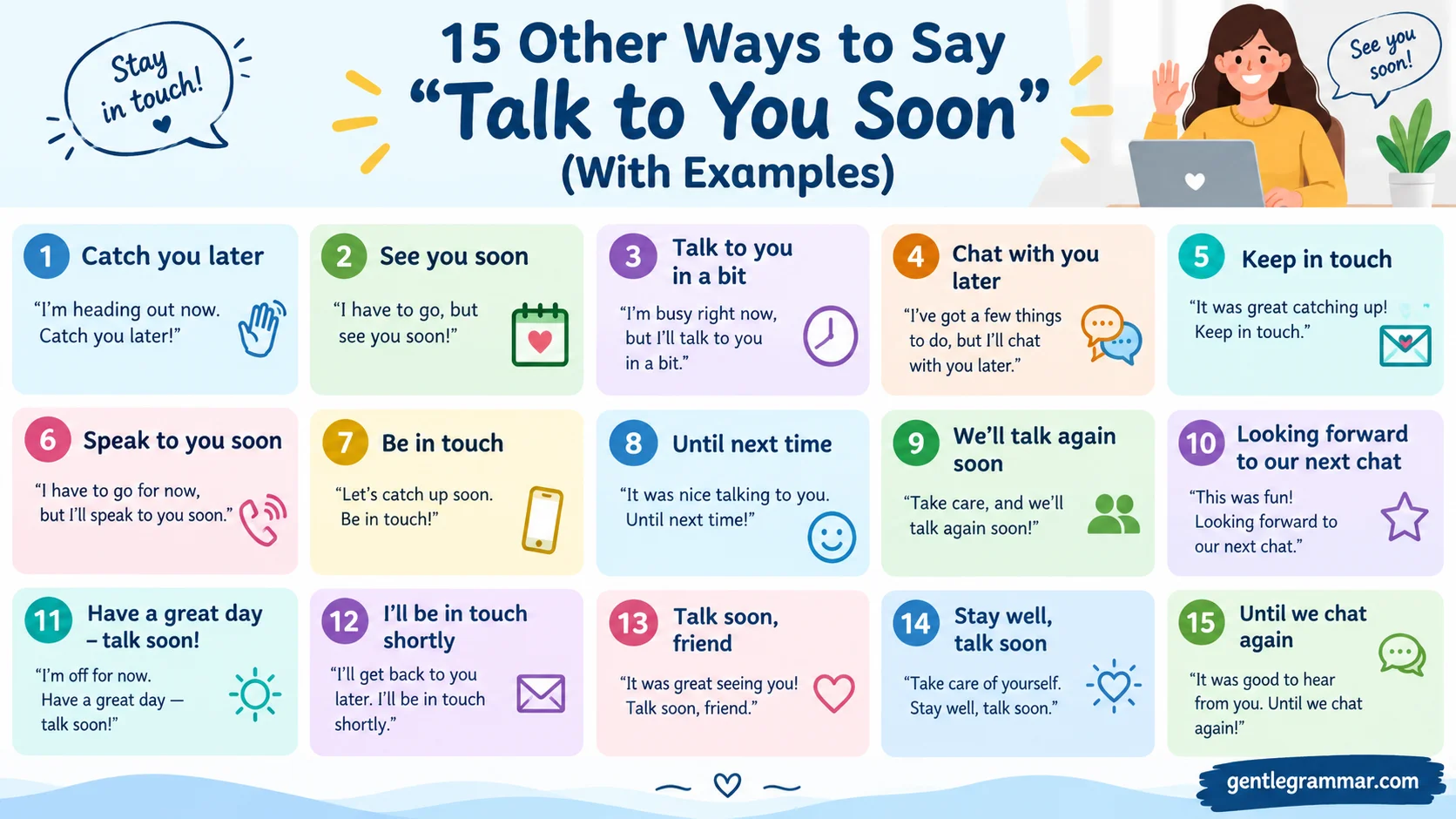
In our fast-paced world, communication happens through emails, casual texts, calls, business email, and text messages.
15 Other Ways to Say “Talk to You Soon” (With Examples) helps you find fresh ways to end conversations naturally and warmly. I’ve noticed that “Talk to You Soon” often becomes a default signal when wrapping up a conversation. Although it feels comfortable and familiar, repeating the same phrase can sound predictable or stale. Choosing alternative phrases makes everyday messages more natural, meaningful, and engaging while helping you stay connected and maintain relationships.
In my writing experience, using different phrases makes written communication, spoken communication, and personal communication more engaging. The right sign-off depends on the context, tone, timing, and setting. Professional communication, business communication, email communication, and workplace communication often need polished language, while friendly chats, casual conversations, and social interactions suit informal expressions.
What Does “Talk to You Soon” Mean?
“Talk to you soon” is a friendly expression used when ending a conversation while suggesting that you expect to communicate with the other person again in the near future. It can refer to a phone call, a face-to-face conversation, a video meeting, or an exchange of messages. The word “soon” indicates that the next conversation is expected relatively shortly, although it does not specify an exact time. In everyday English, the phrase communicates friendliness, continued interest, and an expectation of future contact without requiring a definite appointment.
Common Situations Where “Talk to You Soon” Is Used
People use this expression when ending phone calls, chatting with friends, sending text messages, or wrapping up informal conversations. It can also appear in emails and workplace messages when colleagues expect to discuss something again. For example, a coworker might write it after arranging to share project updates, while a friend might use it after catching up about their week.
The phrase is flexible enough for many everyday situations because it sounds friendly without being overly emotional. However, an alternative may work better when you want to schedule a specific conversation, express affection, promise a follow-up, or maintain a more formal tone. Choosing the right wording helps the recipient understand whether you are simply saying goodbye or genuinely planning to reconnect.
Is It Professional or Polite to Say “Talk to You Soon”?
Yes, “talk to you soon” is generally polite and professional enough for many workplace conversations. It works particularly well with colleagues, familiar clients, and people with whom you already have an established working relationship. Its tone is friendly, approachable, and slightly informal rather than strictly formal. In a casual work email, it can provide a pleasant closing without sounding stiff.
In a more formal business exchange, however, you may prefer “I look forward to speaking with you again” or “I look forward to our next conversation.” These alternatives sound more polished and communicate a professional interest in continued contact. If you need to confirm a specific follow-up, use wording such as “I’ll speak with you tomorrow” instead. The best choice depends on your relationship with the recipient and whether the next conversation is planned or simply expected.
Advantages and Disadvantages of Saying “Talk to You Soon”
Advantages
- Friendly and natural: The phrase sounds relaxed and familiar in everyday conversations.
- Encourages future contact: It suggests that the conversation is not a final goodbye.
- Versatile: You can use it in speech, texts, emails, and many workplace messages.
- Brief and easy to understand: It communicates a positive intention without requiring a lengthy explanation.
Disadvantages
- Vague timing: The word “soon” does not tell the recipient exactly when you will reconnect.
- Limited emotional detail: It may not fully express affection, excitement, or appreciation when those feelings matter.
- Can sound casual: In highly formal correspondence, a more polished closing may be appropriate.
- May imply an expectation: If you do not intend to contact the person again soon, the phrase could create an expectation you cannot meet.
Synonyms for “Talk to You Soon”
- Talk to You Later
- Speak to You Soon
- Catch Up With You Soon
- I’ll Be in Touch
- Looking Forward to Talking Again
- Until We Speak Again
- Talk Again Soon
- Speak With You Again Shortly
- I’ll Talk to You Tomorrow
- Let’s Connect Soon
- I’ll Give You a Call Soon
- See You Around
- Keep in Touch
- Looking Forward to Catching Up
- I’ll Reach Out Soon
1. Talk to You Later
Meaning
“Talk to you later” is a casual way to end a conversation while indicating that you expect to speak with someone again at a later time.
Definition
A friendly goodbye that suggests another conversation will happen later, without specifying exactly when.
Detailed Explanation
This expression is very close in meaning to “talk to you soon,” but it places more emphasis on a later conversation rather than how soon it will happen. It is common among friends, family members, and coworkers who communicate regularly. The phrase sounds relaxed and natural in everyday English. If the timing is uncertain, it is useful because it does not create a firm deadline.
Scenario Examples
Scenario 1: Ending a conversation with a friend
Example: “I’ve got to finish my homework now. Talk to you later!”
Scenario 2: Leaving an online chat
Example: “Thanks for helping me with the assignment. Talk to you later!”
Scenario 3: Wrapping up a workplace conversation
Example: “I’ll send you the updated file this afternoon. Talk to you later.”
Best Use
Use this expression in casual conversations, text messages, online chats, and familiar workplace interactions. It is especially appropriate when you expect to communicate with the person again but have not arranged a specific time.
Tone
Tone: Casual, friendly, relaxed.
It sounds natural and approachable, although it may be too informal for highly formal business correspondence.
2. Speak to You Soon
Meaning
“Speak to you soon” communicates that you expect to have another conversation with someone in the near future. It is a slightly more polished alternative to “talk to you soon.”
Definition
A friendly closing expression indicating an intention or expectation to speak again soon.
Detailed Explanation
The phrase has essentially the same meaning as the original expression. Some speakers find “speak” a little more polished than “talk,” although the difference is small in everyday English. It works well in professional emails, telephone conversations, and messages to people you know through work. The expression remains friendly without becoming overly personal or formal.
Scenario Examples
Scenario 1: Ending a work email
Example: “Thank you for your time today. Speak to you soon.”
Scenario 2: Finishing a phone call
Example: “I’ll check those details and get back to you. Speak to you soon!”
Scenario 3: Messaging a classmate
Example: “I’ll review the notes before our study session. Speak to you soon.”
Best Use
Choose this expression for friendly professional communication, telephone calls, emails, and conversations where you want a polite but natural closing.
Tone
Tone: Polite, friendly, moderately professional.
It is versatile enough for everyday use and many business situations without sounding overly formal.
3. Catch Up With You Soon
Meaning
“Catch up with you soon” suggests that you want to reconnect with someone and exchange updates about what has been happening in your lives.
Definition
An informal expression indicating a desire to have a future conversation, often to share news or discuss recent experiences.
Detailed Explanation
Unlike the original phrase, this expression suggests more than simply speaking again. It often implies a longer or more personal conversation in which both people share updates. It is particularly useful when you have not spoken to someone for a while. The wording conveys interest in the person’s life and can make a goodbye feel warmer. However, it is less suitable when the next conversation is strictly about a quick work-related question.
Scenario Examples
Scenario 1: Messaging an old friend
Example: “It’s been ages since we last talked! Let’s catch up with you soon” is less natural than “Let’s catch up soon.” A natural message would be: “I’ve missed our chats. Let’s catch up soon!”
Scenario 2: Ending a conversation with a former colleague
Example: “It was great hearing about your new role. Hope we can catch up soon.”
Scenario 3: Reconnecting with a relative
Example: “I want to hear all about your trip. Let’s catch up soon when you have time.”
Best Use
Use “catch up” with friends, relatives, former colleagues, and acquaintances when you want to exchange personal news or discuss recent events. It is particularly effective when reconnecting after a period of limited contact.
Tone
Tone: Warm, conversational, familiar.
The phrase communicates genuine interest in reconnecting rather than simply ending a conversation.
4. I’ll Be in Touch
Meaning
“I’ll be in touch” means that you intend to contact someone again. The next interaction could happen through a call, email, text, or another communication channel.
Definition
A statement of intention to contact someone in the future.
Detailed Explanation
This phrase differs from “talk to you soon” because it emphasizes taking the initiative to make contact rather than simply expecting another conversation. It is common in professional settings, particularly when one person needs to provide an update or follow up on a discussion. It can also work in personal conversations. However, it does not promise that a conversation will happen immediately, and the exact timing may remain unclear unless you specify it.
Scenario Examples
Scenario 1: Following a job interview
Example: “Thank you for coming in today. I’ll be in touch once we’ve reviewed the applications.”
Scenario 2: Updating a customer
Example: “We’re checking the delivery details now, and I’ll be in touch with an update.”
Scenario 3: Ending a conversation with a friend
Example: “I’ll check my schedule tonight and be in touch about the weekend.”
Best Use
Use this expression in professional emails, customer service, interviews, and situations requiring follow-up. In personal messages, it works well when you plan to contact the other person yourself.
Tone
Tone: Professional, reassuring, direct.
It communicates responsibility and an intention to follow up, though it can sound less affectionate than a personal goodbye.
5. Looking Forward to Talking Again
Meaning
“Looking forward to talking again” expresses positive anticipation about a future conversation. It tells the other person that you enjoyed speaking with them or value the opportunity to continue the discussion.
Definition
A friendly expression showing that you welcome another conversation with someone.
Detailed Explanation
This phrase adds a sense of enthusiasm and appreciation that the original expression does not necessarily convey. It is especially useful after a meaningful conversation, a productive meeting, or an enjoyable introduction. In professional settings, it can demonstrate continued interest without sounding overly familiar. The wording expresses anticipation rather than setting a definite time, so it is not a substitute for a scheduled follow-up.
Scenario Examples
Scenario 1: After a productive business meeting
Example: “Thank you for sharing your ideas about the project. I’m looking forward to talking again.”
Scenario 2: After meeting someone new
Example: “I really enjoyed hearing about your photography. Looking forward to talking again!”
Scenario 3: Following a helpful mentoring conversation
Example: “Your advice gave me a lot to think about. I’m looking forward to talking again at our next session.”
Best Use
Choose this expression after meaningful conversations, introductions, interviews, mentoring sessions, or productive meetings when you want to communicate genuine interest in future contact.
Tone
Tone: Warm, appreciative, optimistic.
It places more emphasis on the value of the next conversation than on the timing.
6. Until We Speak Again
Meaning
“Until we speak again” is a way of saying goodbye while acknowledging that you expect another conversation in the future.
Definition
A farewell expression that looks ahead to the next time two people communicate.
Detailed Explanation
This wording sounds more deliberate and slightly more formal than the original phrase. It can suit thoughtful messages, speeches, letters, and situations where you want a memorable farewell. Depending on the context, it may also sound sentimental or dramatic. It is less common in quick, casual exchanges between friends who speak every day. Because it does not specify a date, it leaves the timing open.
Scenario Examples
Scenario 1: Ending a thoughtful personal message
Example: “Take good care of yourself, and until we speak again, know that I’m thinking of you.”
Scenario 2: Closing a recorded message
Example: “Thank you for joining us today. Until we speak again, have a wonderful week.”
Scenario 3: Saying goodbye before an extended trip
Example: “I’ll be away for a few months, but until we speak again, stay safe and take care.”
Best Use
Use it in thoughtful letters, speeches, farewell messages, and more reflective conversations. For ordinary work chats, a simpler expression usually sounds more natural.
Tone
Tone: Reflective, warm, slightly formal.
Its deliberate wording makes the goodbye feel more meaningful than an everyday conversational closing.
7. Talk Again Soon
Meaning
“Talk again soon” communicates a desire or expectation to have another conversation in the near future.
Definition
A brief farewell expressing the intention or hope to speak with someone again soon.
Detailed Explanation
This expression is a concise variation of the original phrase. It sounds natural in both spoken English and written messages. The word “again” emphasizes the continuation of communication, while “soon” suggests that another conversation is expected in the near future. It is friendly without being particularly emotional or formal. Because it is brief, it works especially well when you want to end a conversation without adding unnecessary words.
Scenario Examples
Scenario 1: Ending a quick text exchange
Example: “Thanks for the update! Talk again soon.”
Scenario 2: Saying goodbye to a friend after lunch
Example: “I had a great time today. Let’s talk again soon!”
Scenario 3: Wrapping up a video call
Example: “I’ll send you the meeting notes later. Talk again soon.”
Best Use
Use this phrase in texts, informal emails, telephone calls, and everyday conversations. It is a practical choice when you want a short, friendly closing.
Tone
Tone: Casual, positive, straightforward.
Its simplicity makes it easy to use without suggesting strong emotion or a fixed appointment.
8. Speak With You Again Shortly
Meaning
“Speak with you again shortly” indicates that you expect to have another conversation relatively soon. It sounds more structured and professional than many casual alternatives.
Definition
A polite expression suggesting another conversation will take place in the near future.
Detailed Explanation
This wording is useful when continued communication is expected in a business or service-related context. The word “shortly” can suggest a relatively near timeframe, although it does not provide an exact deadline. Compared with the original phrase, the expression sounds more formal and less conversational. It is appropriate when you want to maintain a professional tone, but it may feel unnecessarily stiff when messaging close friends. If the timing matters, naming a specific time is clearer.
Scenario Examples
Scenario 1: Ending a customer support call
Example: “I’ll verify your account details and speak with you again shortly.”
Scenario 2: Coordinating a work discussion
Example: “I’ll confirm the revised schedule with the team, and we’ll speak again shortly.”
Scenario 3: Following up during a service appointment
Example: “The technician is reviewing the issue now. We expect to speak with you again shortly.”
Best Use
Use this phrase in customer service, business calls, formal service updates, and structured professional communication where another conversation is expected soon.
Tone
Tone: Professional, courteous, measured.
The wording sounds respectful and organized, though it is less suitable for relaxed personal conversations.
9. I’ll Talk to You Tomorrow
Meaning
“I’ll talk to you tomorrow” clearly communicates that you expect to speak with someone the following day.
Definition
A direct statement identifying tomorrow as the intended time for the next conversation.
Detailed Explanation
This phrase is more specific than “talk to you soon” because it establishes a clear timeframe. It is especially useful when you already expect to reconnect the next day or have arranged a follow-up. The wording sounds natural in both personal and professional settings. However, it implies a stronger expectation than the original phrase, so it should only be used when tomorrow is a realistic plan. If the conversation is not confirmed, a less definite expression may be more appropriate.
Scenario Examples
Scenario 1: Ending a conversation with a friend
Example: “I’ll send you the pictures tonight. I’ll talk to you tomorrow!”
Scenario 2: Arranging a work follow-up
Example: “I’ll review the proposal before the morning meeting. I’ll talk to you tomorrow.”
Scenario 3: Saying goodnight to a partner
Example: “Sleep well, sweetheart. I’ll talk to you tomorrow morning.”
Best Use
Choose this phrase when the next conversation is expected the following day, particularly in personal relationships, ongoing work discussions, and planned follow-ups.
Tone
Tone: Direct, familiar, reassuring.
Its specific timing makes it useful for setting expectations, but it should not be used if the schedule is uncertain.
10. Let’s Connect Soon
Meaning
“Let’s connect soon” suggests that two people should communicate again in the near future. Depending on the context, this may mean a phone call, a video meeting, an email exchange, or a professional discussion.
Definition
An invitation or suggestion to communicate again soon.
Detailed Explanation
Unlike the original phrase, this expression often sounds like a mutual suggestion or invitation rather than a simple goodbye. It is especially common in professional networking, business conversations, and discussions about future collaboration. It can also work in personal communication when you want to make plans to reconnect. However, it is somewhat vague and does not automatically establish a meeting. If you need a definite arrangement, propose a date or time.
Scenario Examples
Scenario 1: Meeting a professional contact
Example: “I enjoyed learning about your work in design. Let’s connect soon and explore some ideas.”
Scenario 2: Following a networking event
Example: “It was great meeting you at the conference. Let’s connect soon on LinkedIn.”
Scenario 3: Planning a discussion with a colleague
Example: “We have a few ideas worth exploring. Let’s connect soon to discuss the next steps.”
Best Use
Use this phrase in professional networking, collaborative projects, follow-up emails, and conversations about future plans. It is especially effective when you want to suggest continued communication.
Tone
Tone: Collaborative, professional, forward-looking.
The inclusive word “let’s” makes it sound like a shared intention rather than a one-sided promise.
11. I’ll Give You a Call Soon
Meaning
“I’ll give you a call soon” means that you intend to telephone someone in the near future.
Definition
A promise or statement of intention to make a phone call at a later time.
Detailed Explanation
This expression is more specific than the original phrase because it identifies a phone call as the next form of communication. It is useful when you want to continue a discussion verbally rather than through messages or email. The wording sounds natural among friends, relatives, and familiar professional contacts. However, it may create an expectation that you will initiate the next conversation. If you are not sure whether you will call, avoid making it sound like a firm promise.
Scenario Examples
Scenario 1: Ending a conversation with a parent
Example: “I’ll check how your appointment went. I’ll give you a call soon.”
Scenario 2: Following up with a friend
Example: “Things are hectic this week, but I’ll give you a call soon so we can catch up.”
Scenario 3: Contacting a client
Example: “I’ll review the details and give you a call soon to explain the available options.”
Best Use
Choose this expression when you specifically intend to telephone the other person. It works well in personal conversations and familiar business relationships.
Tone
Tone: Friendly, reassuring, direct.
It communicates a clear intention to make contact, which makes it more specific than a general farewell.
12. See You Around
Meaning
“See you around” is an informal way to say goodbye to someone you expect to encounter again, although you may not know when.
Definition
A casual farewell suggesting that two people will probably meet or encounter each other again.
Detailed Explanation
This phrase is related to “talk to you soon,” but the meaning is not exactly the same. It suggests seeing someone again rather than necessarily speaking with them by phone or message. It works particularly well with classmates, neighbors, colleagues, and acquaintances who share familiar places or social circles. It may sound too vague if you need to arrange a specific conversation. Use it when future contact is likely but no plans have been made.
Scenario Examples
Scenario 1: Leaving school after class
Example: “I’ll see you around campus next week. Take care!”
Scenario 2: Saying goodbye to a neighbor
Example: “Thanks for the help with the groceries. See you around!”
Scenario 3: Leaving a casual gathering
Example: “It was nice chatting with everyone. See you around!”
Best Use
Use this expression in casual social settings, such as school, neighborhood conversations, informal workplaces, and gatherings where you expect to encounter the person again.
Tone
Tone: Casual, easygoing, familiar.
It is a relaxed farewell rather than a promise to initiate another conversation.
13. Keep in Touch
Meaning
“Keep in touch” expresses a desire for continued communication. It suggests that people should stay connected even when they are not seeing each other regularly.
Definition
An expression encouraging people to maintain contact over time.
Detailed Explanation
This phrase focuses on maintaining an ongoing connection, rather than arranging one conversation in the near future. It is useful when a friend moves away, a colleague changes jobs, or two people expect to be busy for a while. It can feel warm and sincere, especially when the relationship matters. However, it does not specify when the next conversation will happen. If you want to arrange an immediate follow-up, a more time-specific phrase would be clearer.
Scenario Examples
Scenario 1: Saying goodbye to a departing colleague
Example: “I’ve really enjoyed working with you. Let’s keep in touch after you start your new role.”
Scenario 2: Messaging a friend who has moved away
Example: “Distance won’t change our friendship. Keep in touch, and let me know how you’re settling in!”
Scenario 3: Ending a conversation with a new acquaintance
Example: “It was lovely meeting you at the workshop. Let’s keep in touch.”
Best Use
Use this expression in farewell messages, friendships, professional networking, and situations where you want a relationship to continue over time.
Tone
Tone: Warm, encouraging, relationship-focused.
It conveys a lasting interest in communication rather than a specific plan for the next conversation.
14. Looking Forward to Catching Up
Meaning
“Looking forward to catching up” expresses enthusiasm about a future conversation in which you and another person can exchange news and discuss recent experiences.
Definition
A statement of positive anticipation about reconnecting and sharing updates with someone.
Detailed Explanation
This phrase combines the warmth of reconnecting with an explicit sense of anticipation. It is especially appropriate when you have not spoken to someone for a while or when you have arranged a conversation to discuss recent events. Unlike the original expression, it emphasizes the enjoyment of the conversation itself. It is common in personal messages and can also work with familiar colleagues. In a highly formal setting, a more businesslike expression may be preferable.
Scenario Examples
Scenario 1: Replying to an old friend
Example: “Saturday works perfectly! I’m looking forward to catching up and hearing your news.”
Scenario 2: Reconnecting with a former coworker
Example: “It’s been a while since we worked together. I’m looking forward to catching up over coffee.”
Scenario 3: Arranging a family video call
Example: “Let’s plan a call for Sunday. I’m looking forward to catching up with everyone.”
Best Use
Choose this expression for reconnecting with friends, relatives, former colleagues, and people you have not spoken to recently. It works best when the purpose is to share updates rather than discuss a single brief matter.
Tone
Tone: Warm, enthusiastic, personable.
It communicates that you value the relationship and are genuinely interested in the next conversation.
15. I’ll Reach Out Soon
Meaning
“I’ll reach out soon” means that you intend to contact someone in the near future. It is commonly used in professional and personal communication.
Definition
A statement indicating that you plan to initiate contact with another person soon.
Detailed Explanation
This expression emphasizes that you will initiate the next interaction. It is flexible because reaching out may involve sending an email, making a call, or writing a message. In professional communication, it can sound proactive and organized, especially when you need to follow up after a meeting or review some information. In personal conversations, it can be friendly and reassuring. Like the original phrase, however, it leaves the exact timing open, so a specific deadline is preferable when one matters.
Scenario Examples
Scenario 1: Following a business meeting
Example: “I’ll review the notes from today’s meeting and reach out soon with my suggestions.”
Scenario 2: Contacting a potential collaborator
Example: “Your project sounds interesting. I’ll reach out soon so we can discuss the details.”
Scenario 3: Making plans with a friend
Example: “My schedule is a little unpredictable this week, but I’ll reach out soon to arrange a time.”
Best Use
Use this phrase in professional emails, networking, business follow-ups, and personal messages when you expect to initiate the next conversation.
Tone
Tone: Proactive, polite, professional-friendly.
It communicates intention and responsibility without requiring the next interaction to be a phone call or an in-person conversation.
FAQs:
What is another way to say “Talk to You Soon”?
Some natural alternatives include “Speak to You Soon,” “Talk to You Later,” “I’ll Be in Touch,” and “Talk Again Soon.” Choose the expression based on your intention. For example, use “I’ll Be in Touch” when you plan to initiate contact, or “Talk to You Later” for a casual goodbye.
What does “Talk to You Soon” mean?
“Talk to You Soon” means that you expect to communicate with someone again in the near future. It is a friendly farewell used in conversations, phone calls, texts, and emails. Although it suggests future contact, it does not specify an exact time or guarantee that another conversation will happen.
Is “Talk to You Soon” professional?
Yes, “Talk to You Soon” is appropriate in many professional situations, particularly when communicating with familiar colleagues or clients. For formal correspondence, “I look forward to speaking with you again” may sound more polished. If a specific follow-up is planned, mentioning the date or time makes your message clearer.
What is a more polite way to say “Talk to You Soon”?
“I look forward to speaking with you again” is a polite, professional alternative. For a friendly conversation, “Looking Forward to Talking Again” communicates warmth and interest. When choosing your wording, consider your relationship with the recipient and whether you want to sound formal, casual, or particularly appreciative.
Which alternative works best in formal communication?
“I look forward to speaking with you again” is a strong choice for formal emails and professional conversations. If you need to contact someone with an update, “I’ll Be in Touch” may be more appropriate. When a specific follow-up is expected, stating the planned date or time is usually clearer than relying on a general farewell.
Conclusion:
Choosing the right words when ending a conversation helps you communicate more clearly and naturally. “Talk to You Soon” remains a useful expression because it is friendly, simple, and appropriate for many everyday situations. However, alternatives can help you express a more specific intention, whether you want to reconnect with an old friend, follow up with a client, or arrange another conversation with a colleague.
Remember that similar phrases do not always communicate exactly the same thing. “Keep in Touch” emphasizes maintaining a relationship, while “I’ll Reach Out Soon” suggests that you will initiate contact. Likewise, “I’ll Talk to You Tomorrow” gives a clearer timeframe. Before choosing an expression, consider your audience, the context, and the tone you want to convey. The best wording is the one that communicates your intentions honestly and makes the other person feel comfortable.
