
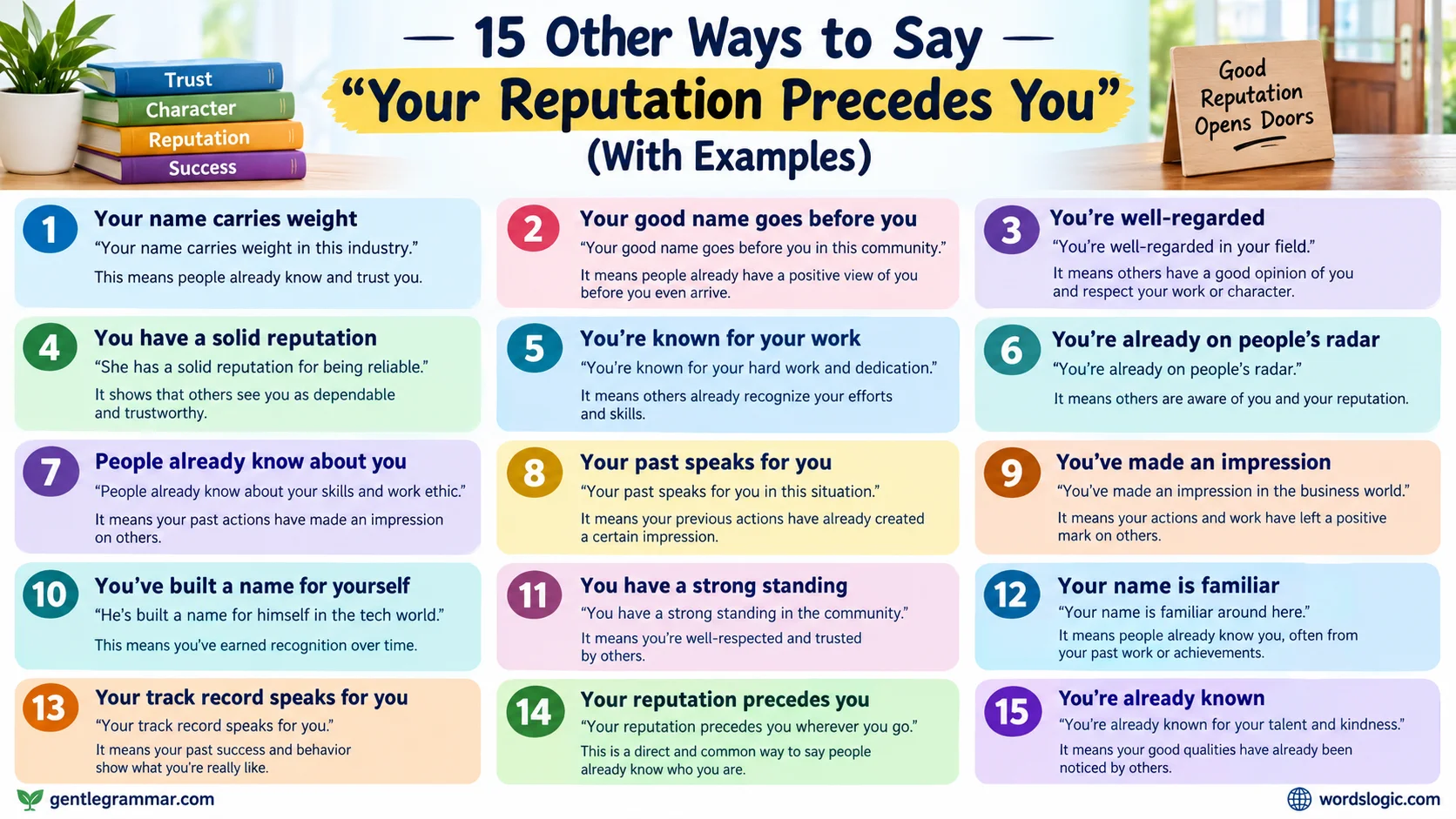
This guide explores 15 Other Ways to Say “Your Reputation Precedes You” (With Examples) and explains how others form opinions before meeting you.
Imagine walking into a room to meet a new manager for the first time. Before you physically arrive or introduce yourself, someone may mention your great leadership, skills, or success in solving difficult problems. This is what the saying “Your Reputation Precedes You” means in everyday English. Through my experiences, I’ve realized that people often already know something about our character, achievements, and behavior because others have heard a story or shared their version of events.
The fascinating thing about reputation is that even a subtle gesture or perception can become a compliment or a challenge. A notorious person may struggle to rebuild trust, while someone with a positive image often gains instant respect. I’ve noticed that how we carry ourselves, communicate naturally, and choose the right tone in different situations can influence the narrative others create about us. This realization made me reflect on what is possible when we consciously use our behavior and choices to improve our reputation.
What Does “Your Reputation Precedes You” Mean?
“Your Reputation Precedes You” means that people have already heard about someone before meeting them. Their reputation, achievements, personality, or previous actions have created an impression that reaches others in advance. In simple terms, people know something about you before they get to know you personally.
The expression can communicate either a positive or negative impression, depending on the context. For example, when someone says, “Your reputation precedes you” to a talented employee, they may be praising that person’s professional achievements. When it’s said sarcastically, however, it might suggest that someone has become known for questionable behavior. The phrase is often used when a person’s name, work, accomplishments, or public image have already attracted attention. Its meaning depends heavily on the speaker’s tone and the information others have heard.
Common Situations Where “Your Reputation Precedes You” Is Used
People use this expression when someone’s reputation is already familiar to others. It’s particularly common in situations where people meet for the first time but have heard about each other through colleagues, friends, or professional connections.
- Workplace introductions: A manager might welcome a new employee by mentioning that colleagues have already praised their skills and experience.
- Professional networking: Someone may use the expression when meeting a respected business owner, consultant, or industry professional.
- Personal conversations: Friends might use it when introducing someone who is already well known within their social circle.
- Public recognition: A speaker may introduce a guest whose achievements have attracted attention.
- Social media: People sometimes use similar expressions when commenting on someone’s popularity, accomplishments, or public image.
- Customer communication: A business owner might welcome a new client whose company or professional achievements are already familiar to them.
In these situations, an alternative can make the introduction feel more natural. For example, “I’ve heard great things about you” sounds warmer than the original expression. Meanwhile, “People speak highly of your work” offers a more professional way to acknowledge someone’s achievements.
Is It Professional or Polite to Say “Your Reputation Precedes You”?
Yes, “Your Reputation Precedes You” can be professional and polite, especially when it’s used as a genuine compliment. It works well during business introductions, conferences, networking events, and formal meetings. The expression sounds confident and somewhat sophisticated, making it suitable for situations where someone wants to acknowledge another person’s established reputation.
However, its meaning isn’t always positive. Depending on the speaker’s delivery, it can sound sarcastic, intimidating, or overly dramatic. For a friendly workplace introduction, “I’ve heard wonderful things about you” may feel more welcoming. In a formal business email, “Your achievements are widely recognized” might communicate respect more clearly. The best wording depends on your relationship with the person and the impression you want to create.
Advantages and Disadvantages of Saying “Your Reputation Precedes You”
Advantages
One major advantage of this expression is that it recognizes someone’s reputation before a personal introduction. It can make people feel appreciated because it acknowledges the effort they’ve put into building their professional image or personal standing. It also creates an immediate conversation starter, particularly when two people have heard about each other through mutual contacts.
Another benefit is its versatility. You can use it to recognize professional accomplishments, public recognition, or even someone’s distinctive personality. When delivered sincerely, it communicates respect without requiring a lengthy explanation.
Disadvantages
The main limitation is that the expression can sound too formal or dramatic in everyday conversations. Some people may also interpret it as sarcasm, especially when they aren’t sure what others have heard about them. Its meaning can become uncomfortable if the person’s reputation includes negative stories or controversial behavior.
It can also feel impersonal when you want to offer a warm compliment. In those situations, a more specific expression that mentions someone’s work, character, or achievements may communicate your appreciation more effectively.
Synonyms for “Your Reputation Precedes You”
Here are 15 natural alternatives, each suited to a slightly different situation:
- I’ve Heard a Lot About You
- I’ve Heard Great Things About You
- People Speak Highly of You
- Your Name Has Come Up
- Your Reputation Speaks for Itself
- Your Work Speaks for Itself
- You’re Well Known Around Here
- Word About You Has Gotten Around
- I’ve Heard About Your Accomplishments
- You’ve Made Quite an Impression
- I’ve Been Looking Forward to Meeting You
- You’re the Person Everyone Talks About
- Your Achievements Are Widely Recognized
- I’ve Heard You’re the Person to Talk To
- People Already Know Your Name
1. I’ve Heard a Lot About You
Meaning
“I’ve Heard a Lot About You” means that other people have shared information about someone before the speaker meets them. It suggests that the person’s name, personality, experiences, or achievements have already been discussed.
Definition
A friendly expression indicating that someone is already familiar with information about another person through conversations with others.
Detailed Explanation
This expression is one of the most natural alternatives in everyday English. It communicates that someone has already heard about the person without necessarily suggesting that everything they’ve heard is positive. Unlike the original phrase, it doesn’t directly emphasize an established reputation. Instead, it focuses on previous conversations and familiarity. It’s useful when you want to acknowledge that you’ve heard about someone without sounding overly formal.
Scenario Examples
Scenario 1: Meeting a new colleague for the first time.
Example: “Hi, James! I’ve heard a lot about you from the marketing team.”
Scenario 2: Meeting a friend’s close friend at a party.
Example: “It’s nice to finally meet you. I’ve heard a lot about you from Sarah.”
Scenario 3: Welcoming someone to a professional event.
Example: “Welcome aboard! I’ve heard a lot about you and your previous projects.”
Best Use
Use this expression during first introductions, casual conversations, workplace meetings, and networking events. It’s especially appropriate when you want to acknowledge someone’s existing connections without making a strong judgment about their reputation.
Tone
Tone: Friendly, conversational, welcoming.
It sounds natural and approachable. The phrase can be positive or neutral depending on the conversation.
2. I’ve Heard Great Things About You
Meaning
“I’ve Heard Great Things About You” means that people have shared positive information about someone. It suggests that the person has earned a favorable impression through their behavior, personality, skills, or achievements.
Definition
A positive expression used to tell someone that others have spoken favorably about them.
Detailed Explanation
This phrase is warmer and more complimentary than the original expression. It clearly communicates that the information you’ve received is positive rather than leaving the meaning open to interpretation. It’s particularly effective when welcoming someone whose kindness, talent, or professional ability has been praised. Unlike a general statement about reputation, this wording emphasizes positive feedback from other people. It’s a good choice when you want someone to feel appreciated immediately.
Scenario Examples
Scenario 1: Welcoming a new employee.
Example: “Welcome to the team! I’ve heard great things about you from your previous manager.”
Scenario 2: Meeting your friend’s partner.
Example: “It’s lovely to meet you. I’ve heard great things about you from Emma.”
Scenario 3: Introducing yourself to a respected professional.
Example: “I’ve heard great things about your work in the design industry.”
Best Use
This expression works particularly well in friendly introductions, professional networking, personal conversations, and welcoming messages. Use it when you genuinely want to communicate a positive impression.
Tone
Tone: Warm, complimentary, friendly.
Its positive wording makes the other person feel welcomed and respected without sounding overly formal.
3. People Speak Highly of You
Meaning
“People Speak Highly of You” means that others regularly express admiration, respect, or appreciation for someone. It suggests that the person has earned a positive reputation through their actions or qualities.
Definition
An expression describing someone who receives favorable comments and praise from other people.
Detailed Explanation
This alternative puts the emphasis on other people’s respect and opinions. It’s slightly more polished than saying you’ve heard a lot about someone. It also sounds more deliberate because it suggests that several people have expressed positive views. You might choose it when recognizing someone’s leadership, professional ability, or helpful personality. Compared with the original phrase, it’s less dramatic and more direct about the positive nature of someone’s reputation.
Scenario Examples
Scenario 1: Complimenting an experienced manager.
Example: “People speak highly of you, especially when it comes to supporting your team.”
Scenario 2: Meeting a respected teacher.
Example: “Several students have told me that people speak highly of your teaching.”
Scenario 3: Welcoming a new business partner.
Example: “People speak highly of your professionalism and the way you handle difficult projects.”
Best Use
Choose this expression for professional introductions, workplace conversations, formal networking, and respectful personal communication. It works particularly well when you want to acknowledge someone’s good standing.
Tone
Tone: Respectful, complimentary, professional.
The phrase sounds sincere and measured. It communicates admiration without excessive enthusiasm.
4. Your Name Has Come Up
Meaning
“Your Name Has Come Up” means that someone has been mentioned in previous conversations. It suggests that people have discussed the person, their work, or something connected to them.
Definition
A conversational expression indicating that someone has been mentioned during discussions involving other people.
Detailed Explanation
This phrase is more neutral than the original expression because it doesn’t automatically suggest a positive reputation. Someone’s name might come up during a conversation about a successful project, a new opportunity, or a shared professional connection. The surrounding words determine whether the reference is complimentary or simply informative. It’s useful when you want to explain how you became familiar with someone without making assumptions about what others think of them. It highlights familiarity rather than reputation.
Scenario Examples
Scenario 1: Discussing a possible business collaboration.
Example: “Your name came up during our meeting about the upcoming partnership.”
Scenario 2: Meeting someone through a mutual friend.
Example: “Your name has come up a few times whenever I talk to Michael.”
Scenario 3: Introducing yourself to a job candidate.
Example: “Your name came up when the team discussed experienced candidates for this position.”
Best Use
Use this phrase in workplace discussions, networking, professional emails, and casual conversations. It’s particularly useful when the mention could be positive, neutral, or simply relevant to a particular topic.
Tone
Tone: Neutral, conversational, professional.
It sounds understated and natural. The phrase doesn’t exaggerate someone’s popularity or achievements.
5. Your Reputation Speaks for Itself
Meaning
“Your Reputation Speaks for Itself” means that someone’s established reputation is strong enough to communicate their qualities without further explanation. Their achievements, behavior, or public recognition already tell others what they need to know.
Definition
An expression suggesting that someone’s reputation provides clear evidence of their character, ability, or accomplishments.
Detailed Explanation
This expression is closely related to the original phrase, but it emphasizes the strength of an existing reputation rather than the fact that people heard about it beforehand. It can be used to recognize someone whose work or personal conduct has earned widespread respect. The wording is confident and slightly more emphatic than a simple compliment. However, it can also sound sarcastic if the reputation being discussed is negative. Choose it when the person’s record is already familiar to the audience.
Scenario Examples
Scenario 1: Praising an experienced entrepreneur.
Example: “You’ve built several successful companies. Your reputation speaks for itself.”
Scenario 2: Discussing a respected athlete.
Example: “We don’t need to explain his contribution to the sport. His reputation speaks for itself.”
Scenario 3: Recognizing a trusted professional.
Example: “Your reputation speaks for itself, and we’re delighted to have you working with us.”
Best Use
This expression is ideal for professional recognition, formal introductions, public praise, and conversations about established achievements. It also works in writing when you want to acknowledge someone’s proven standing.
Tone
Tone: Confident, respectful, emphatic.
It gives a strong impression of recognition. Use it sincerely to avoid an unintended sarcastic meaning.
6. Your Work Speaks for Itself
Meaning
“Your Work Speaks for Itself” means that someone’s professional results demonstrate their abilities without requiring additional praise or explanation.
Definition
An expression recognizing that the quality of someone’s work provides clear evidence of their skills and experience.
Detailed Explanation
Unlike the original phrase, this expression focuses specifically on professional performance and results. It suggests that the person’s achievements are visible through what they’ve created, completed, or contributed. It’s especially useful when complimenting an artist, designer, writer, developer, or business professional. The wording is more specific than a general statement about reputation because it connects recognition to actual work. However, it doesn’t necessarily suggest that people have heard about the person before meeting them.
Scenario Examples
Scenario 1: Praising a graphic designer.
Example: “I’ve seen your recent campaigns. Your work speaks for itself.”
Scenario 2: Recognizing a successful employee.
Example: “You don’t need to explain your contribution to the project. Your work speaks for itself.”
Scenario 3: Introducing a talented photographer.
Example: “Take a look at her portfolio. Her work speaks for itself.”
Best Use
Use this expression in professional communication, performance reviews, creative industries, business introductions, and conversations about accomplishments. It works best when someone’s actual results are available to demonstrate their abilities.
Tone
Tone: Professional, confident, appreciative.
It offers meaningful recognition without relying on exaggerated compliments.
7. You’re Well Known Around Here
Meaning
“You’re Well Known Around Here” means that many people in a particular community, workplace, or social circle already recognize someone. It suggests that the person has established familiarity or recognition within that group.
Definition
A casual expression describing someone who is familiar or recognized by many people in a particular place or community.
Detailed Explanation
This phrase focuses on local recognition and familiarity rather than the quality of someone’s reputation. Someone might be well known because of their professional achievements, friendly personality, community involvement, or frequent presence. It doesn’t automatically mean that everyone has a positive opinion of them. Compared with the original expression, it sounds more relaxed and less formal. It’s a natural choice when talking about someone who has become a familiar name within a specific group.
Scenario Examples
Scenario 1: Welcoming a popular community volunteer.
Example: “You’re well known around here. Everyone appreciates the work you’ve done for the neighborhood.”
Scenario 2: Meeting a long-standing employee.
Example: “You’re well known around here, so I’m sure you’ll have plenty of advice for the new team.”
Scenario 3: Talking to a familiar local business owner.
Example: “You’re well known around here. My family has been visiting your shop for years.”
Best Use
This expression works well in community conversations, local business introductions, social gatherings, and familiar workplace environments. Use it when recognition within a particular group is the main point.
Tone
Tone: Casual, friendly, familiar.
Its relaxed wording makes it suitable for everyday interactions rather than highly formal introductions.
8. Word About You Has Gotten Around
Meaning
“Word About You Has Gotten Around” means that information about someone has spread through conversations and reached other people. It suggests that their actions, achievements, or reputation have attracted attention.
Definition
A conversational expression describing how information about someone has circulated among a group of people.
Detailed Explanation
This alternative emphasizes the spread of information rather than the quality of someone’s reputation. It can describe positive recognition, such as people hearing about a successful project, or more general attention surrounding someone’s actions. The phrase is more informal than the original and can sometimes suggest gossip or rumors. That’s why the surrounding context matters. If you want to make it sound complimentary, mention the specific achievement or quality that people have heard about.
Scenario Examples
Scenario 1: Welcoming a talented new employee.
Example: “Word about you has gotten around. The whole department is excited to work with you.”
Scenario 2: Talking to a local musician.
Example: “Word about your performances has gotten around, and people are looking forward to your next show.”
Scenario 3: Meeting someone after a successful community project.
Example: “Word about your charity work has gotten around. Congratulations on making such a difference.”
Best Use
Use this phrase in casual conversations, social settings, community discussions, and informal professional interactions. It’s especially appropriate when someone’s activities have become a topic of conversation.
Tone
Tone: Informal, conversational, slightly emphatic.
It can sound enthusiastic or suggestive depending on the context. Use a positive detail to make your intended meaning clear.
9. I’ve Heard About Your Accomplishments
Meaning
“I’ve Heard About Your Accomplishments” means that someone has received information about another person’s achievements or successful work. It directly recognizes that the person has done something noteworthy.
Definition
A respectful expression used to acknowledge someone’s achievements that have already been discussed or recognized by others.
Detailed Explanation
This phrase is more specific than the original because it focuses on measurable achievements and notable contributions. It works particularly well when meeting someone who has completed an impressive project, received an award, or reached an important professional milestone. Unlike a general reputation-based expression, it identifies accomplishments as the reason for recognition. It also sounds sincere without becoming overly enthusiastic. Choose it when you want your compliment to focus on what someone has achieved rather than simply how well known they are.
Scenario Examples
Scenario 1: Meeting an award-winning researcher.
Example: “I’ve heard about your accomplishments in environmental research. Your latest project sounds fascinating.”
Scenario 2: Welcoming a new team leader.
Example: “I’ve heard about your accomplishments at your previous company. We’re excited to have you here.”
Scenario 3: Congratulating a successful student.
Example: “I’ve heard about your accomplishments in the science competition. You should be proud of yourself.”
Best Use
This expression is suitable for formal introductions, academic settings, professional networking, award ceremonies, and congratulatory messages. It works best when you know which achievements you’re referring to.
Tone
Tone: Respectful, appreciative, professional.
It communicates genuine recognition while keeping the conversation focused on the person’s accomplishments.
10. You’ve Made Quite an Impression
Meaning
“You’ve Made Quite an Impression” means that someone’s actions, personality, work, or presence have attracted attention and left people with a memorable opinion of them.
Definition
An expression describing someone who has strongly influenced how other people think or feel through their behavior or achievements.
Detailed Explanation
This phrase focuses on the impact someone has had on others rather than information that people have heard before meeting them. It’s often used after someone has demonstrated their skills, delivered a presentation, or made a memorable contribution. The word “quite” adds emphasis without making the compliment sound excessive. Depending on the speaker’s tone, it can also carry a sarcastic meaning. It’s a good alternative when you want to acknowledge someone’s influence or memorable presence.
Scenario Examples
Scenario 1: Praising a colleague after a presentation.
Example: “You’ve made quite an impression on the management team with that presentation.”
Scenario 2: Talking to a talented performer.
Example: “Your performance last night was unforgettable. You’ve made quite an impression on everyone.”
Scenario 3: Recognizing a new employee’s contribution.
Example: “You’ve made quite an impression during your first week with the company.”
Best Use
Choose this expression for workplace recognition, social conversations, public events, presentations, and situations involving memorable achievements. It is particularly useful after someone has demonstrated their abilities.
Tone
Tone: Complimentary, confident, enthusiastic.
It sounds encouraging and recognizes the effect someone’s actions have had on other people.
11. I’ve Been Looking Forward to Meeting You
Meaning
“I’ve Been Looking Forward to Meeting You” means that someone has been anticipating a personal introduction or conversation with another person. It often suggests that they’ve heard positive things or developed an interest in meeting them.
Definition
A polite expression used to communicate that you have been eagerly anticipating meeting someone.
Detailed Explanation
This phrase shifts the focus from someone’s reputation to your personal anticipation. It doesn’t directly state that other people have praised the person. Instead, it communicates that meeting them feels important or exciting. It’s especially appropriate when you’ve arranged a professional meeting, received an introduction through a mutual contact, or heard about someone’s interesting work. Compared with the original expression, it feels more personal and welcoming. It’s an excellent option when you want to make a first meeting comfortable.
Scenario Examples
Scenario 1: Meeting a new business client.
Example: “Good morning, Mr. Lewis. I’ve been looking forward to meeting you.”
Scenario 2: Meeting a friend’s close family member.
Example: “It’s wonderful to finally meet you. I’ve been looking forward to this.”
Scenario 3: Welcoming a guest speaker.
Example: “We’ve been looking forward to meeting you and hearing more about your research.”
Best Use
This phrase works best in first introductions, business meetings, professional emails, personal gatherings, and formal welcoming messages. It’s particularly useful when you want to express warmth rather than discuss someone’s reputation directly.
Tone
Tone: Warm, polite, welcoming.
It shows genuine interest and helps establish a positive connection from the beginning.
12. You’re the Person Everyone Talks About
Meaning
“You’re the Person Everyone Talks About” means that someone has become a frequent topic of conversation within a particular group. It suggests that their name or activities have attracted considerable attention.
Definition
A conversational expression describing someone who is frequently mentioned or discussed by other people.
Detailed Explanation
This expression is more dramatic and informal than the original phrase. It highlights the amount of attention someone receives, rather than necessarily praising their reputation. It can be a compliment when people are discussing someone’s talent, success, or achievements. However, it might also sound teasing or uncomfortable if the attention comes from gossip. Unlike a formal professional compliment, this phrase works best when the relationship is relaxed and the meaning is clear.
Scenario Examples
Scenario 1: Meeting a popular colleague.
Example: “So you’re the person everyone talks about! I’ve heard about your successful product launch.”
Scenario 2: Welcoming a talented student to a club.
Example: “You’re the person everyone talks about after winning that national competition.”
Scenario 3: Talking to a well-known local performer.
Example: “You’re the person everyone talks about whenever live music comes up around here.”
Best Use
Use this expression in casual conversations, friendly introductions, social gatherings, and informal discussions about popularity or recognition. Avoid it in serious business correspondence unless you have a close and relaxed relationship with the recipient.
Tone
Tone: Casual, playful, enthusiastic.
It can sound flattering or teasing. Your delivery should make the intended meaning obvious.
13. Your Achievements Are Widely Recognized
Meaning
“Your Achievements Are Widely Recognized” means that many people or organizations acknowledge someone’s accomplishments. It suggests that their work or contributions have received considerable appreciation.
Definition
A formal expression describing accomplishments that are known and appreciated by a broad audience.
Detailed Explanation
This is one of the more formal alternatives on the list. It emphasizes public recognition and professional achievement rather than general familiarity with someone’s name. The phrase works particularly well when introducing a respected professional, academic, public figure, or industry leader. It also avoids the potentially ambiguous meaning of the original expression because it clearly identifies achievements as the source of recognition. Choose it for situations where a polished and respectful tone matters.
Scenario Examples
Scenario 1: Introducing a guest speaker at a conference.
Example: “Your achievements are widely recognized, and we’re honored to welcome you to today’s event.”
Scenario 2: Writing a professional introduction.
Example: “Your achievements are widely recognized throughout the research community.”
Scenario 3: Congratulating an experienced executive.
Example: “Your achievements are widely recognized across the industry. Congratulations on this important milestone.”
Best Use
This expression is ideal for formal speeches, professional introductions, business correspondence, award ceremonies, and academic communication. Use it when the person’s accomplishments have genuinely received recognition.
Tone
Tone: Formal, respectful, professional.
Its polished wording communicates admiration without becoming overly personal or casual.
14. I’ve Heard You’re the Person to Talk To
Meaning
“I’ve Heard You’re the Person to Talk To” means that someone has been recommended as a helpful, knowledgeable, or experienced person who can provide guidance on a particular subject.
Definition
An informal expression used when someone has been recommended as the right person to approach for information, assistance, or advice.
Detailed Explanation
This alternative is more specific than the original because it emphasizes expertise and helpfulness. It suggests that other people have directed you toward someone because they trust that person’s knowledge or abilities. It doesn’t necessarily mean the person is widely famous or has a general reputation. Instead, their experience makes them particularly valuable in a specific situation. It’s a natural way to begin a conversation when you need assistance or want to establish a professional connection.
Scenario Examples
Scenario 1: Asking an experienced colleague for advice.
Example: “I’ve heard you’re the person to talk to about improving our customer support process.”
Scenario 2: Contacting a business consultant.
Example: “Several people recommended you. I’ve heard you’re the person to talk to when it comes to business strategy.”
Scenario 3: Meeting a knowledgeable teacher.
Example: “I’ve heard you’re the person to talk to about preparing for the advanced mathematics exam.”
Best Use
Choose this expression for professional networking, workplace conversations, consultations, educational settings, and requests for advice. It works especially well when someone has been recommended for a specific skill or area of knowledge.
Tone
Tone: Friendly, respectful, purposeful.
It communicates trust in someone’s expertise while keeping the introduction relaxed and approachable.
15. People Already Know Your Name
Meaning
“People Already Know Your Name” means that someone has become recognizable or familiar to others, even before being personally introduced. It suggests that their achievements, activities, or public presence have attracted attention.
Definition
A conversational expression indicating that someone is already known or recognized by members of a particular group.
Detailed Explanation
This phrase focuses on recognition and familiarity, rather than directly describing the quality of someone’s reputation. Someone might be known because of professional success, public appearances, community involvement, or social connections. It can be complimentary, although it doesn’t automatically mean that everyone has a favorable opinion of the person. Compared with the original phrase, it sounds simpler and more direct. It’s particularly useful when talking about someone who has established a recognizable presence within an organization or community.
Scenario Examples
Scenario 1: Welcoming a successful entrepreneur.
Example: “People already know your name in this industry. It’s great to finally meet you.”
Scenario 2: Introducing a popular student to a new class.
Example: “People already know your name because of your recent achievements in the debate competition.”
Scenario 3: Meeting a respected community organizer.
Example: “People already know your name around the neighborhood. Your volunteer work has made a difference.”
Best Use
Use this expression in casual introductions, professional networking, community conversations, and social settings. It’s particularly appropriate when someone’s recognition is more important than the specific details of their reputation.
Tone
Tone: Friendly, confident, conversational.
It sounds straightforward and approachable. Adding a specific reason for the recognition can make the compliment more meaningful.
FAQs:
1. What is another way to say “Your Reputation Precedes You”?
A natural alternative is “I’ve Heard Great Things About You.” It communicates that people have already shared positive information about someone. Other options include “People Speak Highly of You” and “Your Reputation Speaks for Itself.” The best choice depends on whether you want a friendly, professional, or formal tone.
2. What does “Your Reputation Precedes You” mean?
It means that people have heard about someone before meeting them personally. Their achievements, character, behavior, or professional standing have already created an impression. The expression can be complimentary or sarcastic depending on the context.
3. Is “Your Reputation Precedes You” professional?
Yes. It’s generally appropriate for business introductions, networking events, conferences, and professional conversations. However, it can sound formal or dramatic in casual situations. A simpler expression such as “I’ve heard wonderful things about you” may feel more natural.
4. What is a more polite way to say “Your Reputation Precedes You”?
“People Speak Highly of You” is a polite and respectful alternative. You could also say, “I’ve heard wonderful things about your work.” Both expressions communicate positive recognition without sounding overly dramatic.
5. Which alternative works best in formal communication?
“Your Achievements Are Widely Recognized” is an excellent choice for formal communication. It sounds professional and focuses on a person’s accomplishments. For a formal introduction, “People Speak Highly of You” is another natural option.
Conclusion:
Choosing the right words can make a first introduction feel more genuine and memorable. Although “Your Reputation Precedes You” communicates that someone is already known through their achievements, character, or previous actions, it isn’t always the most natural expression for every situation. Alternatives such as “I’ve Heard Great Things About You” create a warmer connection, while “Your Achievements Are Widely Recognized” sounds more polished in professional settings.
Other phrases highlight expertise, popularity, or the impact someone has made on others. Remember that similar expressions don’t always carry identical meanings. Consider your relationship with the person, the situation, and the impression you want to create. The best alternative is the one that expresses genuine respect without sounding forced.
