
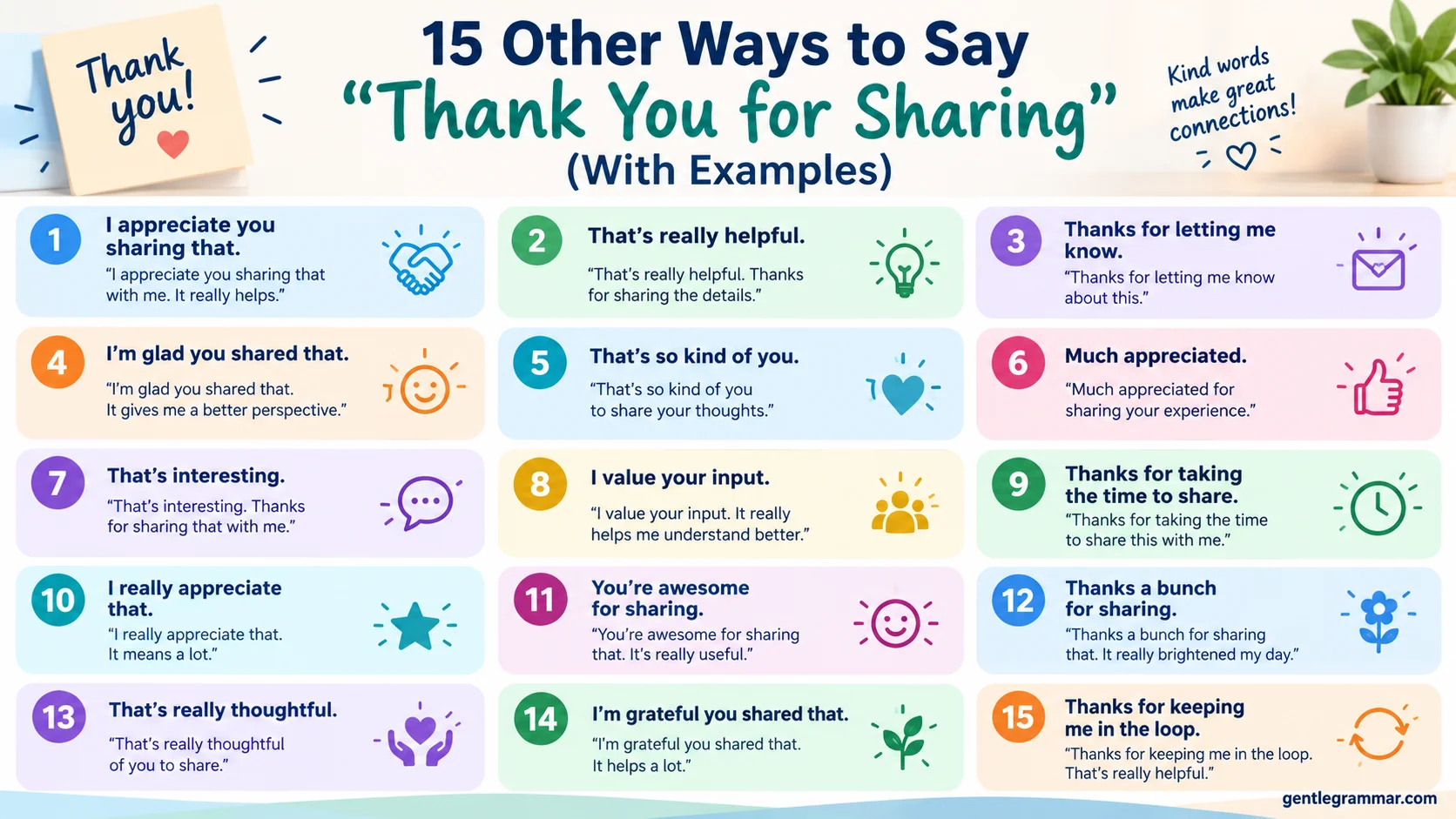
A simple thank you can turn routine interactions into meaningful interactions and help build stronger customer relationships and personal bonds.
When someone shares useful information received, shared insights, or personal thoughts, showing empathy, care, and genuine appreciation helps the other person feel valued rather than processed. You can use thank you notes, a simple thank you card, or creative thank you messages to express your gratitude in a cute and creative way. For example, a friend, family member, crush, or partner may appreciate cute and simple, funny, flirty, sincere, or affectionate messages depending on the relationship and situation.
I have found that thoughtful words, heartfelt gratitude, and a personal touch often create positive feelings, strengthen emotional connection, and leave a lasting impression. These unique expressions, playful messages, humor, and memorable messages offer ways to thank someone, whether through texting, text communication, friendly communication, romantic communication, or family communication. You can explore example messages, appreciation texts, cute thank you texts, funny thank you messages, flirty thank you texts, and sincere thank you messages to find meaningful ways to express your gratitude and make your message stand out.
What Does “Thank You for Sharing” Mean?
“Thank You for Sharing” is an expression of gratitude used when someone gives you information, expresses an opinion, offers an idea, or reveals something about their personal experience. It communicates that you appreciate their willingness to contribute something with you. Depending on the situation, it can express simple politeness, genuine interest, emotional support, or professional acknowledgment.
In everyday English, the phrase can be used when a colleague shares useful feedback, a friend talks about a personal challenge, or a student contributes an idea during a discussion. Its meaning depends partly on tone and context. A warm response can make someone feel valued, while a brief or formal response may simply acknowledge the information. When someone shares something sensitive, adding words of empathy can communicate more care than gratitude alone.
Common Situations Where “Thank You for Sharing” Is Used
This expression works in many everyday and professional situations because it acknowledges another person’s contribution without requiring a long response.
- Everyday conversations: When a friend tells you an interesting story, offers advice, or explains something new.
- Personal relationships: When a partner or family member shares feelings, concerns, or a meaningful memory.
- Workplace communication: When a colleague contributes feedback, project updates, suggestions, or useful information.
- School and education: When a student answers a question, presents an opinion, or contributes to a group discussion.
- Social media: When someone shares an experience, personal reflection, recommendation, or helpful post.
- Customer communication: When a customer provides feedback about a service or explains a concern.
- Sensitive conversations: When someone discusses a difficult experience and deserves an empathetic response.
An alternative may be useful when you want to sound more appreciative, more compassionate, more enthusiastic, or more professional. For example, thanking someone for their honesty is different from acknowledging that their information was useful.
Is It Professional or Polite to Say “Thank You for Sharing”?
Yes, “Thank You for Sharing” is generally polite and appropriate for professional communication. It works in meetings, emails, presentations, training sessions, and discussions where people contribute information or opinions. The wording is friendly without being overly familiar, making it suitable for many workplace situations.
However, the phrase can sometimes sound generic if someone has shared something deeply personal or difficult. In those circumstances, a more empathetic response may feel more sincere. In a formal email, “Thank you for providing this information” may be more precise, while “I appreciate your openness” may be better when someone has spoken candidly. The best choice depends on the relationship, the subject, and whether you want to acknowledge the information, the person’s effort, or their willingness to be open.
Advantages and Disadvantages of Saying “Thank You for Sharing”
Advantages
The phrase is simple, polite, and versatile. It acknowledges someone’s contribution without making assumptions about what they shared or how they feel. It can work in both casual conversations and professional settings, and it is particularly useful when you want to recognize a person’s input without interrupting the flow of discussion. Its neutral wording also makes it appropriate when a longer or more emotional response would be unnecessary.
Disadvantages
Because the expression is broad, it may sometimes sound impersonal or routine. It does not necessarily communicate whether you found the information useful, admired the person’s honesty, or understood their feelings. In sensitive conversations, it may feel insufficient on its own, while in formal writing, a more specific expression can communicate your purpose more clearly. Choosing a more precise alternative helps you show what you appreciate rather than relying on the same general phrase every time.
Synonyms for “Thank You for Sharing”
- I Appreciate You Sharing This
- Thanks for Opening Up
- I’m Grateful You Told Me
- Thank You for Your Honesty
- I Appreciate Your Input
- Thanks for Letting Me Know
- I’m Glad You Shared That
- Thank You for Your Perspective
- I Appreciate Your Willingness to Share
- Thanks for Bringing This to My Attention
- That’s Helpful to Know
- Thank You for the Insight
- I Appreciate You Keeping Me in the Loop
- Thank You for Being So Open
- I’m Glad You Brought This Up
1. I Appreciate You Sharing This
Meaning
“I Appreciate You Sharing This” expresses genuine gratitude for something another person has communicated. It emphasizes that their contribution matters to you, whether they have shared useful information, a personal story, or a thoughtful idea.
Definition
A polite expression used to acknowledge and value someone’s willingness to share information or an experience.
Detailed Explanation
This expression sounds slightly more personal and deliberate than a simple thank-you. The word “appreciate” communicates that you recognize the value of the other person’s contribution. It works particularly well when you want to acknowledge their effort without making the conversation overly emotional. Unlike a general expression of thanks, it can also suggest that you have taken what they shared seriously.
Scenario Examples
– Scenario: A colleague explains a problem affecting a project.
Example: “I appreciate you sharing this with me. It helps me understand what’s happening.”
– Scenario: A friend recommends a book that helped them through a difficult period.
Example: “I appreciate you sharing this. I’ll definitely give it a read.”
Best Use
Use this phrase in work emails, personal conversations, feedback discussions, and thoughtful messages when you want to show that someone’s contribution is valued.
Tone
Tone: Warm, respectful, appreciative.
It communicates sincerity without becoming overly formal or emotional.
2. Thanks for Opening Up
Meaning
“Thanks for Opening Up” expresses appreciation when someone talks honestly about their feelings, concerns, or personal experiences. It recognizes the trust involved in sharing something private or emotionally important.
Definition
An informal expression of gratitude for someone’s willingness to speak honestly about personal matters.
Detailed Explanation
This phrase is more emotionally specific than “Thank You for Sharing.” It suggests that the person has revealed something personal rather than simply passed along information. It can help someone feel accepted when they have been hesitant to speak. However, it is less suitable for routine workplace updates or ordinary facts because it implies a degree of personal openness.
Scenario Examples
– Scenario: A friend explains why they have been feeling lonely lately.
Example: “Thanks for opening up to me. I’m here if you want to talk more.”
– Scenario: Your partner shares a concern about your relationship.
Example: “Thanks for opening up about how you’ve been feeling. I want to understand.”
Best Use
Choose this expression for close friendships, romantic relationships, supportive conversations, and sensitive personal discussions.
Tone
Tone: Caring, intimate, supportive.
Its warmth comes from acknowledging the courage or trust that personal disclosure can involve.
3. I’m Grateful You Told Me
Meaning
“I’m Grateful You Told Me” communicates that you value receiving information from someone. It often suggests that knowing what they shared matters to you or helps you understand a situation.
Definition
A sincere expression of gratitude for someone telling you something important.
Detailed Explanation
This wording feels more personal than a neutral acknowledgment because “grateful” conveys a stronger sense of appreciation. It is particularly useful when the information affects your relationship, decisions, or understanding of an event. It does not necessarily mean that the news is positive; you can be grateful that someone told you something difficult. Use it when the act of telling you matters as much as the information itself.
Scenario Examples
– Scenario: A friend tells you they have been struggling and need support.
Example: “I’m grateful you told me. You don’t have to handle everything alone.”
– Scenario: A teammate alerts you to a change in a deadline.
Example: “I’m grateful you told me before I finalized the schedule.”
Best Use
This phrase works well in personal relationships, meaningful conversations, and situations where timely or honest communication matters.
Tone
Tone: Sincere, thoughtful, personal.
It emphasizes the importance of being informed rather than merely acknowledging a contribution.
4. Thank You for Your Honesty
Meaning
“Thank You for Your Honesty” recognizes someone for speaking truthfully, especially when the information may be difficult to express or hear. It appreciates their candor and transparency, not simply the fact that they shared something.
Definition
An expression of gratitude for someone’s truthful and straightforward communication.
Detailed Explanation
This alternative is most appropriate when honesty is the important part of the conversation. It may fit a difficult discussion, constructive feedback, or a moment when someone admits a mistake. Compared with “Thank You for Sharing,” it makes a more specific statement about the person’s approach to communication. It should not be used automatically whenever someone provides information, because doing so can imply that honesty was in question.
Scenario Examples
– Scenario: A colleague gives you candid feedback on your presentation.
Example: “Thank you for your honesty. I’ll use your feedback to improve the next version.”
– Scenario: A friend admits that they forgot an important commitment.
Example: “Thank you for your honesty. I appreciate you telling me directly.”
Best Use
Use it in feedback conversations, relationship discussions, conflict resolution, and situations involving candid communication.
Tone
Tone: Respectful, direct, sincere.
It shows that you value truthfulness, even when the message is uncomfortable.
5. I Appreciate Your Input
Meaning
“I Appreciate Your Input” thanks someone for contributing an opinion, suggestion, recommendation, or piece of feedback. It focuses on the value of their contribution rather than on personal disclosure.
Definition
A professional and polite way to acknowledge someone’s ideas or feedback.
Detailed Explanation
This expression is especially useful when people are collaborating or making decisions. It sounds more work-oriented than “Thank You for Sharing” because “input” usually refers to information or ideas offered for consideration. It can be used even when you do not ultimately agree with the suggestion. However, if someone has shared a deeply personal experience, this wording may sound too businesslike.
Scenario Examples
– Scenario: A teammate suggests a clearer way to organize a report.
Example: “I appreciate your input. That structure should make the report easier to follow.”
– Scenario: A classmate contributes an idea to a group assignment.
Example: “I appreciate your input on the project. Let’s include that in our discussion.”
Best Use
Choose this phrase for meetings, collaborative projects, professional emails, brainstorming sessions, and academic discussions.
Tone
Tone: Professional, courteous, collaborative.
It recognizes someone’s contribution while keeping the conversation focused on the task.
6. Thanks for Letting Me Know
Meaning
“Thanks for Letting Me Know” acknowledges that someone has informed you about something. It is most useful when the shared information is an update, announcement, change, or practical detail.
Definition
A casual, polite expression of gratitude for receiving information.
Detailed Explanation
This is a natural everyday alternative when you want to acknowledge a message without giving an elaborate response. It focuses on the usefulness of being informed rather than on the act of sharing itself. The wording works equally well for good news, inconvenient changes, or neutral updates. It is less suitable when someone has revealed a deeply personal feeling and needs emotional understanding rather than a simple acknowledgment.
Scenario Examples
– Scenario: A friend tells you they will arrive later than expected.
Example: “Thanks for letting me know. I’ll meet you there at seven.”
– Scenario: A customer informs you that their contact details have changed.
Example: “Thanks for letting me know. We’ll update your information.”
Best Use
Use it in text messages, everyday conversations, workplace updates, scheduling, and customer communication.
Tone
Tone: Casual, polite, practical.
It is friendly and efficient, making it a good choice when a short response is enough.
7. I’m Glad You Shared That
Meaning
“I’m Glad You Shared That” expresses appreciation while suggesting that you welcome what the other person has contributed. It can convey interest, reassurance, or relief depending on the situation.
Definition
A warm expression that communicates happiness or appreciation that someone chose to share something.
Detailed Explanation
This phrase goes beyond acknowledging the information by expressing a positive reaction to receiving it. It can encourage someone who is uncertain about sharing an opinion or personal experience. Unlike “Thank You for Your Honesty,” it does not specifically suggest that the person revealed a difficult truth. The expression is best used when you genuinely welcome the contribution rather than simply wanting to sound encouraging.
Scenario Examples
– Scenario: A student shares an unusual interpretation during a class discussion.
Example: “I’m glad you shared that. It gives us another way to look at the story.”
– Scenario: A friend tells you about a goal they have been nervous to pursue.
Example: “I’m glad you shared that with me. I hope you get the chance to try it.”
Best Use
This wording suits supportive conversations, classrooms, friendships, group discussions, and situations where encouragement is helpful.
Tone
Tone: Encouraging, warm, positive.
It communicates that the contribution is welcome, not merely received.
8. Thank You for Your Perspective
Meaning
“Thank You for Your Perspective” acknowledges someone’s particular point of view or interpretation. It is especially useful when another person helps you consider a situation from a different angle.
Definition
A polite expression of gratitude for someone’s viewpoint or way of understanding an issue.
Detailed Explanation
This alternative emphasizes how someone sees a situation, rather than the simple act of communicating information. It is helpful during discussions in which people have different experiences or opinions. The phrase can show respect without implying that you agree with everything the person has said. Compared with a general thank-you, it sounds more thoughtful and analytical, making it especially effective in professional or academic settings.
Scenario Examples
– Scenario: A colleague explains why a proposal might be difficult for customers to use.
Example: “Thank you for your perspective. I hadn’t considered that issue.”
– Scenario: A friend offers a different interpretation of a disagreement.
Example: “Thank you for your perspective. It helps me see why you reacted that way.”
Best Use
Use it in meetings, debates, academic discussions, feedback sessions, and conversations involving different viewpoints.
Tone
Tone: Respectful, thoughtful, diplomatic.
It values another person’s viewpoint without requiring you to share their opinion.
9. I Appreciate Your Willingness to Share
Meaning
“I Appreciate Your Willingness to Share” recognizes that someone has chosen to contribute information or an experience. It places emphasis on their readiness to participate or communicate openly.
Definition
A courteous expression of gratitude for someone’s readiness to share thoughts, knowledge, or experiences.
Detailed Explanation
This expression sounds more formal and deliberate than everyday alternatives. It can be useful when someone’s participation is meaningful, particularly in a group, workshop, or sensitive discussion. The word “willingness” highlights their choice to contribute rather than the content alone. Because it is relatively formal, it may feel stiff in a quick text to a close friend.
Scenario Examples
– Scenario: A participant describes a lesson they learned during a training session.
Example: “I appreciate your willingness to share your experience with the group.”
– Scenario: A team member volunteers to explain a challenge they encountered.
Example: “I appreciate your willingness to share what happened. It will help us improve the process.”
Best Use
Choose this phrase for workshops, group discussions, formal thank-you messages, training sessions, and professional communication.
Tone
Tone: Respectful, formal, appreciative.
It acknowledges the person’s decision to participate and can convey particular consideration for their contribution.
10. Thanks for Bringing This to My Attention
Meaning
“Thanks for Bringing This to My Attention” expresses appreciation when someone points out an issue, concern, mistake, or important detail that you might otherwise have missed.
Definition
A polite expression of gratitude for someone identifying or reporting something that needs attention.
Detailed Explanation
This phrase is more specific than “Thank You for Sharing” because it suggests that the information requires awareness or action. It is particularly useful in professional communication when someone flags a problem or identifies a risk. It does not necessarily mean that the situation is resolved; it simply acknowledges the person’s effort in raising it. For ordinary personal stories or casual updates, it can sound unnecessarily formal.
Scenario Examples
– Scenario: A colleague notices an error in a document before it is sent.
Example: “Thanks for bringing this to my attention. I’ll correct the figures before sending it.”
– Scenario: A customer reports a problem with an online order.
Example: “Thank you for bringing this to our attention. We’ll review the issue.”
Best Use
Use it in work emails, customer service, issue reporting, quality checks, and discussions about problems requiring follow-up.
Tone
Tone: Professional, courteous, action-oriented.
It acknowledges the information while signaling that it deserves attention.
11. That’s Helpful to Know
Meaning
“That’s Helpful to Know” indicates that the information someone has shared is useful to you. It communicates practical appreciation rather than emphasizing the person’s willingness to speak.
Definition
A conversational expression used to acknowledge information that improves your understanding or helps you make a decision.
Detailed Explanation
This phrase works particularly well when the information gives you a useful detail, clarification, or new fact. It often sounds more natural than a formal thank-you during a quick conversation. Unlike “I Appreciate Your Input,” it does not necessarily refer to an opinion or suggestion; it can acknowledge almost any useful information. Use it when the information genuinely helps, since otherwise it may sound automatic or insincere.
Scenario Examples
– Scenario: A neighbor explains which entrance is open during building repairs.
Example: “That’s helpful to know. I’ll use the side entrance tomorrow.”
– Scenario: A colleague explains a software shortcut.
Example: “That’s helpful to know. It should save me some time.”
Best Use
This expression is ideal for casual conversations, practical updates, work discussions, instructions, and everyday messages.
Tone
Tone: Natural, friendly, appreciative.
Its relaxed wording makes it especially suitable for acknowledging useful information without interrupting the flow of conversation.
12. Thank You for the Insight
Meaning
“Thank You for the Insight” acknowledges information or an observation that gives you a deeper understanding of something. It is particularly appropriate when someone has offered a thoughtful explanation or identified something you had not considered.
Definition
A polite expression of gratitude for a useful observation, interpretation, or deeper understanding.
Detailed Explanation
The word “insight” implies more than simply sharing a fact; it suggests that the contribution helps explain a situation or reveals something meaningful. This makes the expression useful in analytical conversations and professional discussions. It can sound more polished than a casual thank-you, although it may feel exaggerated when the information is very ordinary. Choose it when the person has genuinely helped you understand an issue more clearly.
Scenario Examples
– Scenario: A manager explains why customers are abandoning a particular step in a process.
Example: “Thank you for the insight. That gives us a clearer direction for the redesign.”
– Scenario: A friend helps you understand why a disagreement developed.
Example: “Thank you for the insight. I hadn’t thought about the situation from that angle.”
Best Use
Use it in professional meetings, research discussions, strategy sessions, thoughtful conversations, and analytical feedback.
Tone
Tone: Thoughtful, polished, appreciative.
It recognizes the value of someone’s understanding, not just the information they provide.
13. I Appreciate You Keeping Me in the Loop
Meaning
“I Appreciate You Keeping Me in the Loop” thanks someone for continuing to share relevant updates. It suggests that you value staying informed as a situation develops.
Definition
An informal-professional expression of gratitude for receiving ongoing information or updates.
Detailed Explanation
This phrase is especially useful when communication happens over time rather than in a single exchange. The expression “in the loop” means included in relevant information or developments. It can help reinforce good communication among colleagues, project partners, and friends coordinating plans. However, it is not a direct substitute when someone shares a personal secret or offers a single thoughtful observation.
Scenario Examples
– Scenario: A teammate sends regular updates about a delayed project.
Example: “I appreciate you keeping me in the loop as the timeline changes.”
– Scenario: A friend updates you about plans for a group trip.
Example: “I appreciate you keeping me in the loop. Let me know when the dates are confirmed.”
Best Use
Choose this expression for team projects, ongoing email threads, workplace coordination, group plans, and continuing updates.
Tone
Tone: Friendly, collaborative, professional.
It communicates appreciation for consistent communication and shared awareness.
14. Thank You for Being So Open
Meaning
“Thank You for Being So Open” expresses gratitude when someone communicates honestly and freely about their thoughts, feelings, or experiences. It recognizes their openness rather than merely acknowledging a specific piece of information.
Definition
An appreciative expression used when someone speaks candidly or willingly discusses personal matters.
Detailed Explanation
This phrase is especially suitable when someone has shared feelings, concerns, or experiences they might normally keep private. It can sound warmer and more personal than “Thank You for Your Honesty,” which places greater emphasis on truthfulness. Openness does not always mean that a person has disclosed something difficult, so the phrase can also suit constructive conversations about expectations or concerns. Avoid using it for routine information because it may suggest a deeper level of disclosure than the situation warrants.
Scenario Examples
– Scenario: Your partner explains what has been worrying them.
Example: “Thank you for being so open about your concerns. I want us to work through them together.”
– Scenario: A colleague candidly discusses difficulties with a new responsibility.
Example: “Thank you for being so open about the challenges. Let’s look at what support would help.”
Best Use
Use it in personal relationships, trust-building conversations, supportive workplace discussions, and situations that benefit from candid communication.
Tone
Tone: Warm, empathetic, respectful.
It recognizes openness as a meaningful part of building trust.
15. I’m Glad You Brought This Up
Meaning
“I’m Glad You Brought This Up” expresses appreciation when someone raises a subject, concern, or question worth discussing. It suggests that the topic is relevant and that you welcome the opportunity to address it.
Definition
A conversational expression used to show that you welcome someone raising a particular subject.
Detailed Explanation
Unlike a general thank-you, this expression focuses on the importance of the topic being discussed. It is particularly useful when someone raises a concern that others may have overlooked or asks a question that helps clarify a situation. It can encourage further discussion and make the person feel comfortable contributing. However, it is not appropriate for every personal disclosure because it may shift attention toward the topic rather than the person’s feelings.
Scenario Examples
– Scenario: An employee asks whether a new deadline is realistic.
Example: “I’m glad you brought this up. Let’s review the workload before confirming the date.”
– Scenario: A friend asks to discuss a misunderstanding between you.
Example: “I’m glad you brought this up. I’d rather talk it through than leave things unclear.”
Best Use
This phrase works well in meetings, problem-solving discussions, team conversations, planning sessions, and personal conversations about unresolved concerns.
Tone
Tone: Receptive, constructive, encouraging.
It communicates that raising the subject is welcome and that you are prepared to discuss it.
FAQs:
What is another way to say “Thank You for Sharing”?
A natural alternative is “I Appreciate You Sharing This.” It communicates genuine gratitude and works in both personal and professional conversations. If someone shares something emotional, “Thanks for Opening Up” may feel more supportive. For workplace updates, “Thanks for Letting Me Know” is often a better fit.
What does “Thank You for Sharing” mean?
“Thank You for Sharing” means you appreciate someone communicating information, ideas, opinions, or personal experiences with you. Depending on the situation, it can express politeness, interest, gratitude, or emotional support. The tone and context help determine how the message is understood.
Is “Thank You for Sharing” professional?
Yes, “Thank You for Sharing” is generally professional and polite. It works in meetings, presentations, training sessions, and workplace discussions. For a more specific professional response, you could say “I Appreciate Your Input” when someone offers feedback or “Thanks for Bringing This to My Attention” when they report an issue.
What is a more polite way to say “Thank You for Sharing”?
“I Appreciate You Sharing This” is a polite and versatile alternative. It sounds thoughtful without being overly formal. In situations involving personal feelings, “Thank You for Being So Open” can communicate greater warmth, while “I Appreciate Your Willingness to Share” is suitable for more formal discussions.
Which alternative works best in formal communication?
“I Appreciate Your Input” is an excellent choice when acknowledging suggestions, opinions, or feedback in a professional setting. For important information, “Thank You for Providing This Information” may be more precise. When someone raises a problem that requires attention, “Thanks for Bringing This to My Attention” is often more appropriate.
Conclusion:
Choosing the right alternative to “Thank You for Sharing” helps you communicate appreciation in a way that suits the situation. Sometimes a simple acknowledgment is enough, while other conversations call for empathy, encouragement, or a more professional response. Expressions such as “I Appreciate You Sharing This,” “Thanks for Opening Up,” and “Thank You for Your Perspective” each communicate a slightly different message.
The key is to consider what the other person has shared and what you want your response to convey. If someone offers useful information, acknowledge its value. If they express personal feelings, show understanding and care. In professional settings, choose wording that reflects the contribution clearly and respectfully. A thoughtful response does more than acknowledge a message; it shows that you have paid attention to the person behind it.
