
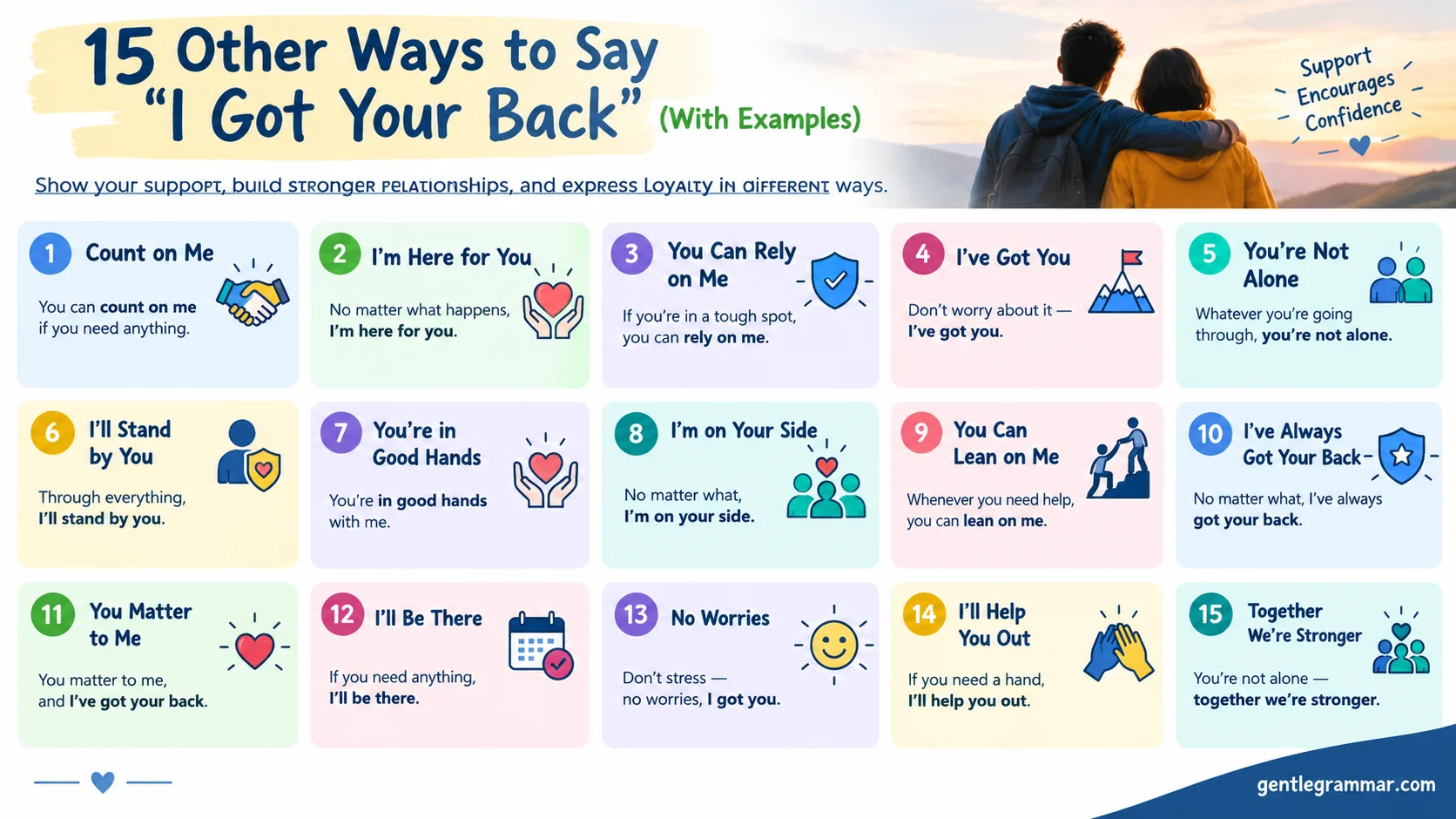
Finding the right words to show someone you care can make a meaningful difference in real life. The common English idiom “I got your back” means you are ready to protect someone, stand beside them, and offer help during a tough time.
From my personal experience, a dependable friend, family member, or reliable colleague can make you feel safe through simple acts of kindness. In 15 Other Ways to Say “I Got Your Back” (With Examples), you can discover alternative expressions that provide emotional support, reassurance, and comfort without repeating the same old line. Genuine phrases, thoughtful words, and natural expressions help you encourage.
In everyday communication, choosing the right alternative depends on your relationship and situation. For example, “You can always rely on me” communicates reliability and dependability, while “I’m here whenever you need me” offers emotional reassurance and sincere support. Other useful expressions include “I’ll stand by you,” “You’re not alone,” and “I’ll help you through this.”
What Does “I Got Your Back” Mean?
“I got your back” means that you are willing to support, protect, defend, or help someone when they need you. It is an informal expression that reassures another person that they do not have to face a problem alone. For example, if a friend feels nervous about a difficult conversation, you might say, “Don’t worry, I got your back.” This tells your friend that you will be there to help.
The phrase can communicate loyalty, trust, friendship, and emotional support. Depending on the situation, it may mean standing up for someone, helping them solve a problem, defending their position, or simply being available when life gets difficult. It does not always mean physical protection; often, it refers to emotional or practical assistance. Although people sometimes use the past-tense wording “I got your back,” the expression generally communicates a present commitment to supporting someone.
Common Situations Where “I Got Your Back” Is Used
People commonly use this expression when they want to reassure someone that they can depend on them. In everyday conversations, it works well between friends who are facing a challenge, preparing for an important event, or dealing with a stressful situation. In text messages, a simple “I’ve got your back” can communicate encouragement without requiring a long explanation.
The phrase is also useful in personal relationships, where it expresses loyalty and reassurance. At school, classmates might use it when working on a group project or preparing for a presentation. At work, colleagues may want to communicate the same idea when offering help with a deadline or a challenging assignment, although more professional wording may be preferable. On social media, it can express public support for a friend or loved one.
Choosing an alternative helps you match the situation. A close friend may appreciate a relaxed expression, while a coworker or client may respond better to clear, respectful language that explains exactly how you can help.
Is It Professional or Polite to Say “I Got Your Back”?
“I got your back” is friendly, supportive, and informal. It is generally polite when used with someone you know well, but it is not the most formal expression for business correspondence. Among teammates who share a relaxed working relationship, it can build trust and communicate solidarity. For example, telling a coworker, “I’ve got your back during the presentation,” sounds encouraging and natural.
In a formal email to a manager, client, or unfamiliar colleague, a phrase such as “I’m here to support you” or “You can count on my assistance” may be more suitable. These alternatives express commitment without sounding overly casual. The original phrase is not rude or inappropriate by itself; its suitability depends on your relationship with the listener, the seriousness of the situation, and the communication setting.
Advantages and Disadvantages of Saying “I Got Your Back”
Advantages
The main advantage of this expression is its warmth and simplicity. It reassures people that they have someone on their side and can help strengthen feelings of trust and loyalty. Because it is short and conversational, it works particularly well in text messages, everyday conversations, and moments when someone needs quick encouragement. It can also communicate solidarity without making a situation feel overly serious.
Disadvantages
The phrase can sound too casual in formal emails, official statements, or conversations with people you do not know well. Its meaning can also be vague because it does not explain what kind of help you are offering. In a serious situation, someone may need a specific commitment rather than general reassurance. Choosing a more precise expression can make your support clearer and better suited to the person’s needs.
Synonyms for “I Got Your Back”
- I’ve Got You Covered
- You Can Count on Me
- I’m Here for You
- I’ll Stand by You
- I’m on Your Side
- I’ll Support You
- I’ll Be There for You
- You Have My Support
- I’ll Back You Up
- We’re in This Together
- I Won’t Let You Face This Alone
- You Can Lean on Me
- I’ll Help You Through This
- I’m in Your Corner
- You Have Someone in Your Corner
1. I’ve Got You Covered
Meaning
“I’ve got you covered” means that you have taken care of something or are ready to handle a situation so the other person does not have to worry. Like “I got your back,” it communicates reassurance and practical support.
Definition
A promise to take care of a task, need, or responsibility for someone.
Detailed Explanation
This expression focuses more on solving a problem or handling a responsibility than on emotional loyalty. It is especially useful when you can take action to help someone. For example, you might cover a coworker’s shift or bring something a friend forgot. It is less suitable when someone needs emotional comfort rather than practical assistance.
Scenario Examples
– Scenario: Your coworker is worried about completing a presentation.
Example: “Don’t worry about the slides. I’ve got you covered.”
– Scenario: A friend forgets to bring money for lunch.
Example: “I’ve got you covered today. You can pay me back later.”
– Scenario: Your teammate needs help with a work assignment.
Example: “I’ll take care of the report’s final section. I’ve got you covered.”
Best Use
Use this phrase for practical help, shared responsibilities, everyday favors, and informal workplace conversations.
Tone
Tone: Friendly, confident, reassuring.
It communicates that you are ready to handle something and want the other person to feel at ease.
2. You Can Count on Me
Meaning
“You can count on me” means that someone can trust you to help, keep your word, or provide support when needed. It expresses reliability and commitment.
Definition
A reassurance that you are dependable and willing to help.
Detailed Explanation
This phrase emphasizes trustworthiness rather than simply being on someone’s side. It can refer to emotional support, practical assistance, or fulfilling a promise. Compared with “I got your back,” it often sounds a little more deliberate and works well in both personal and professional settings. Use it when you want your words to communicate genuine dependability.
Scenario Examples
– Scenario: Your friend is preparing for an important exam.
Example: “If you need help studying this weekend, you can count on me.”
– Scenario: A colleague needs someone to assist with an important project.
Example: “You can count on me to finish my part before Friday.”
– Scenario: Someone you care about is going through a difficult time.
Example: “Whatever happens, you can count on me to listen.”
Best Use
Choose this expression for promises, dependable support, work commitments, and close relationships.
Tone
Tone: Trustworthy, sincere, supportive.
Its emphasis on reliability makes it useful when you want to reassure someone that you mean what you say.
3. I’m Here for You
Meaning
“I’m here for you” means that you are available to listen, offer comfort, or provide help. It is especially common when someone is upset, worried, or going through a difficult experience.
Definition
An expression of emotional availability and willingness to support someone.
Detailed Explanation
Unlike “I got your back,” which can suggest defending or protecting someone, this phrase focuses on emotional presence and care. It lets the other person know that they can talk to you without feeling alone. It does not necessarily promise to solve their problem. Instead, it offers the reassurance that you are willing to listen and help in whatever way you reasonably can.
Scenario Examples
– Scenario: Your friend feels overwhelmed by personal problems.
Example: “You don’t have to explain everything right now. I’m here for you.”
– Scenario: A family member receives disappointing news.
Example: “I’m sorry you’re going through this. I’m here for you whenever you want to talk.”
– Scenario: Your partner is having a stressful week.
Example: “Take your time, love. I’m here for you.”
Best Use
Use this phrase in personal conversations, emotional support messages, relationships, and difficult moments.
Tone
Tone: Caring, gentle, compassionate.
It communicates emotional availability without putting pressure on the other person to explain their feelings.
4. I’ll Stand by You
Meaning
“I’ll stand by you” means that you will remain loyal to someone, even when they face criticism, difficulties, or uncertainty.
Definition
A promise to continue supporting someone through challenging circumstances.
Detailed Explanation
This expression emphasizes loyalty and commitment, especially when circumstances become difficult. It can be stronger than “I got your back” because it suggests that your support will continue even when other people disagree. However, standing by someone does not have to mean approving every decision they make. You can support a person while still being honest with them about their actions.
Scenario Examples
– Scenario: Your friend is facing criticism after making a mistake.
Example: “I know things are difficult right now, but I’ll stand by you while you make things right.”
– Scenario: Your partner is dealing with a major life change.
Example: “Whatever challenges come our way, I’ll stand by you.”
– Scenario: A teammate is being unfairly blamed for a shared problem.
Example: “I’ll stand by you and explain what actually happened.”
Best Use
This phrase works well in close relationships, difficult personal situations, and moments when loyalty matters.
Tone
Tone: Loyal, serious, reassuring.
Its wording suggests a lasting commitment rather than a quick offer of help.
5. I’m on Your Side
Meaning
“I’m on your side” means that you support someone’s position, understand their perspective, or want a fair outcome for them.
Definition
An expression showing agreement, solidarity, or support for another person’s point of view.
Detailed Explanation
This expression is particularly useful when someone feels misunderstood or believes that others are against them. It communicates solidarity and understanding, but it can also imply agreement with their opinion. That makes it slightly different from offering general help. If you want to reassure someone without promising to agree with everything they say, clarify that you support them while remaining open to an honest discussion.
Scenario Examples
– Scenario: Your friend feels that nobody understands their concerns.
Example: “I understand why you’re upset. I’m on your side, and I’ll listen.”
– Scenario: Two colleagues disagree about a project decision.
Example: “I’m on your side when it comes to making sure the team gets a fair hearing.”
– Scenario: Your sibling is nervous about speaking up in a family discussion.
Example: “Go ahead and explain how you feel. I’m on your side.”
Best Use
Use this phrase in disagreements, discussions, friendships, and situations involving fairness or solidarity.
Tone
Tone: Supportive, direct, reassuring.
It works best when you want someone to feel understood, although context determines whether it suggests agreement or simply support.
6. I’ll Support You
Meaning
“I’ll support you” means that you are willing to help someone pursue a goal, manage a challenge, or get through a difficult experience.
Definition
A commitment to provide assistance, encouragement, or resources.
Detailed Explanation
This expression is more neutral and professional than “I got your back.” It can refer to practical help, emotional encouragement, or support for a decision or goal. The exact meaning depends on the context, so adding details can make the promise more meaningful. For example, explaining that you will help prepare for a presentation is clearer than offering support without saying what it involves.
Scenario Examples
– Scenario: A colleague is leading a new project.
Example: “I’ll support you throughout the rollout and help address any issues.”
– Scenario: Your friend wants to learn a new skill.
Example: “It’s great that you’re giving this a try. I’ll support you however I can.”
– Scenario: A student feels nervous about an upcoming competition.
Example: “You’ve worked hard for this, and I’ll support you all the way.”
Best Use
Choose this phrase for workplace communication, encouragement, educational settings, and personal goals.
Tone
Tone: Encouraging, respectful, dependable.
It is versatile enough for casual conversations and many professional situations.
7. I’ll Be There for You
Meaning
“I’ll be there for you” means that you intend to show up or remain available when someone needs you.
Definition
A promise of presence and assistance during a particular time or difficult experience.
Detailed Explanation
This phrase emphasizes being present and available, whether emotionally or practically. Compared with “I’m here for you,” the future wording often highlights a commitment to helping when something happens later. It can be particularly reassuring when a person is worried about facing an upcoming challenge alone. If the situation requires actual attendance, make sure your words reflect what you can realistically do.
Scenario Examples
– Scenario: Your friend is nervous about a medical appointment.
Example: “I’ll be there for you tomorrow if you’d like me to come along.”
– Scenario: Your partner is preparing for an important interview.
Example: “No matter how it goes, I’ll be there for you afterward.”
– Scenario: Your sibling is moving to a new city.
Example: “It’s a big change, but I’ll be there for you whenever you need to talk.”
Best Use
This expression fits close relationships, future commitments, emotional reassurance, and offers of companionship.
Tone
Tone: Warm, caring, committed.
It reassures someone that they can expect your presence, not merely your good intentions.
8. You Have My Support
Meaning
“You have my support” means that you approve of, encourage, or are willing to assist someone with a decision, goal, or course of action.
Definition
A clear statement that someone can rely on your backing or encouragement.
Detailed Explanation
This phrase is more measured and formal than “I got your back.” It works especially well when expressing support for someone’s plans, professional decisions, or personal goals. However, it does not necessarily promise to handle their problems or defend them in every situation. When the distinction matters, explain whether your support means encouragement, practical help, or agreement with a particular decision.
Scenario Examples
– Scenario: A colleague proposes a new approach at work.
Example: “You have my support in presenting this proposal to the team.”
– Scenario: Your friend decides to return to school.
Example: “You have my support as you work toward this qualification.”
– Scenario: A team member volunteers to lead a challenging initiative.
Example: “You have my support, and I’ll help you get the resources you need.”
Best Use
Use it in professional conversations, team discussions, personal decisions, and situations requiring clear encouragement.
Tone
Tone: Respectful, confident, professional.
Its direct wording makes it useful when you want to express backing without sounding overly casual.
9. I’ll Back You Up
Meaning
“I’ll back you up” means that you will support someone’s account of events, help defend their position, or provide assistance when they need reinforcement.
Definition
A promise to support or reinforce another person’s position or actions.
Detailed Explanation
This expression is close to “I got your back,” especially when a person expects to face questions, criticism, or a difficult discussion. It often implies active assistance or confirmation, rather than general emotional support. For instance, you might back up a colleague by explaining what you witnessed during a meeting. It should be used honestly; backing someone up does not mean agreeing to support a claim you know is false.
Scenario Examples
– Scenario: Your coworker needs someone to confirm what was agreed in a meeting.
Example: “I’ll back you up when you explain the decision to the manager.”
– Scenario: Your friend is worried about confronting someone who misunderstood them.
Example: “I’ll come with you and back you up if you need me.”
– Scenario: A teammate needs help answering questions about a group presentation.
Example: “You explain the main idea, and I’ll back you up with the research.”
Best Use
This phrase is best for teamwork, disagreements, shared responsibilities, and situations where someone needs active reinforcement.
Tone
Tone: Casual, loyal, action-oriented.
It communicates that you are prepared to step in and help rather than simply offer sympathy.
10. We’re in This Together
Meaning
“We’re in this together” means that two or more people share a challenge, responsibility, or experience and will work through it as a team.
Definition
An expression of shared responsibility and mutual support.
Detailed Explanation
Unlike “I got your back,” which focuses on one person supporting another, this phrase emphasizes partnership and teamwork. It can help reduce feelings of isolation by reminding someone that they are not dealing with a problem alone. The expression is especially appropriate when everyone involved has a role to play. It should not be used to suggest shared responsibility when one person is actually carrying the entire burden.
Scenario Examples
– Scenario: Your team has a demanding deadline.
Example: “The workload is heavy, but we’re in this together. Let’s divide the tasks.”
– Scenario: You and your partner are adjusting to a new routine.
Example: “We’ll figure out what works for us. We’re in this together.”
– Scenario: Classmates are preparing for a difficult group assignment.
Example: “Let’s help each other with the research. We’re in this together.”
Best Use
Use this expression for teamwork, relationships, shared challenges, and collaborative projects.
Tone
Tone: Inclusive, encouraging, cooperative.
Its strength comes from emphasizing a shared effort rather than a one-sided promise.
11. I Won’t Let You Face This Alone
Meaning
“I won’t let you face this alone” means that you intend to stay involved and help someone through a difficult or intimidating experience.
Definition
A strong reassurance that you will provide companionship or assistance during a challenge.
Detailed Explanation
This expression is more emotionally intense than “I got your back.” It is especially helpful when someone is frightened, overwhelmed, or facing a serious personal problem. It focuses on companionship and reassurance, not necessarily on solving the situation. Because the wording is strong, use it when you can genuinely offer continued support rather than making a promise that you may be unable to keep.
Scenario Examples
– Scenario: Your friend is nervous about reporting a serious problem.
Example: “You don’t have to handle the conversation by yourself. I won’t let you face this alone.”
– Scenario: A family member is dealing with a difficult transition.
Example: “We’ll take this one step at a time. I won’t let you face this alone.”
– Scenario: Your partner is worried about a challenging family meeting.
Example: “I’ll come with you and stay by your side. I won’t let you face this alone.”
Best Use
This phrase suits serious personal challenges, emotional reassurance, difficult conversations, and close relationships.
Tone
Tone: Deeply supportive, protective, heartfelt.
It offers a stronger emotional commitment than a casual expression of encouragement.
12. You Can Lean on Me
Meaning
“You can lean on me” means that someone can depend on you for comfort, encouragement, or practical help when life becomes difficult.
Definition
An expression inviting another person to rely on your support during challenging times.
Detailed Explanation
The phrase uses the image of leaning on someone for support, much like leaning on a stable object to keep your balance. It emphasizes trust and emotional closeness, making it especially suitable for friends, partners, and family members. Compared with “I got your back,” it feels softer and more personal. It is not usually the first choice for formal business communication, but it can sound natural among colleagues who have a close working relationship.
Scenario Examples
– Scenario: Your friend is balancing family responsibilities and work.
Example: “You’ve been handling so much lately. You can lean on me when you need a break.”
– Scenario: Your partner feels discouraged about a personal goal.
Example: “You don’t have to be strong all the time. You can lean on me.”
– Scenario: A sibling needs help with everyday responsibilities.
Example: “Let me know what you need. You can lean on me this week.”
Best Use
Choose this expression for emotional support, intimate friendships, family relationships, and comforting messages.
Tone
Tone: Gentle, caring, reassuring.
It gives someone permission to ask for help without feeling that they must manage everything alone.
13. I’ll Help You Through This
Meaning
“I’ll help you through this” means that you are willing to assist someone as they work through a specific problem or difficult period.
Definition
A commitment to help someone manage a challenge from its beginning through its resolution or next stage.
Detailed Explanation
This expression emphasizes active help over general loyalty. It suggests that you are prepared to take practical steps, provide guidance, or offer encouragement while the person deals with a problem. It can sound more specific than “I got your back” because it focuses on getting through a particular situation. You can make the promise clearer by mentioning the type of assistance you can realistically provide.
Scenario Examples
– Scenario: A friend is struggling to organize a major move.
Example: “Let’s make a checklist and tackle one task at a time. I’ll help you through this.”
– Scenario: A colleague is learning an unfamiliar work process.
Example: “I’ll walk you through the first few steps so you feel more comfortable.”
– Scenario: Your sibling is having a difficult week.
Example: “You don’t have to figure everything out tonight. I’ll help you through this.”
Best Use
This phrase works well for specific challenges, practical guidance, personal difficulties, and supportive workplace conversations.
Tone
Tone: Reassuring, helpful, constructive.
It communicates a willingness to participate in solving the problem rather than simply expressing sympathy.
14. I’m in Your Corner
Meaning
“I’m in your corner” means that you support and encourage someone, especially when they are facing a challenge or need confidence.
Definition
A figurative expression of loyalty and encouragement for someone facing a difficult situation.
Detailed Explanation
This expression comes from the imagery of boxing, where a fighter’s corner team offers guidance and support. In everyday English, it communicates encouragement, loyalty, and confidence in another person. It is similar to “I’m on your side,” but it often sounds more motivating and focused on helping someone succeed. It is informal enough for personal conversations and can also work in relaxed professional settings.
Scenario Examples
– Scenario: Your friend is nervous about launching a small business.
Example: “Starting something new takes courage. Just remember, I’m in your corner.”
– Scenario: A teammate is preparing for a challenging presentation.
Example: “You’ve done the preparation, and I’m in your corner if you need support.”
– Scenario: Your sibling is working toward an important personal goal.
Example: “Keep going. I’m in your corner, even when progress feels slow.”
Best Use
Use this phrase for encouragement, personal goals, challenges, friendships, and supportive team relationships.
Tone
Tone: Motivational, loyal, upbeat.
It communicates that you believe in the person and want to see them succeed.
15. You Have Someone in Your Corner
Meaning
“You have someone in your corner” means that a person has an ally who will encourage, support, or advocate for them when needed.
Definition
A reassurance that someone is not without support and has at least one person willing to stand beside them.
Detailed Explanation
This expression highlights the fact that someone has an ally, rather than making a direct promise about what you will personally do. It can be especially reassuring when someone feels isolated, overlooked, or uncertain about whether anyone cares. Like “I’m in your corner,” it draws on the imagery of a support team. It is slightly more indirect, so it works well when you want to remind someone that they have support without making the conversation overly intense.
Scenario Examples
– Scenario: A new employee feels intimidated by a challenging project.
Example: “You’re still learning, and you have someone in your corner if you need guidance.”
– Scenario: Your friend feels discouraged after receiving criticism.
Example: “Don’t let one person’s opinion define you. You have someone in your corner.”
– Scenario: A student is nervous about sharing an idea with a group.
Example: “Speak up and share your thoughts. You have someone in your corner.”
Best Use
This phrase fits encouragement, mentoring, friendships, school, and situations where someone needs reassurance that they have an ally.
Tone
Tone: Reassuring, encouraging, supportive.
It reminds the listener that support exists, even when the person offering it is not the main focus of the sentence.
FAQs:
What is another way to say “I got your back”?
A natural alternative is “You can count on me.” It communicates trust and reliability. If you want to offer emotional comfort, “I’m here for you” may be more appropriate, while “I’ve got you covered” works especially well when you are offering practical help.
What does “I got your back” mean?
“I got your back” means I will support, protect, or help you when you need me. It is an informal expression of loyalty and reassurance. People commonly use it with friends, family members, partners, and trusted coworkers.
Is “I got your back” professional?
The expression can be appropriate in a casual workplace environment, especially among colleagues who know each other well. However, it may sound too informal in official correspondence or communication with clients. “I’ll support you” and “You can count on my assistance” are often better choices in professional settings.
What is a more polite way to say “I got your back”?
“I’m here to support you” is a polite, versatile alternative. It works in personal and professional conversations without sounding overly casual. If you want to express emotional warmth, “I’m here for you” is another natural choice.
Which alternative works best in formal communication?
“I’ll support you” is a strong choice for formal or professional communication because it is clear, respectful, and straightforward. “You have my support” is also suitable when expressing approval or backing for someone’s proposal, decision, or goal. Choose the wording that best describes the kind of support you intend to provide.
Conclusion:
Choosing the right words can make your support feel more genuine and meaningful. Although “I got your back” is a friendly way to express loyalty, different situations may call for different expressions. You can say “You can count on me” to emphasize reliability, “I’m here for you” to offer emotional comfort, or “I’ll back you up” when someone needs active assistance. In professional settings, a phrase such as “I’ll support you” may communicate the same intention more clearly.
The key is to consider your relationship with the other person, the seriousness of the situation, and the kind of help they need. Some expressions offer comfort, while others emphasize teamwork, practical assistance, or lasting commitment. Ultimately, the most meaningful alternative is one that sounds natural, matches the situation, and reflects the support you can genuinely provide.
