
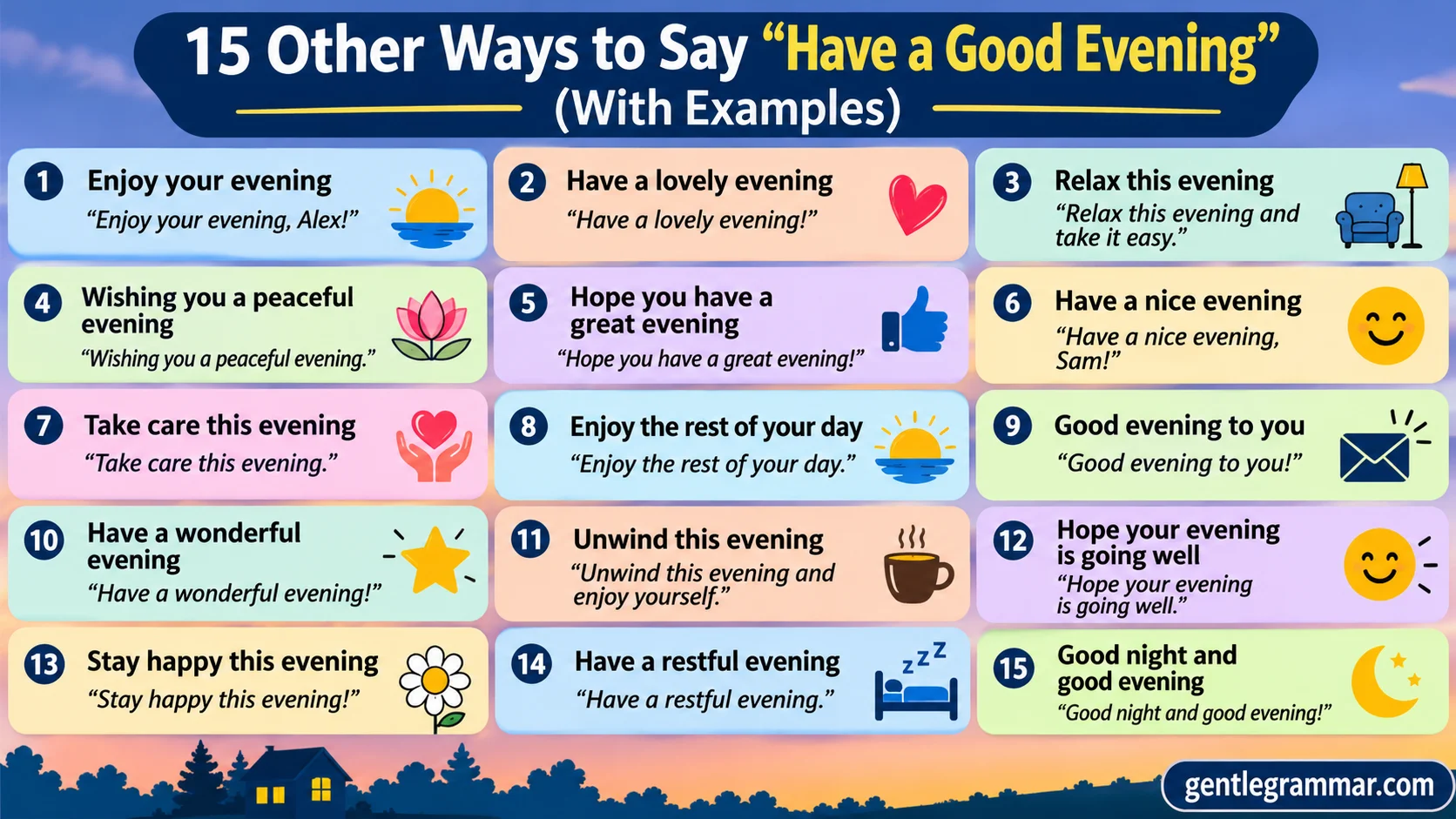
Explore 15 Other Ways to Say “Have a Good Evening” (With Examples) for colleagues, friends, loved ones, and everyday conversations at day’s end.
Simple phrases can carry weight because they influence how people perceive your tone, confidence, and attention to detail. A common phrase like “Have a good evening” is a somewhat formal phrase that helps you wish someone a pleasant end to their day. It is a kind expression, a polite expression, and a friendly expression that allows you to bid someone farewell as the day comes to a close.
You might use this evening greeting when leaving a colleague at the end of the workday, saying goodbye to a friend after a social gathering, or speaking to a loved one before heading to bed. The right words help create warmer daily conversations, personal interactions, and workplace interactions. A thoughtful professional evening wish also creates a positive impression and shows the importance of etiquette, clarity, and meaningful interaction.
What Does “Have a Good Evening” Mean?
“Have a good evening” is a polite farewell expression used to wish someone an enjoyable and pleasant evening. People typically say it when ending a conversation, leaving work, saying goodbye to friends, or finishing a customer interaction later in the day. It communicates kindness, goodwill, and a positive wish for the remaining hours of someone’s day. The phrase is suitable for both personal and professional situations. Depending on the relationship, it can sound friendly, respectful, or slightly formal without feeling distant.
Common Situations Where “Have a Good Evening” Is Used
People commonly use this expression when saying goodbye in the late afternoon or evening. You might say it to a colleague after work, a friend following a conversation, or a neighbor you meet outside. It also works well in text messages, emails, and customer service conversations.
In professional settings, employees often use it to end meetings, workplace discussions, or customer interactions politely. In personal communication, it can make a simple goodbye feel more thoughtful. However, repeating the same farewell can sometimes feel routine. Choosing a different expression allows you to communicate more warmth, enthusiasm, or familiarity depending on the situation.
Is It Professional or Polite to Say “Have a Good Evening”?
Yes, “Have a good evening” is both professional and polite. It is appropriate for workplace conversations, business emails, customer service messages, and everyday interactions. The wording is respectful without being overly formal, making it a safe choice when you want to end a conversation on a positive note.
It also works in casual situations, although friends and family might prefer something warmer, such as “Enjoy your evening” or “Have a lovely evening.” In formal communication, a slightly more polished expression can help you sound considerate. The original phrase is already perfectly acceptable, so changing it is a matter of tone and personal preference rather than a requirement.
Advantages and Disadvantages of Saying “Have a Good Evening”
Advantages
- Polite and respectful: It shows consideration when ending a conversation.
- Widely understood: Most English speakers recognize its meaning immediately.
- Versatile: It works in professional, social, and personal situations.
- Positive: It leaves the conversation with a friendly impression.
- Simple: Its straightforward wording makes it easy to use naturally.
Disadvantages
- Can sound routine: Frequent use may make it feel less personal.
- Limited emotional warmth: It does not always communicate affection or enthusiasm.
- Slightly conventional: Some casual conversations call for more relaxed wording.
- Less specific: It does not express a particular wish, such as relaxation or enjoyment.
Synonyms for “Have a Good Evening”
- Enjoy Your Evening
- Have a Lovely Evening
- Have a Wonderful Evening
- Have a Pleasant Evening
- Wishing You a Relaxing Evening
- Have a Great Night
- Enjoy the Rest of Your Day
- Take Care and Enjoy Your Evening
- Have a Peaceful Evening
- Hope You Have a Nice Evening
- Make the Most of Your Evening
- Have an Enjoyable Evening
- Wishing You a Beautiful Evening
- Have a Fantastic Evening
- Until We Meet Again
1. Enjoy Your Evening
Meaning
“Enjoy your evening” expresses a friendly wish that someone spends their evening doing something pleasant. It is a natural alternative that focuses on enjoyment and positive experiences.
Definition
A polite expression wishing someone happiness or pleasure during the evening.
Detailed Explanation
This phrase is slightly more conversational than the original. Rather than simply wishing someone a good evening, it encourages them to make the most of their remaining time. It works equally well with friends, colleagues, customers, and acquaintances. Its straightforward wording makes it suitable for both spoken conversations and written messages.
Scenario Examples
Scenario: You’re leaving the office after finishing a conversation with a colleague.
Example: “Thanks for your help today. Enjoy your evening!”
Scenario: A friend is heading out for dinner.
Example: “Have fun at the restaurant. Enjoy your evening!”
Scenario: You’re ending a customer service conversation.
Example: “Thank you for contacting us. Enjoy your evening!”
Best Use
Use this expression in everyday conversations, workplace interactions, customer service messages, and friendly texts. It is particularly useful when someone has plans or activities ahead.
Tone
Tone: Friendly, polite, conversational.
It sounds natural and positive without being overly personal or formal.
2. Have a Lovely Evening
Meaning
“Have a lovely evening” communicates a warm wish for someone to enjoy a pleasant and enjoyable evening. The word lovely adds a little more affection than the original expression.
Definition
A warm farewell wishing someone a particularly pleasant evening.
Detailed Explanation
This expression feels softer and more affectionate than “Have a good evening.” It is especially suitable when speaking to someone you know or want to treat with extra kindness. You can also use it in professional situations where a welcoming, personable tone is appropriate. Although it is common in British English, speakers elsewhere understand it easily.
Scenario Examples
Scenario: You’re saying goodbye to a close friend after meeting for coffee.
Example: “It was so nice catching up. Have a lovely evening!”
Scenario: A hotel receptionist is welcoming a guest before they head out.
Example: “Thank you for staying with us. Have a lovely evening!”
Best Use
Use it in friendly conversations, personal messages, hospitality settings, and warm professional interactions.
Tone
Tone: Warm, gentle, affectionate, polite.
The word “lovely” makes the farewell feel more thoughtful and welcoming.
3. Have a Wonderful Evening
Meaning
“Have a wonderful evening” expresses a stronger and more enthusiastic wish than the original phrase. It suggests that you hope the other person experiences something especially enjoyable.
Definition
A cheerful farewell wishing someone an exceptionally pleasant evening.
Detailed Explanation
The word wonderful adds enthusiasm and positivity. It is a good choice when someone has an exciting event, dinner, celebration, or special plan ahead. Compared with the original, this alternative sounds more expressive and encouraging. It can work in professional communication, although it may feel slightly enthusiastic for a very formal exchange.
Scenario Examples
Scenario: Your friend is attending a birthday celebration.
Example: “I hope you have a wonderful evening at the party!”
Scenario: You’re ending a conversation with a business client.
Example: “Thank you for your time today. Have a wonderful evening!”
Best Use
Choose this phrase for celebrations, friendly conversations, social events, and positive professional interactions.
Tone
Tone: Cheerful, enthusiastic, warm.
It communicates genuine goodwill with a little extra excitement.
4. Have a Pleasant Evening
Meaning
“Have a pleasant evening” is a courteous way to wish someone a comfortable and enjoyable evening. It places more emphasis on comfort and general satisfaction than excitement.
Definition
A polite expression wishing someone a calm and agreeable evening.
Detailed Explanation
This expression is slightly more formal than “Have a good evening.” It is useful when speaking to customers, clients, colleagues, or people you do not know particularly well. Its wording feels respectful without becoming overly stiff. Unlike “Have a wonderful evening,” it does not suggest excitement or a special occasion.
Scenario Examples
Scenario: A receptionist is saying goodbye to a visitor.
Example: “Thank you for coming in. Have a pleasant evening!”
Scenario: You’re ending a formal conversation with a customer.
Example: “We appreciate your patience. Have a pleasant evening.”
Best Use
Use it in customer service, business communication, formal interactions, and polite everyday conversations.
Tone
Tone: Courteous, professional, respectful.
Its measured wording makes it a suitable choice when you want to maintain a polite distance.
5. Wishing You a Relaxing Evening
Meaning
“Wishing you a relaxing evening” expresses a desire for someone to enjoy a peaceful break after a busy or stressful day.
Definition
A thoughtful expression hoping someone can rest and unwind during the evening.
Detailed Explanation
This alternative is more specific than the original because it focuses on rest and relaxation. It is especially thoughtful when someone has had a demanding day or is looking forward to some personal time. It can sound more caring than a standard farewell. However, it is not always interchangeable with the original because it assumes relaxation is what the person wants.
Scenario Examples
Scenario: Your colleague has finished a particularly busy shift.
Example: “You’ve had a long day. Wishing you a relaxing evening!”
Scenario: You’re sending a thoughtful message to a family member.
Example: “Take some time for yourself tonight. Wishing you a relaxing evening.”
Best Use
Use this expression in personal messages, supportive conversations, and workplace farewells when someone deserves a break.
Tone
Tone: Caring, thoughtful, gentle.
It communicates consideration for someone’s comfort and well-being.
6. Have a Great Night
Meaning
“Have a great night” is a casual farewell wishing someone an enjoyable night ahead. It is a relaxed alternative that sounds particularly natural in everyday conversation.
Definition
An informal expression wishing someone an enjoyable night.
Detailed Explanation
This phrase is more casual than “Have a good evening.” It works particularly well with friends, family members, and familiar colleagues. Depending on the context, “night” can refer to evening activities or the later hours before bedtime. It is less suitable for very formal communication, where a more courteous expression may be preferable.
Scenario Examples
Scenario: Your friend is leaving to meet other friends.
Example: “See you tomorrow! Have a great night!”
Scenario: A colleague is heading to a concert after work.
Example: “Enjoy the show. Have a great night!”
Best Use
Use it in casual conversations, text messages, social gatherings, and friendly goodbyes.
Tone
Tone: Relaxed, cheerful, informal.
It feels easygoing and familiar, making it ideal for people you know well.
7. Enjoy the Rest of Your Day
Meaning
“Enjoy the rest of your day” is a polite expression wishing someone a pleasant remainder of their day. It is especially useful when the conversation takes place in the late afternoon or early evening.
Definition
A friendly farewell encouraging someone to enjoy the remaining hours of their day.
Detailed Explanation
Unlike the original, this expression does not specifically focus on the evening. It works throughout the afternoon and can also be used near the beginning of the evening. Its wording feels natural in professional environments because it is friendly without being overly familiar. It is a useful option when you are unsure whether the other person considers the evening to have started.
Scenario Examples
Scenario: You’re finishing a phone conversation with a customer.
Example: “Thanks for calling and have a great rest of your day!”
Scenario: You are saying goodbye to a neighbor in the late afternoon.
Example: “It was nice seeing you. Enjoy the rest of your day!”
Best Use
Use it in customer service, workplace conversations, emails, and everyday interactions before the day is over.
Tone
Tone: Polite, friendly, professional.
It sounds natural and works across different levels of familiarity.
8. Take Care and Enjoy Your Evening
Meaning
“Take care and enjoy your evening” combines a caring farewell with a positive wish for the hours ahead.
Definition
A friendly expression encouraging someone to look after themselves and enjoy their evening.
Detailed Explanation
This phrase communicates more personal warmth than the original. The words “take care” add a thoughtful reminder about someone’s well-being. It is particularly appropriate when saying goodbye to friends, colleagues, or people you have developed a friendly relationship with. Because it contains two farewell messages, it may feel slightly too personal for a brief, strictly formal exchange.
Scenario Examples
Scenario: You’re ending a conversation with a friend who is traveling home.
Example: “Message me when you get home. Take care and enjoy your evening!”
Scenario: You’re saying goodbye to a colleague after a productive day.
Example: “Thanks for everything today. Take care and enjoy your evening!”
Best Use
Choose it for friendly workplace conversations, personal messages, and thoughtful everyday goodbyes.
Tone
Tone: Caring, friendly, considerate.
It makes the farewell feel more personal by combining kindness with a positive wish.
9. Have a Peaceful Evening
Meaning
“Have a peaceful evening” expresses a wish that someone experiences a quiet, calm, and stress-free evening.
Definition
A gentle farewell wishing someone an evening without stress or disturbance.
Detailed Explanation
This expression focuses on peace and calmness rather than general enjoyment. It is especially appropriate when someone needs time away from work, difficult situations, or everyday responsibilities. Compared with the original, it sounds more soothing and emotionally considerate. However, it may feel unusual in energetic or celebratory situations.
Scenario Examples
Scenario: A friend has been dealing with a stressful week.
Example: “I hope things settle down soon. Have a peaceful evening!”
Scenario: You’re ending a thoughtful conversation with a family member.
Example: “Get some rest tonight. Have a peaceful evening.”
Best Use
Use it in supportive personal messages, gentle conversations, and situations where someone needs calm and rest.
Tone
Tone: Soothing, gentle, thoughtful.
It communicates a sincere wish for quiet and emotional comfort.
10. Hope You Have a Nice Evening
Meaning
“Hope you have a nice evening” is a friendly expression that communicates your wish for someone to enjoy the rest of their day.
Definition
A conversational farewell expressing hope that someone has an enjoyable evening.
Detailed Explanation
This expression sounds slightly more relaxed and personal than the original. Beginning with “Hope” makes it feel conversational rather than like a standard farewell. It works well in text messages, emails, and everyday interactions. It is also a useful option when you want to sound friendly without adding too much emotional emphasis.
Scenario Examples
Scenario: You’re finishing a conversation with a friend over text.
Example: “I’ll talk to you tomorrow. Hope you have a nice evening!”
Scenario: You’re responding to a colleague after they finish helping you.
Example: “Thanks for sending those details. Hope you have a nice evening!”
Best Use
Use it in casual emails, friendly messages, workplace chats, and everyday conversations.
Tone
Tone: Friendly, relaxed, polite.
It feels natural and approachable without sounding overly enthusiastic.
11. Make the Most of Your Evening
Meaning
“Make the most of your evening” encourages someone to use their evening in an enjoyable or meaningful way.
Definition
An encouraging expression suggesting that someone should take full advantage of their free evening.
Detailed Explanation
This phrase is more encouraging than the original. Rather than simply wishing someone a pleasant evening, it suggests enjoying the time available. It works particularly well when someone has free time, exciting plans, or an opportunity to do something they enjoy. It is not a direct replacement in every situation because it carries a subtle suggestion or encouragement.
Scenario Examples
Scenario: Your friend has finally finished a busy project.
Example: “You’ve earned some free time. Make the most of your evening!”
Scenario: A colleague is taking a short break before returning to work the next day.
Example: “Enjoy your time off and make the most of your evening.”
Best Use
Use it in motivational conversations, friendly messages, and situations where someone has free time ahead.
Tone
Tone: Encouraging, positive, energetic.
It gives a simple farewell a slightly motivational feeling.
12. Have an Enjoyable Evening
Meaning
“Have an enjoyable evening” is a polite expression wishing someone a satisfying and pleasant experience during the evening.
Definition
A courteous farewell wishing someone pleasure and satisfaction throughout the evening.
Detailed Explanation
This phrase is similar in meaning to the original, although it sounds a little more deliberate and formal. The word “enjoyable” emphasizes the quality of someone’s experience. It works well in professional settings and polite written communication. In casual conversations, however, “Enjoy your evening” usually sounds shorter and more natural.
Scenario Examples
Scenario: You’re saying goodbye to guests at the end of a business dinner.
Example: “Thank you for joining us tonight. Have an enjoyable evening!”
Scenario: A service employee is finishing an interaction with a visitor.
Example: “We appreciate your visit. Have an enjoyable evening!”
Best Use
Use it in formal conversations, hospitality settings, business events, and polite customer communication.
Tone
Tone: Polished, courteous, professional.
Its slightly formal wording makes it appropriate for respectful interactions.
13. Wishing You a Beautiful Evening
Meaning
“Wishing you a beautiful evening” is a warm expression that hopes someone experiences an especially lovely and memorable evening.
Definition
A heartfelt farewell expressing a wish for someone to enjoy a lovely evening.
Detailed Explanation
This phrase is more expressive and affectionate than the original. The word “beautiful” gives the message a gentle, almost poetic quality. It is especially suitable for close friends, partners, family members, or thoughtful social media messages. It may sound overly sentimental in routine workplace communication, so consider your relationship with the recipient.
Scenario Examples
Scenario: You’re sending a romantic message to your partner.
Example: “I wish I could spend tonight with you. Wishing you a beautiful evening!”
Scenario: You’re writing a kind message to a close friend.
Example: “You deserve some happiness after this week. Wishing you a beautiful evening.”
Best Use
Use it in romantic messages, personal conversations, heartfelt notes, and expressive social media posts.
Tone
Tone: Affectionate, poetic, heartfelt.
It adds emotional warmth and makes an ordinary goodbye feel more meaningful.
14. Have a Fantastic Evening
Meaning
“Have a fantastic evening” is an enthusiastic farewell expressing a strong wish that someone has an exciting and memorable evening.
Definition
An upbeat expression wishing someone an exceptionally enjoyable evening.
Detailed Explanation
This expression is more energetic than the original. The word “fantastic” communicates excitement and positive expectations. It is particularly appropriate when someone is attending a special event, going out with friends, or celebrating an occasion. Although it can be used professionally, its enthusiastic tone is better suited to friendly or welcoming environments.
Scenario Examples
Scenario: Your friend is going to a live music performance.
Example: “Enjoy the music and have a fantastic evening!”
Scenario: A colleague is celebrating a personal achievement.
Example: “Congratulations again! Have a fantastic evening celebrating!”
Best Use
Use it for celebrations, social events, friendly conversations, and enthusiastic personal messages.
Tone
Tone: Excited, cheerful, enthusiastic.
It communicates more energy and excitement than a standard farewell.
15. Until We Meet Again
Meaning
“Until we meet again” is a farewell expression suggesting that you look forward to seeing someone another time. It is more about the next meeting than wishing someone a pleasant evening.
Definition
A farewell used when parting from someone with the expectation or hope of meeting again.
Detailed Explanation
This expression differs from the original because it does not directly wish someone an enjoyable evening. Instead, it emphasizes the connection between two people and the possibility of meeting again. It sounds more sentimental, poetic, or formal depending on the context. It works well when parting from someone after a meaningful meeting, although it may sound dramatic during an ordinary workplace goodbye.
Scenario Examples
Scenario: You’re saying goodbye to a friend who is moving to another city.
Example: “I’ll miss our conversations. Until we meet again!”
Scenario: You’re ending a farewell speech at a special gathering.
Example: “Thank you all for being here tonight. Until we meet again!”
Best Use
Use it in farewell speeches, meaningful personal messages, formal partings, and situations involving a future reunion.
Tone
Tone: Sentimental, respectful, nostalgic.
It gives a farewell a lasting emotional touch rather than simply wishing someone a pleasant evening.
FAQs:
1. What is another way to say “Have a Good Evening”?
Some natural alternatives include “Enjoy your evening,” “Have a lovely evening,” “Have a wonderful evening,” and “Have a pleasant evening.” The best choice depends on whether you want to sound casual, warm, enthusiastic, or professional.
2. What does “Have a Good Evening” mean?
It means you are wishing someone an enjoyable and pleasant evening. People commonly use it when ending conversations, leaving work, or saying goodbye to friends, colleagues, and customers.
3. Is “Have a Good Evening” professional?
Yes. It is a polite and professional farewell suitable for business conversations, workplace emails, customer interactions, and meetings. It is friendly without being too informal.
4. What is a more polite way to say “Have a Good Evening”?
“Have a pleasant evening” is an excellent polite alternative. You can also say “Wishing you a relaxing evening” when you want to sound more thoughtful or considerate.
5. What is the best alternative for a formal email?
“Have a pleasant evening” is a suitable choice for formal emails. “Enjoy the rest of your evening” is another natural option when you want to sound professional but approachable.
Conclusion:
Choosing the right farewell can make even a short conversation feel more meaningful. While “Have a Good Evening” is already polite and appropriate for most situations, alternatives allow you to express different feelings and levels of familiarity. You might choose “Enjoy your evening” for everyday conversations, “Have a pleasant evening” for professional communication, or “Wishing you a relaxing evening” when someone needs a little encouragement to unwind.
Remember that similar expressions do not always carry exactly the same meaning. Consider your relationship with the recipient, the situation, and the impression you want to leave. A thoughtful farewell does not need complicated wording. Sometimes, a few sincere words are enough to make someone’s evening a little brighter.
